


Watering Your Lawn The Right Way: Simple Tips That Work
Keeping a lawn green without wasting water really comes down to three key decisions: how much to apply, when to apply it, and whether your grass even needs it yet.
Most watering problems happen because people just guess on all three.
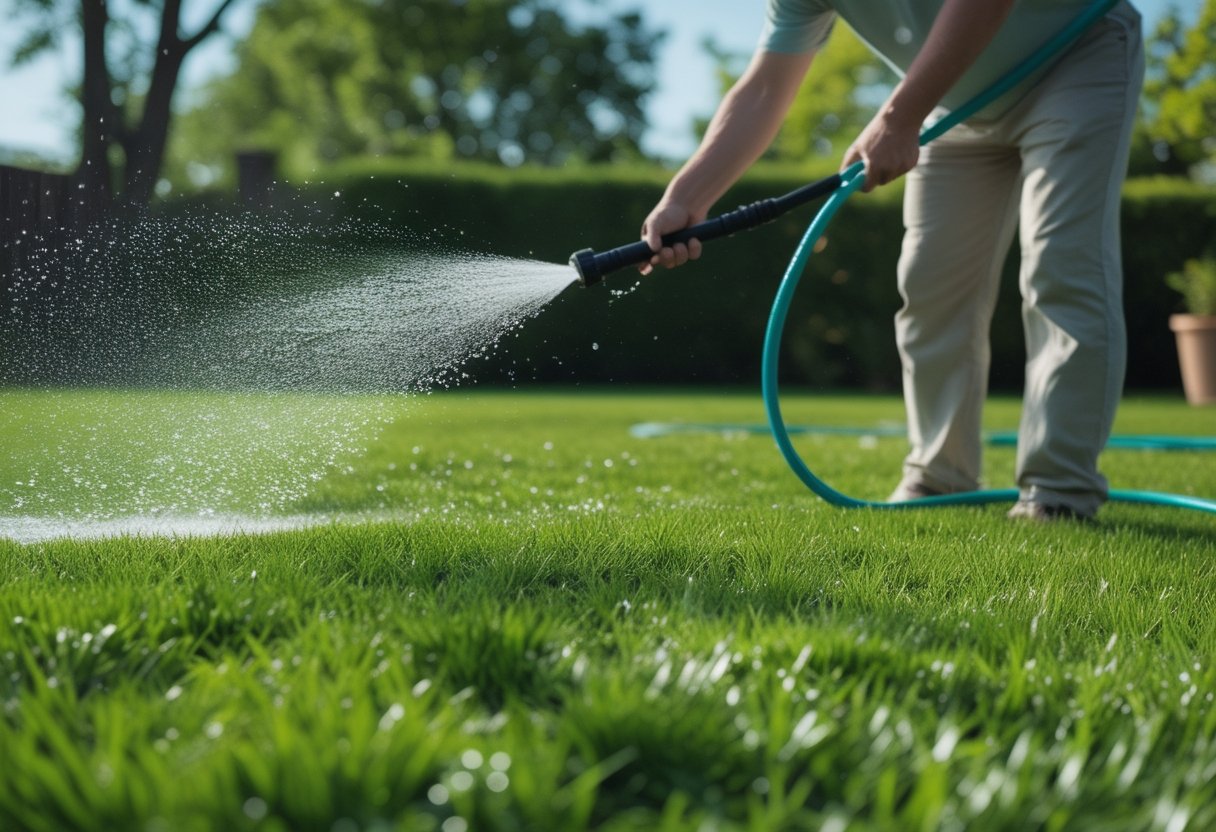
If you switch from a fixed watering schedule to one that actually considers rainfall, soil, and what your sprinklers put out, you’ll see a big difference.
This approach saves water, promotes deeper root growth, and keeps your lawn healthier during dry spells and heat. It’s not really any harder, just smarter.
The tips here are for established home lawns. Whether you use an in-ground system, a hose-end sprinkler, or just drag a sprinkler around, you’ll find something useful here.
Key Takeaways
- Most lawns need about one inch of water per week, but rainfall and soil type change that number all the time.
- Watering deeply two to three times a week grows stronger roots than light daily watering ever will.
- Checking soil moisture and watching for stress signs beats following a rigid calendar schedule.
How Much Water Your Lawn Actually Needs
Lawn watering doesn’t have to be complicated, but you do need to be intentional. The old “one inch per week” rule is a good starting point, but the amount really depends on your weather, your soil, and your grass type.
Aim For About One Inch Of Water Per Week
Most established lawns in the US need between 0.75 and 2.0 inches of water per week, with one inch as the usual target for average conditions.
That usually means two to three deep watering sessions per week—not a quick sprinkle every day.
One inch of water soaks the soil down about six to eight inches, which is where you want the roots to reach. Shallow watering just keeps moisture near the surface, keeping roots shallow and making your lawn less resilient when it gets dry.
Adjust For Rainfall Before You Water Again
Before you turn on the sprinkler, check how much rain you’ve actually had. A half-inch of rain means you only need to add another half-inch that week.
If you got a full inch, skip watering entirely. Keep a rain gauge in your yard or check your local weather station’s totals.
Don’t trust your memory. What felt like a downpour may have only dropped a quarter-inch on your lawn.
Why Deep Watering Beats Daily Light Sprinkling
Light, frequent watering keeps the top inch of soil moist but doesn’t push water down to the roots. That’s a problem.
As Jon Sneider points out, shallow roots make grass more vulnerable to drought, heat, and weeds.
Water deeply and less often. Let the top inch of soil dry out between waterings.
That little dry-out period actually encourages roots to grow deeper, which is what you want for a tough, resilient lawn.
When To Water For Better Absorption
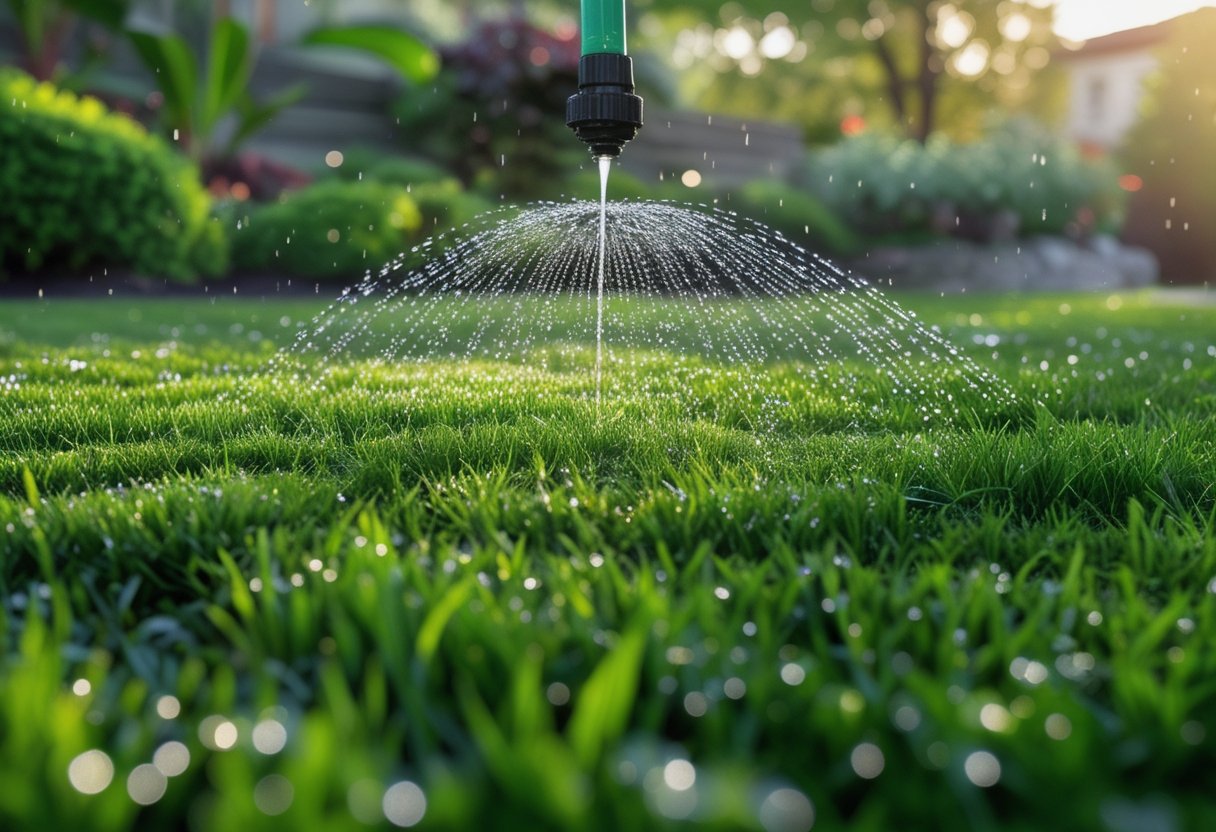
When you water isn’t just about your schedule. It directly affects how much your lawn absorbs and how much just evaporates or causes disease.
Soil temperature and air conditions at watering time actually make a real difference.
Why Early Morning Is The Best Window
Watering between 4 a.m. and 10 a.m. is best for almost every lawn. Temperatures are low, the wind is usually calm, and the soil can absorb moisture before the day heats up.
According to theyardandgarden.com, this window cuts evaporation and disease risk.
Morning watering also lets grass blades dry out naturally as the sun rises. Wet blades in the sun for a few hours? No big deal.
But wet blades overnight are another story.
Why Evening Watering Raises Disease Risk
If you water in the evening, your grass stays wet for eight to ten hours overnight. That long stretch of moisture creates perfect conditions for fungal disease, mildew, and lawn rot.
This is one of the most common mistakes people make, and it’s totally avoidable.
If you can’t water in the morning, late afternoon (before 4 p.m.) is the next best thing. That way, the blades have time to dry before dark.
When Heat And Wind Change Your Timing
On windy or really hot days, even morning watering loses more to evaporation than usual. If you know a heat wave is coming, water the day before to build up soil moisture.
Midday watering during a heatwave mostly wastes water, since a lot evaporates before it can help your grass. Adjust your timing based on what’s actually happening, not just habit.
How To Tell When Grass Really Needs Water
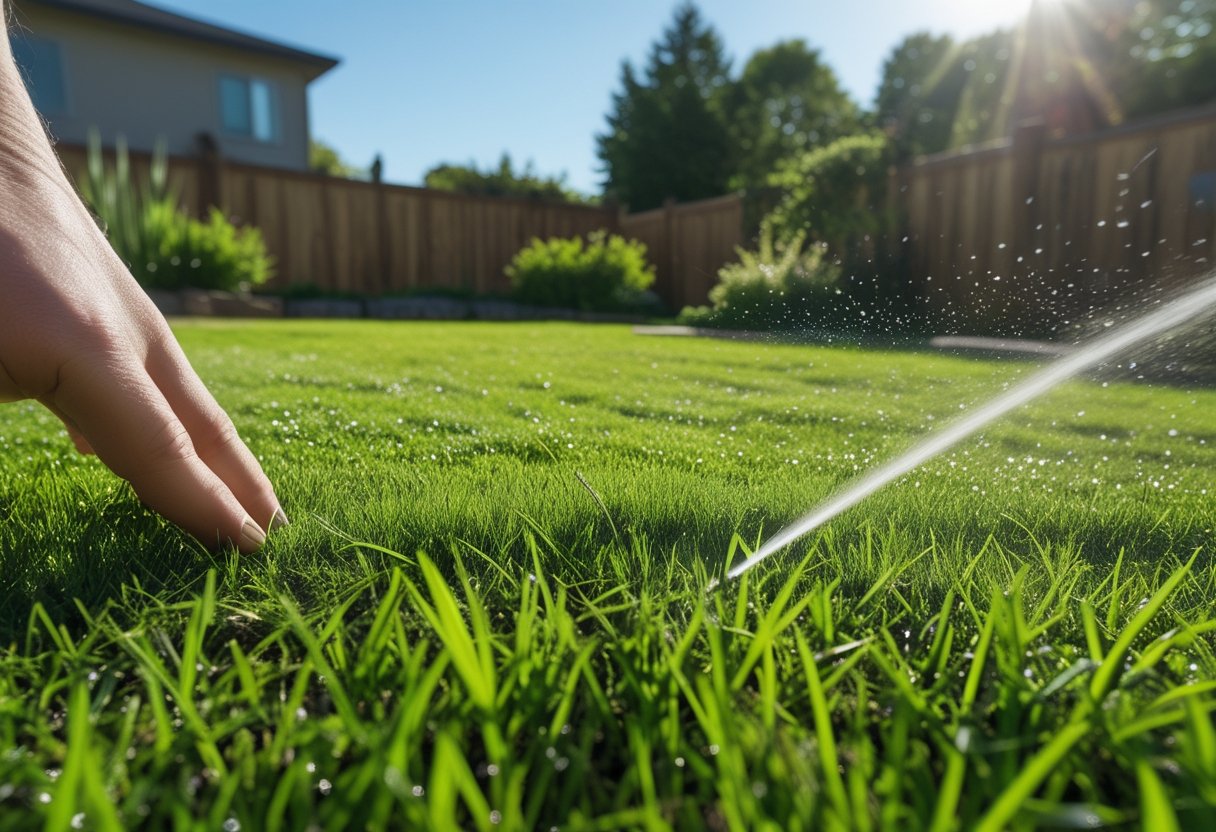
Your lawn will tell you when it’s thirsty if you know what to look for. Checking soil moisture and reading visual stress signs is way better than just watering every Tuesday because that’s what you’ve always done.
Visual Signs Of Drought Stress
The most obvious sign your lawn needs water is when it goes from green to a blue-gray color. Grass blades also start curling or folding lengthwise when they’re stressed.
Here’s an easy test: walk across the lawn. If your footprints stay visible for more than a minute instead of springing back, the grass is dry.
LawnLove mentions slow growth, more weeds, and dry or cracked soil as other signs. If you see these, you’ve probably waited too long, but a deep soak will usually bring it back.
How To Check Soil Moisture At Root Level
Don’t just feel the surface. Push a screwdriver or six-inch probe into the soil.
If it slides in easily, you’ve got enough moisture. If it’s tough or feels dry, water now.
This test only takes half a minute and is much more reliable than just looking at grass color. Try it before every watering session.
Honestly, you’ll often find the soil is wetter than it looks, so you can skip watering that day.
When Dormant Grass Should Be Left Alone
Cool-season grasses go semi-dormant in hot summer, while warm-season grasses go dormant in winter. Dormant grass looks brown and dead, but it isn’t.
Watering dormant grass can actually cause more harm by encouraging shallow new growth that just burns off.
If you’re in a drought lasting four weeks or more, water about half an inch every two to three weeks just to keep the root crowns alive. Otherwise, let dormancy do its thing.
Measure Sprinkler Output Before Setting A Schedule
You can’t make a good watering schedule if you don’t know how much your system actually puts out. Most people skip this, so they end up under-watering or wasting water.
Use A Rain Gauge Or Straight-Sided Cans
Put several straight-sided cans (tuna cans work great) around your lawn at different distances from the sprinkler heads. Run your system for fifteen minutes, then measure the water in each can.
Average the numbers and you’ll know your output rate in inches per hour. Outdoor Watering Nerds break down this “catch cup test” well.
It tells you exactly how long to run your system to hit your one-inch goal. A simple rain gauge in the yard also helps you track rainfall so you don’t overdo it.
Check Sprinkler Heads For Coverage Problems
Uneven watering is super common and easy to miss. Walk your yard while the system runs and look for dry spots, heads spraying pavement, or nozzles with weird patterns.
Adjusting or cleaning heads only takes a few minutes. It can fix dry patches that no amount of schedule tweaking will solve.
If water isn’t spread evenly, you’re just over-watering some spots and starving others.
Match Run Time To Your Lawn Irrigation Setup
Once you know your output rate, the math is simple. If your sprinklers put out half an inch per hour and you want one inch, run it for two hours per week, split into two or three sessions.
If you got half an inch of rain this week, cut your run time in half. Smart controllers can automate this based on local weather, but even a basic timer and your catch cup results will get you most of the way there.
Adjust Watering By Season, Soil, And Grass Type
A schedule that works in May can totally fail in July and waste water in September. Changes in temperature, evaporation, and grass growth mean your lawn’s needs shift every few weeks.
Spring And Summer Watering Differences
In spring, your lawn is waking up from dormancy and doesn’t need heavy irrigation yet. Focus on deep, infrequent watering to encourage roots to grow before summer heat arrives.
The soil is cooler and holds water longer, so you might only need one deep watering a week. Summer is much tougher—hotter soil dries out fast, and your lawn may need up to 1.5 inches or more per week.
lawnbyseason.com says grass type and local climate are the biggest factors in setting your summer target.
What Clay, Sand, Shade, And Slopes Change
Clay soil holds water much longer than sand, so you can water less often but need to go slow to prevent runoff. Sandy soil drains fast and needs more frequent, shorter sessions to keep roots happy.
LawnLove’s soil guide covers this in detail, but the takeaway is: your soil type changes everything about how you water.
Shaded areas use less water than full-sun spots. Slopes lose water to runoff quickly, so cycle-and-soak watering (short bursts with breaks) works better than one long session.
Needs Of Cool-Season Lawns Like Perennial Ryegrass
Perennial ryegrass and other cool-season grasses really kick into gear during spring and fall. They grow best when soil temperatures hang out between 50 and 65 degrees Fahrenheit.
In these seasons, they need steady moisture and do well with deeper watering sessions. But summer’s a different story.
Cool-season grasses slow down when it gets hot and dry. They’re also more sensitive to drought and heat stress than warm-season types.
Stick to your one-inch-per-week target and water early in the day. Only skip watering if you’re sure it rained enough.
If you let cool-season grass dry out too long in summer, you’ll probably see more browning than you would with warm-season grass. It’s just how these grasses react.
Reduce Water Waste While Keeping Turf Healthier
You don’t have to pick between saving water and having a healthy lawn. The same habits that cut down on waste also help your lawn handle drought better over time.
Prevent Runoff And Pooling With Smarter Cycles
If you notice water running off your lawn or pooling in the low spots, your soil’s just not soaking it up fast enough. Try cycle-and-soak watering instead: run your sprinklers for ten minutes, pause for thirty, then run them again.
Repeat this two or three times. You’ll use the same total water, but the soil gets a chance to drink it in each round.
This method matters most if you’re on clay soils or have any slopes. The US EPA points out that efficient irrigation avoids runoff and delivers water at a pace your soil can handle.
How Aeration And Thatch Affect Water Penetration
Compacted soil and thick thatch (that spongy layer of dead grass between the blades and dirt) both keep water from reaching the roots. You might run your sprinklers for an hour, but if there’s half an inch of thatch, a lot of that water never gets where it needs to go.
Core aeration pokes small holes in the soil to help water, air, and nutrients get down to the roots. Dethatching breaks up that barrier and lets more water in.
Both are worth doing every year if your lawn has standing water problems, or if you try the screwdriver test and keep finding dry soil under a damp surface. It’s honestly surprising how much difference these two steps can make.
Use Rain Barrels To Supplement Outdoor Watering
Rain barrels catch water from your roof and store it for later use. Just one inch of rain on a 1,000-square-foot roof can fill over 600 gallons—kind of wild when you think about it.
You can use that stored rainwater for hand-watering dry spots or to help out when rainfall comes up short. It’s a simple, affordable way to save water.
Lawncareplanner.com suggests combining rain barrel collection with smart watering schedules to really cut down on outdoor water use. You don’t have to give up a healthy lawn to do it.
Frequently Asked Questions
What is the best time of day to water a lawn for healthy growth?
Early morning—think between 4 a.m. and 10 a.m.—works best for watering your lawn. The cooler temps and light winds mean less evaporation, and as the sun comes up, the grass dries out naturally, so you’re less likely to run into disease issues.
When is the worst time to water grass and why should it be avoided?
Evening’s the worst time to water your lawn since it leaves the blades wet all night. That dampness is just asking for fungal problems, mildew, and rot.
Midday isn’t great either. Most of the water just evaporates before it even gets to the roots.
How long should I water my grass each session to ensure deep watering?
It depends on your sprinkler setup. Try the catch cup test to see how many inches per hour your system puts down, then figure out how long it’ll take to hit about one inch per week, spread over two or three sessions.
Most systems need 20 to 30 minutes per zone each time, but your numbers may differ. Always check your own setup.
How can I water my lawn efficiently to reduce water waste and lower my bill?
Water early in the morning. Use cycle-and-soak on clay or sloped spots.
Check if it rained before you water. Aerate compacted soil and check your sprinkler heads for even coverage—those two steps make a big difference if you want to use less water without giving up a healthy lawn.
What is the best way to water a lawn without a sprinkler system?
Hose-end sprinklers attached to a garden hose work for most yards. Move them around to cover everything, time each spot based on your catch-cup results, and stick to early-morning watering.
Oscillating sprinklers are great for rectangles, while pulsating ones handle large, open spaces and handle wind better. It’s not fancy, but it gets the job done.
When is the best time to water newly planted grass seed for successful germination?
Newly planted grass seed really needs the soil to stay consistently moist. That means lighter, more frequent watering compared to an established lawn.
Water once or twice a day in short bursts, just enough to keep the top inch of soil damp. Be careful not to wash the seed away—gentle is better.
Early morning works best, but you can add a second round in the late afternoon if the soil dries out. At this stage, keeping the seed from drying out matters more than worrying about disease.
DISCLAIMER
This document is provided for general information purposes only and should not be relied upon as providing legal advice, technical, or specific operational guidance to the reader, whether as to the practices described in the document or the applicable legal requirements and regulations. lawnfly.com expressly disclaims any responsibility for liability arising from or related to the use or misuse of any information in this document.


