

Why Nitrogen, Phosphorus, and Potassium Matter for Grass
The numbers on a lawn fertilizer bag aren’t some product code. They show the percentage by weight of nitrogen, phosphorus, and potassium, in that order.
Once you connect those percentages to your grass type, season, soil test, and application rate, you can choose lawn fertilizer with a lot less guesswork.
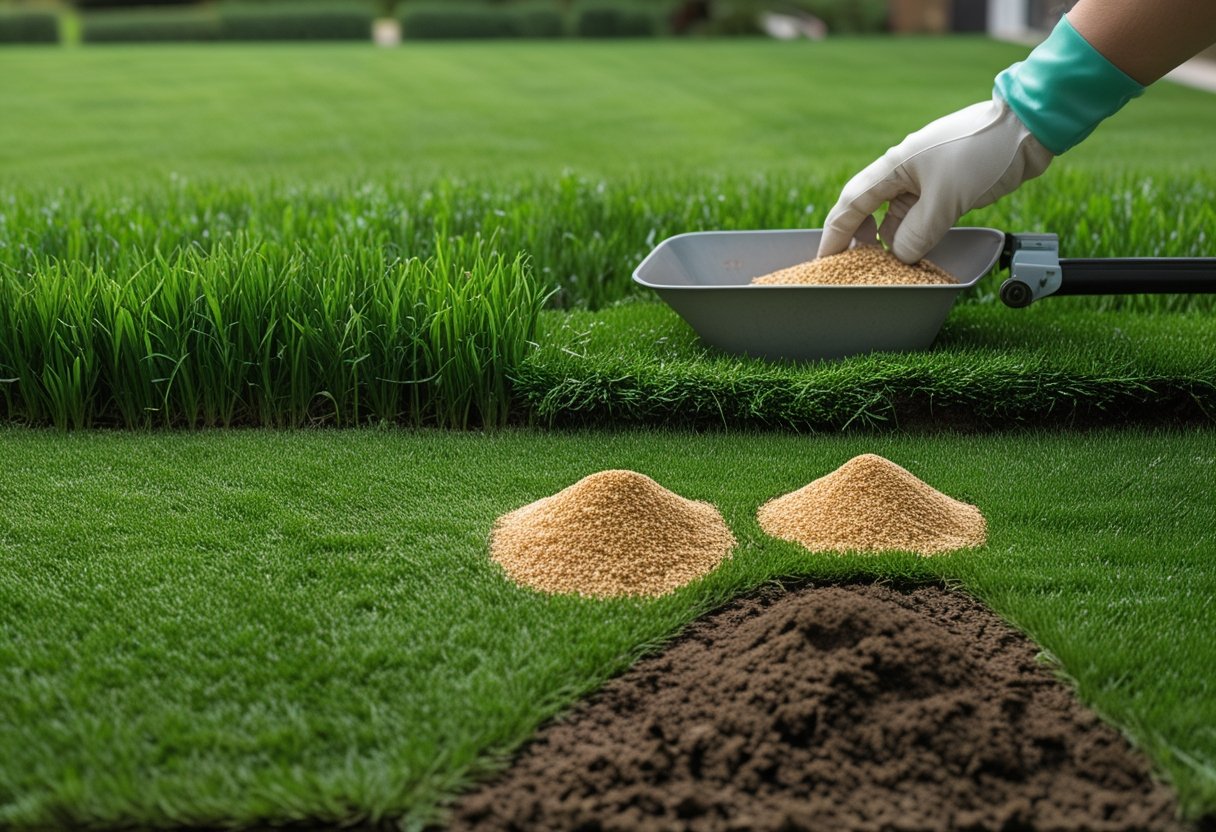
For most established lawns, nitrogen is the main nutrient you manage. Phosphorus and potassium should only be added when your soil and lawn conditions actually call for them.
A high first number isn’t automatically better, and a balanced fertilizer isn’t always the best choice either.
Don’t just stop at the big N-P-K numbers. The guaranteed analysis, nitrogen release rate, product coverage, and local phosphorus rules all affect a safe lawn care plan.
Key Takeaways
- Read the three fertilizer numbers as nitrogen, phosphorus, and potassium percentages by weight.
- Use a soil test and grass type to guide nutrient choices instead of relying on a generic ratio.
- Calculate actual nitrogen and apply it evenly to reduce fertilizer burn and nutrient runoff.
Decode The Numbers On A Fertilizer Bag
The fertilizer grade is that three-number code printed on fertilizer bags and packages. It tells you how much nitrogen, phosphate, and potash the product contains by weight—not how much your lawn should get in one application.

What The Guaranteed Analysis Measures
A label like 24-0-12 means 24% nitrogen, 0% phosphate, and 12% potash by weight. These N-P-K numbers always show up in the same order on fertilizer labels.
The guaranteed analysis might also list ammoniacal nitrogen, urea nitrogen, water-insoluble nitrogen, sulfur, iron, or other nutrients. Those details tell you more about how the product supplies nutrients and how quickly your grass might respond.
If a product has nitrogen, phosphorus, and potassium, it’s a complete fertilizer. If one is missing, it’s an incomplete fertilizer.
A 10-10-10 fertilizer is both complete and balanced, but that doesn’t make it ideal for every lawn.
Why P2O5 And K2O Appear On Labels
Fertilizer labels report phosphorus as P2O5 and potassium as K2O, even though your grass uses the elemental forms. These label conventions are used to calculate the fertilizer grade.
The middle number is for phosphate, not pure elemental phosphorus. The third number is for potash, not pure elemental potassium.
You usually don’t need to convert these values for routine product comparisons—just compare labels consistently.
Established lawns often have enough phosphorus already. Local rules might restrict phosphorus on mature turf, so follow your state and municipal requirements and use a soil test before applying it.
Comparing Fertilizer Grade And Concentration
The fertilizer grade shows concentration, not the correct application rate. A 40-pound bag of 28-0-6 contains 11.2 pounds of nitrogen, calculated as 40 × 0.28.
A higher first number means you need less product to deliver the same nitrogen amount. A balanced 10-10-10 fertilizer requires much more product to supply one pound of nitrogen, which also adds phosphorus and potassium whether your soil needs them or not.
What Nitrogen, Phosphorus, And Potassium Do For Turf
Each nutrient supports a different part of plant health. Nitrogen drives visible leafy growth, phosphorus supports roots and seedlings, and potassium helps turf manage stress.
Nitrogen For Color And Leaf Growth
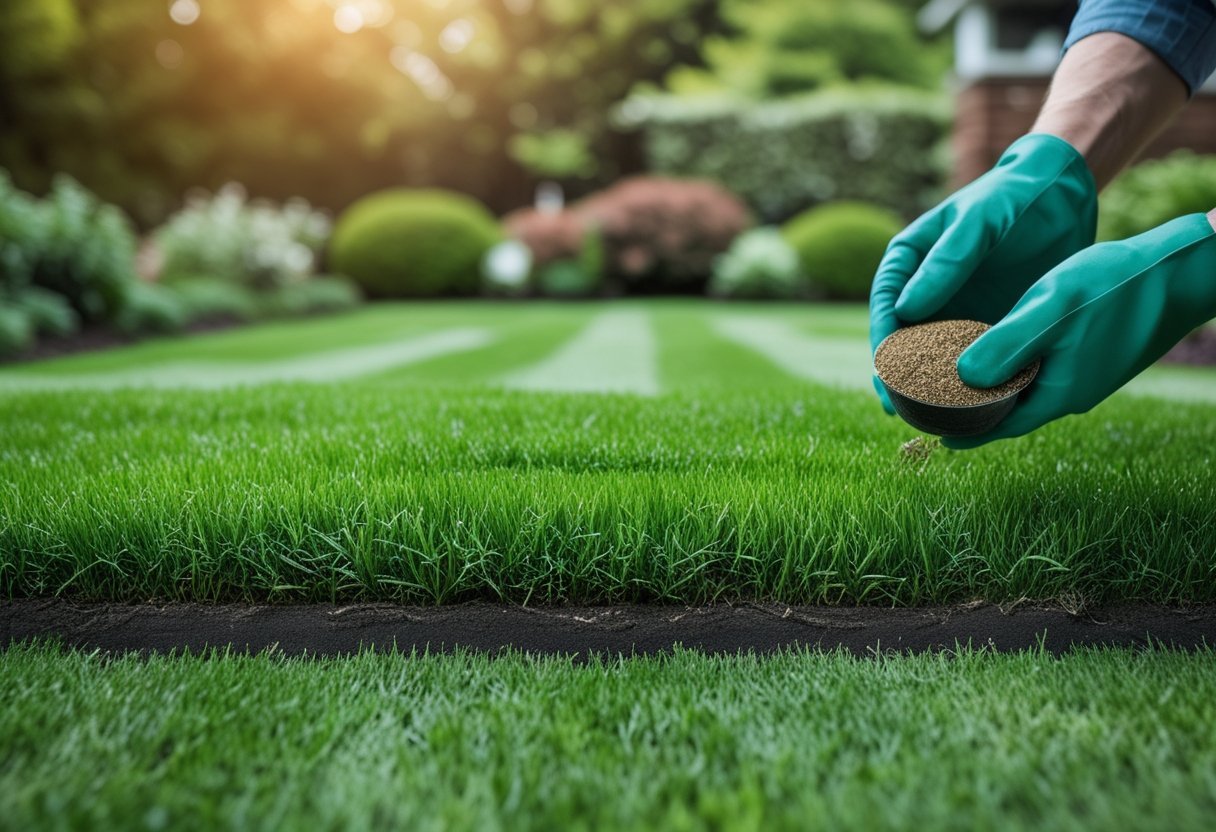
Nitrogen supports chlorophyll production, which gives grass that green color and helps it capture light through photosynthesis. It also drives vegetative growth, so nitrogen-deficient turf often looks pale, thin, and slow to recover.
You need enough nitrogen for healthy growth, yet too much can create soft, fast-growing grass that needs frequent mowing. Heavy applications can also increase fertilizer burn and nutrient runoff.
Phosphorus For New Roots And Seedlings
Phosphorus supports root development, energy movement, and seedling establishment. It matters most when you’re starting a new lawn, laying new turf, or overseeding thin areas.
Established lawns usually need little extra phosphorus unless a soil test shows a deficiency. Applying phosphorus without a documented need can waste money and contribute to water pollution.
Potassium For Stress Protection
Potassium supports water regulation, disease resistance, drought tolerance, and general stress tolerance. It doesn’t usually produce an immediate dark-green response, so you might not notice its value as quickly as nitrogen’s effect.
Potassium can matter before heat, cold, traffic, or drought, especially when soil testing shows low levels. It doesn’t replace proper watering, mowing, or drainage.
Match Nutrients To Your Lawn And Soil
The right N-P-K ratio depends on what your soil can supply and what your grass is doing. A soil test gives you a stronger starting point than a bag’s marketing claims, especially when clay soil, sandy soil, or poor soil condition affects nutrient availability.
Start With A Soil Test And Soil pH
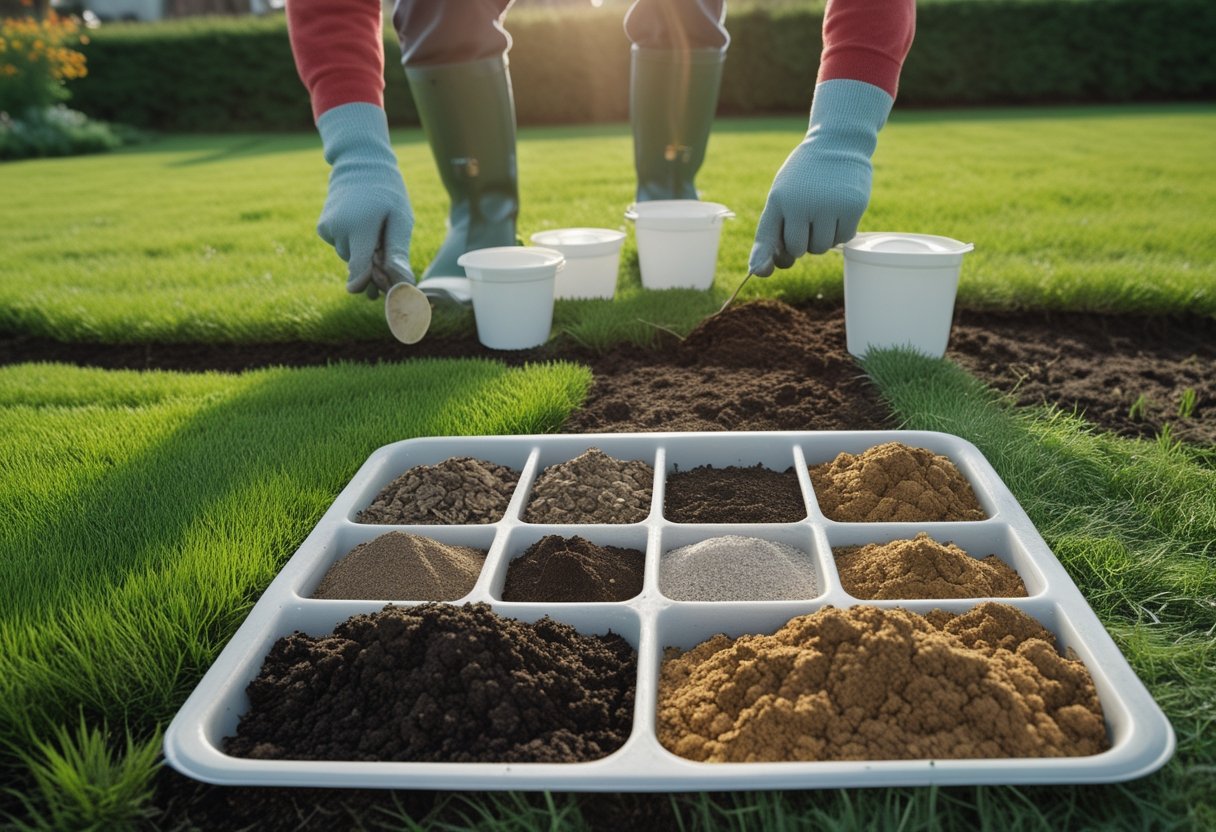
A soil test measures nutrient levels and soil pH, which affects how easily roots absorb nutrients. Test every few years, or sooner if grass keeps struggling despite enough water and sunlight.
Soil testing shows whether you need phosphorus or potassium at all. It can also identify pH problems that fertilizer alone can’t fix. Follow the lab’s recommendations and your product label rather than adding nutrients by appearance alone.
Established Turf Versus Seeding And Overseeding
Established lawns usually need nitrogen-based feeding, with phosphorus added only when testing or local guidance supports it. A product like 28-0-7 or 24-0-6 might fit routine feeding if your soil already has enough phosphorus and potassium.
New lawn establishment and overseeding are different. A starter fertilizer may contain more phosphorus to support seedling roots, but you should use it only when it fits your soil and local regulations. Once the new turf is established, shift your plan toward its normal maintenance needs.
Adjust For Cool-Season And Warm-Season Grasses
Kentucky bluegrass, tall fescue, and other cool-season grasses grow most actively during cooler spring and fall weather. Don’t push cool-season turf with heavy nitrogen during summer heat.
Warm-season grasses like Bermuda and zoysia use nutrients during warm active growth. Your grass type, regional climate, mowing height, irrigation, and soil conditions should shape the schedule. There’s really no single N-P-K ratio that fits every lawn.
Calculate The Right Application Rate
The first fertilizer number matters because lawn recommendations are usually stated as pounds of actual nitrogen per 1,000 square feet. Product weight and nutrient weight aren’t the same thing.
Find Actual Nitrogen In The Bag
Convert the nitrogen percentage to a decimal, then multiply by the bag weight. For example, a 40-pound bag of 28-0-6 contains:
40 × 0.28 = 11.2 pounds of actual nitrogen
The other numbers work the same way for phosphate and potash. This calculation helps you compare fertilizer bags by nutrient content instead of just bag size.
Convert A Nitrogen Goal Into Pounds Of Product
To apply one pound of nitrogen per 1,000 square feet, use:
100 ÷ nitrogen percentage = pounds of product per 1,000 square feet
For a 24-0-12 fertilizer:
100 ÷ 24 = 4.17 pounds of product per 1,000 square feet
For a 5,000-square-foot lawn, multiply 4.17 by 5. You’d need about 20.85 pounds of product for that application, before adjusting for your soil test, grass type, season, and label directions.
Calibrate And Apply With A Broadcast Spreader
Weigh the calculated amount, divide it into manageable portions, and apply in two directions with a broadcast spreader. Use half the product in one direction and the rest at a right angle to improve coverage.
Calibrate the spreader over a measured area before treating the lawn. Don’t rely on a dial setting from a different fertilizer, because granule size and density change the flow rate. Sweep granules from sidewalks and driveways back onto the turf.
Choose A Fertilizer Form And Nitrogen Release Rate
The N-P-K ratio tells you the nutrient concentration, while the nitrogen form tells you how quickly your grass receives it. Product choice also affects watering, application effort, burn risk, and how often you need to feed.
Quick-Release Versus Slow-Release Nitrogen
Quick-release nitrogen from sources like urea, ammonium nitrate, or ammonium sulfate can produce a fast color response. It also comes with a higher risk of fertilizer burn if you apply it unevenly or during heat and drought.
Slow-release nitrogen feeds turf gradually. Common forms include sulfur-coated urea, polymer-coated urea, methylene urea, and water-insoluble nitrogen. Slow-release fertilizer often reduces leaching and burn risk, though you still need correct rates and watering.
Granular And Liquid Product Trade-Offs
Granular fertilizer is easy to store and works well with a broadcast spreader. You have to distribute it evenly and water it according to the label.
Liquid fertilizer can provide uniform coverage when mixed and applied correctly, though measuring and spraying take some care. Liquid fertilizers often act quickly, so avoid overlapping passes and applying during stressful weather.
Organic And Synthetic Fertilizer Sources
Organic fertilizers use stuff like bone meal, blood meal, feather meal, composted manure, or milorganite. They usually contain less nitrogen per pound and release nutrients more slowly, so you might need more product to reach your target rate.
Synthetic fertilizers can provide precise nutrient amounts and fast or controlled release. Neither category is automatically safer or better. The application rate, nitrogen form, soil needs, weather, and your handling practices all make a difference in the end.
Apply Fertilizer Without Damaging The Lawn Or Waterways
Smart nutrient management helps your grass stay green without pushing it to grow more than it should. Aim for a careful application that matches what your lawn actually needs, considering soil, growth stage, and local rules.
Avoid Over-Fertilization And Fertilizer Burn
Over-fertilizing leads to brown edges, patchy streaks, and weak spots—sometimes called fertilizer burn. This gets worse if you overlap spreader passes, put fertilizer on wet grass, or use quick-release nitrogen during hot or dry spells.
Take the time to measure your lawn and the product—guessing usually ends badly. Sweep fertilizer off sidewalks, driveways, and patios so it doesn’t end up in storm drains.
Time Feedings Around Active Growth
Feed your lawn with nitrogen when it’s actually growing and can use it. Cool-season grasses usually like spring and fall, while warm-season types need food during the hot months when they’re pumping out new blades.
Skip fertilizing if your grass is dormant, stressed from drought, or suffering in the heat—unless a pro or the label says otherwise. Water in the fertilizer as the label suggests, just enough to move it into the soil without causing runoff.
Protect Soil And Nearby Water
Keep fertilizer away from ponds, streams, and storm drains—seriously, it doesn’t belong there. Don’t fertilize before big storms, and follow any blackout periods or local rules about phosphorus.
Get a soil test if you’re wondering about things like iron, manganese, or sulfur. Adding random extras without proof is a waste and might mess with your soil’s balance.
Frequently Asked Questions
What do the numbers in an N-P-K fertilizer ratio mean?
The numbers show the percentage by weight of nitrogen, phosphate, and potash, in that order. So, a 20-0-10 bag has 20% nitrogen, 0% phosphate, and 10% potash.
What is the best N-P-K ratio for a healthy lawn?
There’s honestly no single “best” ratio. Most established lawns want more nitrogen and little or no phosphorus, but if you’re starting fresh, a soil test might say you need some phosphorus.
How do I choose the right fertilizer ratio for my grass type?
Figure out if you’ve got cool- or warm-season grass, then look at its main growing season and check your soil test. Kentucky bluegrass and tall fescue don’t follow the same schedule as Bermuda or zoysia, even though they all use nitrogen.
When should I use a high-nitrogen lawn fertilizer?
Go for high-nitrogen when your established lawn is in its growth mode, and your soil test agrees. Don’t use it during summer heat, drought, or dormancy, and always check the label first.
How does a soil test help determine the right N-P-K ratio?
A soil test tells you what nutrients and pH your lawn actually has, so you don’t waste money or add stuff you don’t need. Sometimes it also points out pH or soil issues that keep your grass from absorbing nutrients.
Can using the wrong N-P-K ratio damage my lawn?
Yeah, it definitely can. If you use too much nitrogen, you might see fertilizer burn or weak, fast growth that just means more mowing for you.
Extra phosphorus isn’t great either—it can wash away and end up in streams or lakes. On the flip side, if you pick a product with barely any nitrogen, your grass might not thrive at all.
It’s best to match the ratio and amount to your soil, grass type, time of year, and whatever local rules you’ve got. Every lawn’s a little different, so there’s no one-size-fits-all answer here.
DISCLAIMER
This document is provided for general information purposes only and should not be relied upon as providing legal advice, technical, or specific operational guidance to the reader, whether as to the practices described in the document or the applicable legal requirements and regulations. https://Lawnfly.com expressly disclaims any responsibility for liability arising from or related to the use or misuse of any information in this document.


