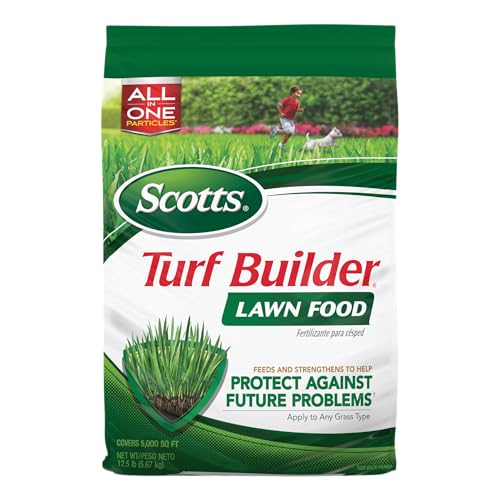


Why Zoysia Grass Needs the Right Fertilizer
Zoysia grass rewards patience way more than it rewards heavy feeding. If your lawn looks thin or pale, the fix usually isn't "more fertilizer."
It's the right amount, the right nutrient, and the right week on the calendar.
The best fertilizer for zoysia grass is a slow-release, moderate-nitrogen product chosen after a soil test, applied only once soil temperatures stay warm and the lawn is fully green.
Zoysia grows slower and stores more energy underground than Bermuda grass, so it just doesn't need the aggressive feeding schedule that works for other warm-season lawns.
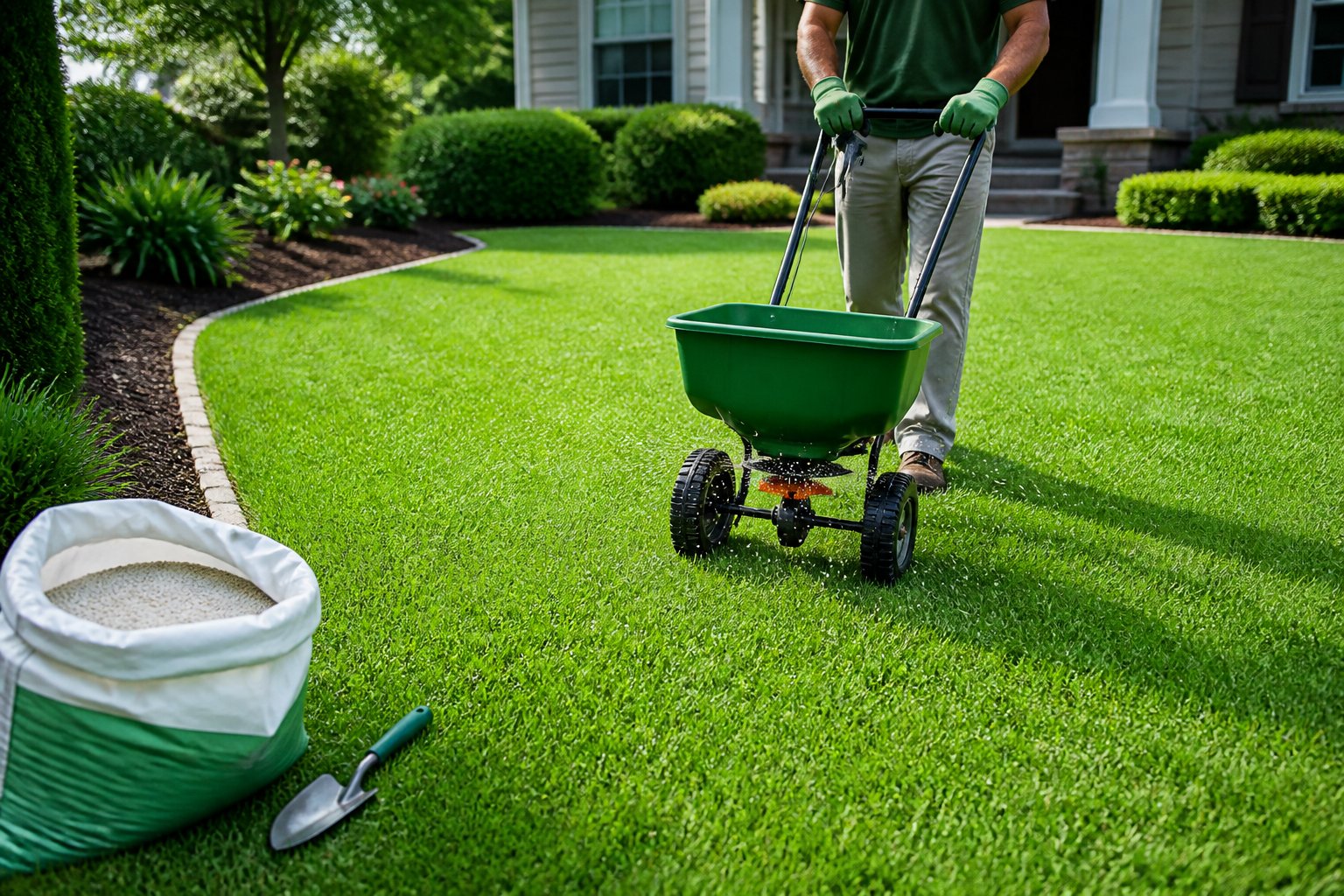
This guide walks through how to read a fertilizer label and match nutrients to what your soil actually lacks. You'll also learn how to time applications around zoysia's real growth window instead of following a generic spring-to-fall calendar.
LawnFly's product comparisons can help you sort through label claims once you know what numbers to look for.
Key Takeaways
- Choose a fertilizer based on soil-test results and actual nitrogen amounts, not the highest number on the bag.
- Feed zoysia only during confirmed active growth, since early or late applications waste nutrients and stress the lawn.
- Yellow grass often needs iron or a pH fix rather than another round of nitrogen.
Start With Zoysia's Nutrient Needs
Zoysia grass doesn't crave as much nitrogen as most warm-season grass. Pushing it harder doesn't make it healthier.
Getting the balance right protects root growth and limits thatch buildup. A balanced approach also keeps the lawn tolerant of heat and drought stress.
Why Moderate Feeding Produces Better Turf
Zoysia stores energy in its stems and roots, not by putting out constant new growth. If you overfeed it with nitrogen, you get soft, fast top growth that outpaces the root system.
That kind of soft growth is more vulnerable to disease, drought, and thatch buildup. A modest, steady feeding schedule builds a denser, tougher lawn over time.
What Nitrogen, Phosphorus, and Potassium Do
Nitrogen drives green color and leaf growth, but zoysia needs less of it than Bermuda or St. Augustine. Phosphorus supports root development, though most established lawns already have enough.
Potassium builds stress tolerance and helps grass handle heat, cold, and foot traffic.
When Yellowing Is Not a Nitrogen Problem
Pale or yellow zoysia doesn't always mean low nitrogen. Iron deficiency causes similar yellowing, especially in alkaline soil, and you fix it with chelated iron rather than a nitrogen boost.
High soil pH can also lock out nutrients the grass already has access to. A soil test is worth doing before adding anything.
Match the N-P-K Ratio to Lawn Conditions
The three numbers on a fertilizer bag (the N-P-K ratio) tell you the percentage of nitrogen, phosphorus, and potassium by weight. Reading them correctly—and pairing them with a recent soil test—matters more than chasing a specific brand or the highest first number.
Read the Fertilizer Label and Calculate Actual Nitrogen
A bag labeled 16-4-8 contains 16% nitrogen. To find actual nitrogen, multiply the bag weight by that percentage.
A 40-pound bag at 16% nitrogen gives 6.4 pounds of actual nitrogen. Zoysia generally needs no more than 1 pound of actual nitrogen per 1,000 square feet per application, and no more than 2 to 4 pounds per year total.
Doing this math prevents the most common overfeeding mistake homeowners make.
Choose Phosphorus Only When the Soil Calls for It
Phosphorus supports new root systems, so a starter fertilizer is useful for new sod or plugs. Established lawns rarely need much extra, and many soils already hold enough.
If a soil test shows adequate phosphorus, pick a low-phosphorus or zero-phosphorus product instead.
Use Potassium and Iron for Targeted Support
Potassium sulfate blends help zoysia handle summer heat and prepare for cooler weather in fall. Chelated iron can sharpen green color without adding nitrogen, which is handy when the lawn looks pale but isn't actually underfed.
Soil pH between 6 and 6.5 keeps both nutrients available to the roots.
Compare Fertilizer Types and Product Profiles
Granular and liquid fertilizers deliver nutrients differently. Organic and synthetic formulas also differ in how quickly they act and how long they last.
Matching the format to your schedule and lawn size makes routine feeding easier to stick with.
Slow-Release Granules for Core Feedings
Granular products with slow-release or water-insoluble nitrogen feed the lawn steadily over several weeks instead of in one quick burst. This fits zoysia's slower growth pattern and reduces the risk of surge growth and fertilizer burn.
Granules also store easily between applications.
Liquid Formulas for Faster, More Frequent Feeding
Liquid fertilizers absorb quickly and work well for spot-feeding thin areas or delivering a fast micronutrient boost, like chelated iron. They don't last as long in the soil, so they're better for smaller lawns or supplemental feedings between granular applications.
Organic and Synthetic Options in Context
Organic fertilizers, including those built around composted materials, feed soil biology and add humic acid. That can improve how well roots take up nutrients over time.
Synthetic blends act faster and give more precise nitrogen control. Some homeowners mix both, using organic products for soil health and synthetic products for timed nitrogen delivery.
Examples of Suitable Formula Profiles
A few product types commonly used on zoysia lawns:
- Simple Lawn Solutions Advanced 16-4-8, a liquid concentrate with added seaweed and fish emulsion for micronutrient support.
- The Andersons PGF Complete 16-4-8, a slow-release granular with humic acid, useful on alkaline soil.
- Milorganite 6-4-0, a slow-release organic option with a gentler nitrogen load.
- Ironite, a targeted iron product for color correction without added nitrogen.
- Simple Lawn Solutions 15-0-15, a potassium-focused blend suited to late-season feeding.
Time Applications Around Active Growth
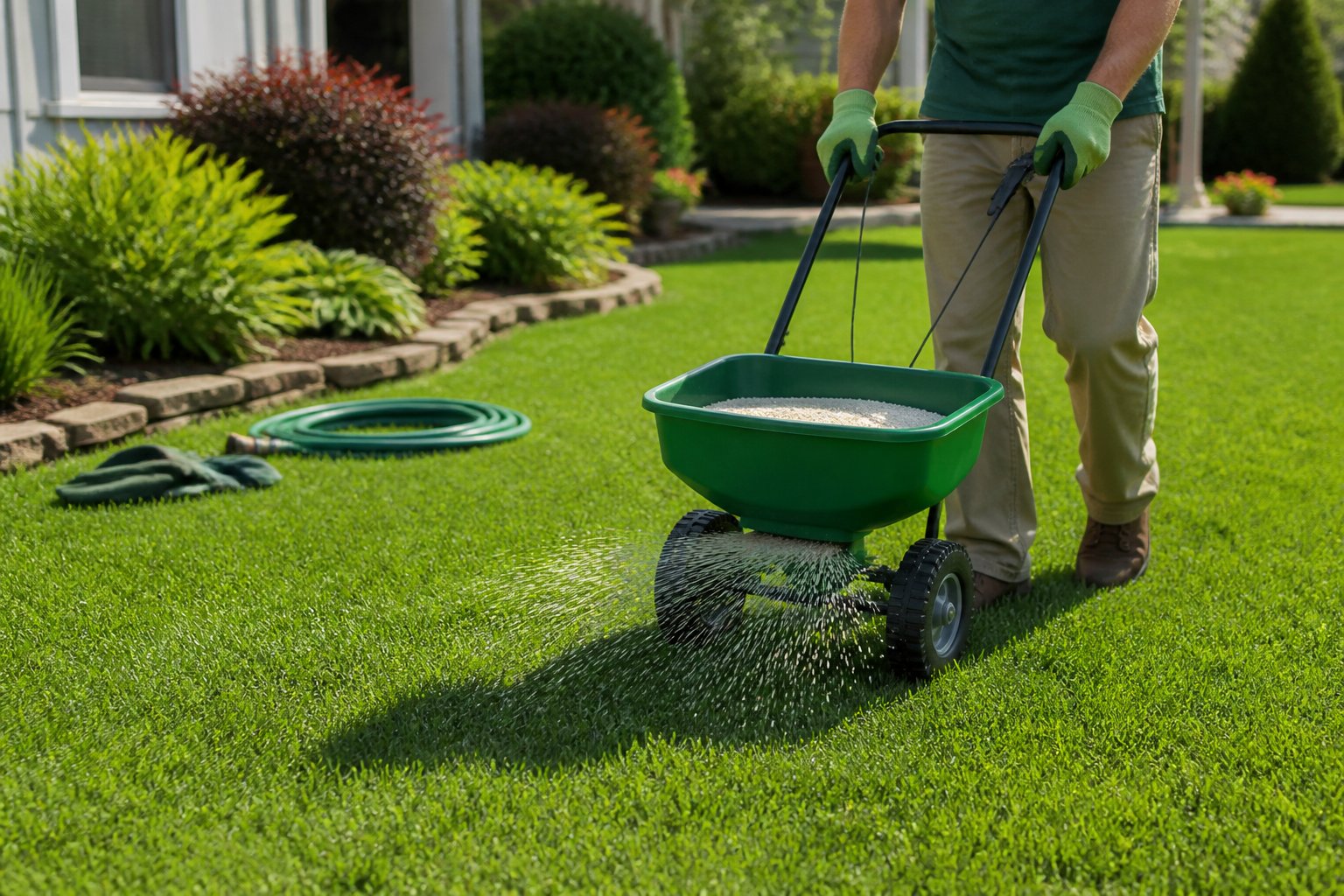
Zoysia's fertilizer schedule follows soil temperature and green-up, not a fixed date on the calendar. Feeding too early stresses grass that hasn't fully broken dormancy.
Feeding too late into fall leaves tender growth exposed to frost.
Wait for Full Green-Up and Warm Soil
Don't fertilize zoysia the moment it starts to green in spring. Wait until soil temperatures hold near 65°F and the lawn is fully green, not just showing patches of color.
Early feeding wastes nitrogen on a root system that isn't actively growing yet.
Follow a Spring-to-Summer Feeding Rhythm
Once the lawn is established for the season, plan 2 to 3 feedings spaced through late spring and summer. Each application should stay near 1 pound of actual nitrogen per 1,000 square feet, spaced roughly 6 to 8 weeks apart.
Stop Nitrogen Before Frost and Winter Dormancy
Cut off nitrogen applications 6 to 8 weeks before your area's average first frost date. Late-season nitrogen encourages tender growth that has poor cold hardiness.
That increases winter damage risk. A potassium-focused feeding, without added nitrogen, can support cold tolerance instead.
Adjust Dates for Southern and Transition-Zone Lawns
Deep South lawns may see 3 to 4 weeks longer growing season than transition-zone lawns further north. Homeowners in the transition zone should plan their last nitrogen feeding earlier and expect a shorter overall feeding window each year.
Apply Fertilizer Evenly and Prevent Damage
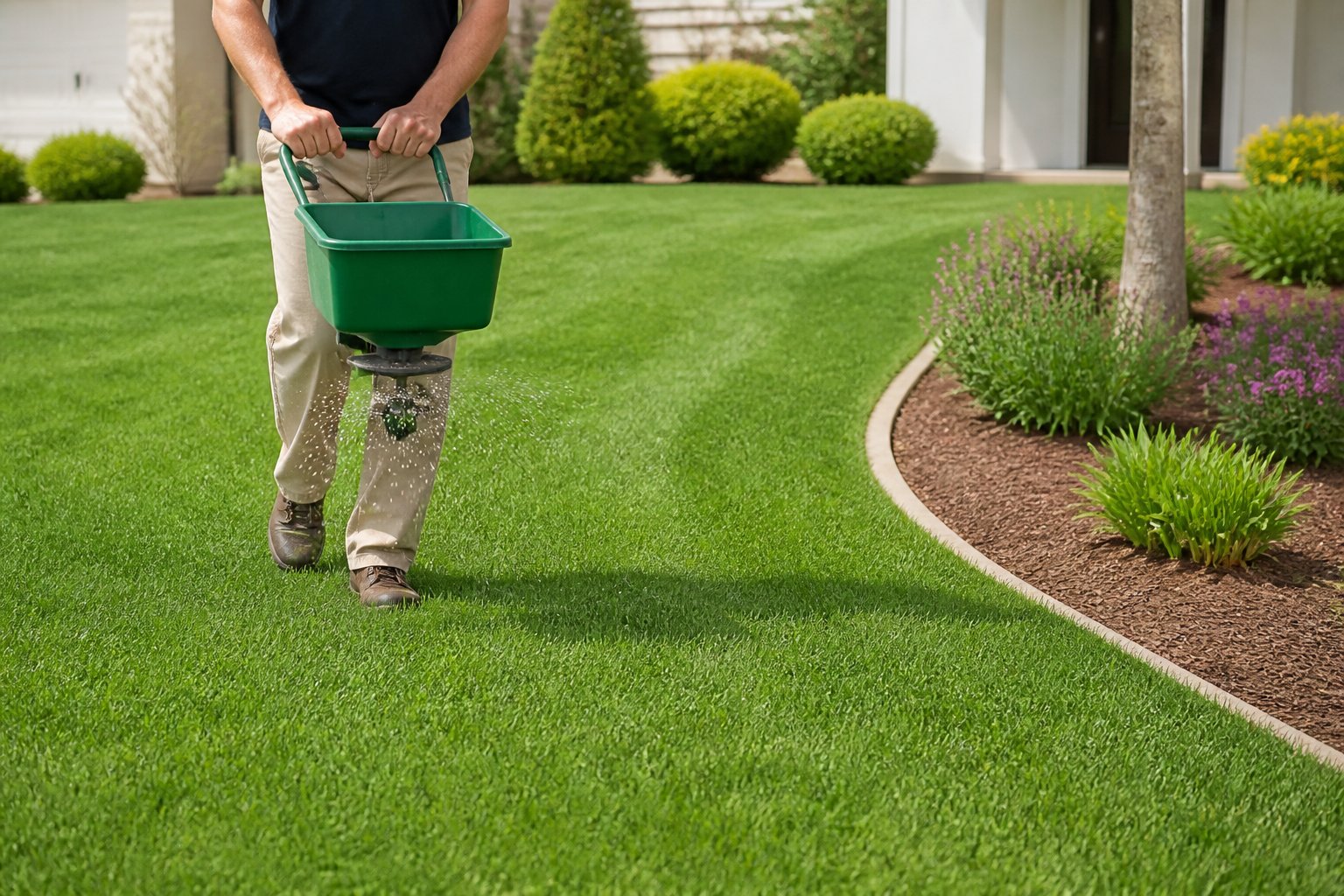
Even application matters as much as product choice. A well-chosen fertilizer applied unevenly can still leave streaks, burnt patches, or wasted product running into the storm drain.
Select a Spreader or Sprayer for the Lawn Size
A broadcast spreader covers large, open lawns efficiently. A drop spreader gives more control near beds, sidewalks, and small or irregular areas.
Liquid fertilizers often connect directly to a garden hose, which works well for smaller lots or targeted feeding.
Water In Granules and Follow Label Rates
Granular fertilizer needs water after application to move nutrients into the soil and reduce burn risk. Always follow the bag's stated rate per 1,000 square feet rather than estimating.
Overlap spreader passes slightly to avoid stripes of lighter or darker green.
Avoid Fertilizer Burn, Runoff, and Uneven Color
Fertilizer burn shows up as brown or yellow streaks where product sat too heavy or too dry. Skip fertilizing before heavy rain, since runoff wastes product and can affect nearby water.
Sweep any granules off driveways and walkways before they wash away.
Separate Weed Control From Routine Feeding
Combination "weed and feed" products with 2,4-D might seem handy, but honestly, they make you fertilize on the weed’s timeline, not the grass’s. If you add nitrogen when zoysia doesn’t need it—just to kill weeds—you’re probably doing more harm than good.
It’s almost always better to treat weeds and feed your lawn as two separate jobs. That way, you get more control and fewer headaches.
Adjust the Plan for Establishment and Problem Lawns
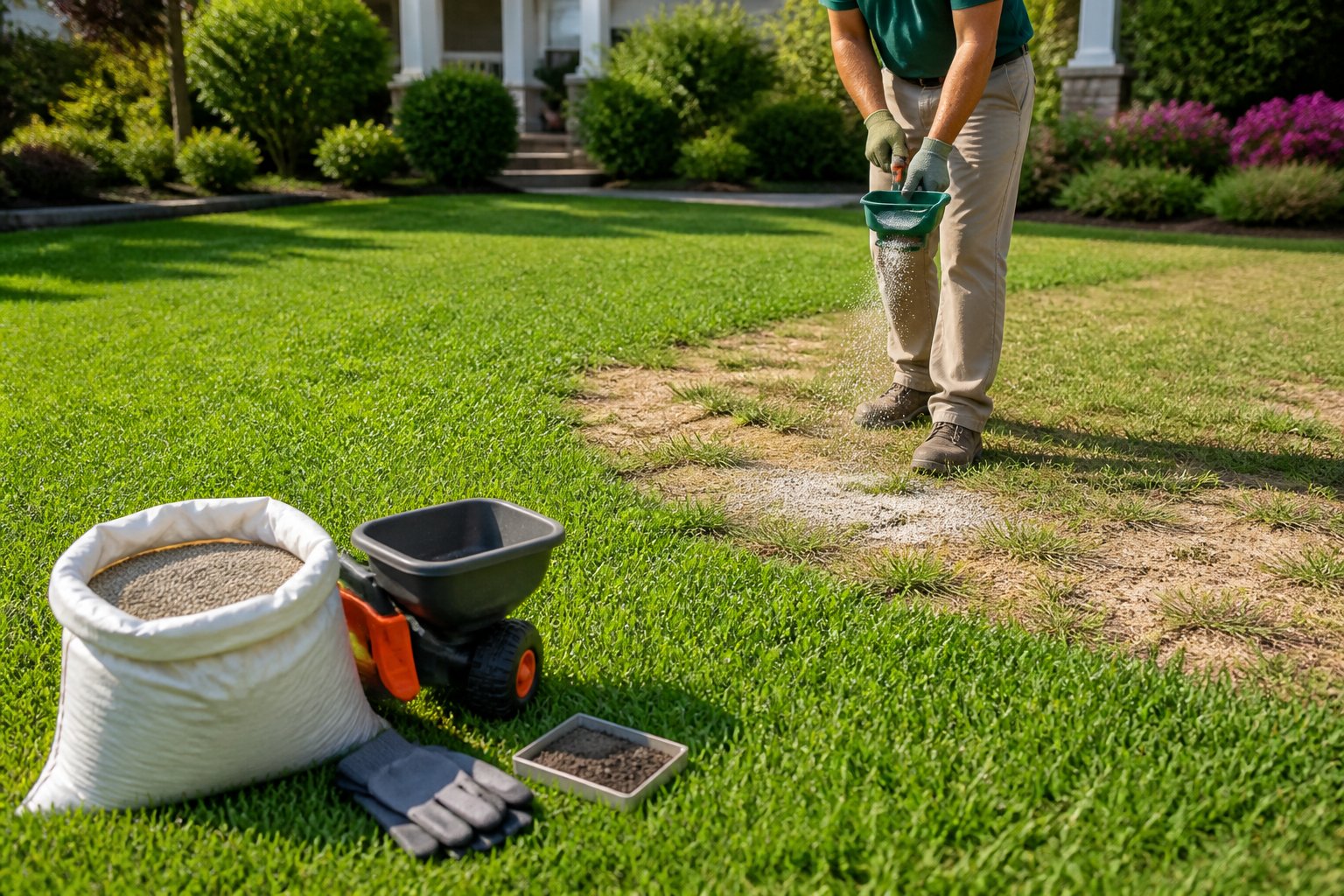
New zoysia and struggling zoysia need a different approach than a healthy, established lawn. If you don’t adjust, you’ll waste product and slow down recovery.
Feed New Sod and Plugged Areas Differently
New sod and plugs do best with a starter fertilizer that’s higher in phosphorus. That helps roots get established.
Wait until you can tug gently and feel resistance before switching to a regular feeding schedule. If you add too much nitrogen too soon, you’ll end up with weak top growth before the roots are ready for it.
Correct Soil pH and Deficiencies Before Adding More Fertilizer
Always start with a soil test before calling your lawn “hungry.” If your pH is outside the 6 to 6.5 range, the grass can’t use the nutrients in the soil, no matter how much you add.
Fixing pH or adding chelated iron often brings back green color faster than more nitrogen ever could.
Respond to Heat, Drought, Thatch, and Weak Recovery
Thatch buildup can block water and nutrients, so sometimes you need to dethatch before fertilizer does any good. During drought, hold off on nitrogen since it just pushes growth the lawn can’t support without enough water.
If your lawn’s slow to recover, a soil conditioner with humic acid can help rebuild organic matter over time. It’s not instant, but it’s worth a shot.
Frequently Asked Questions
What type of fertilizer is best for Zoysia grass?
Most zoysia lawns do well with a slow-release granular fertilizer with moderate nitrogen, like a 16-4-8 or something similar. Honestly, picking based on a recent soil test beats just grabbing the highest nitrogen bag.
When should I fertilize Zoysia grass during the year?
Wait until the lawn’s fully green and soil temps are around 65°F, usually late spring. Keep feeding through summer, spacing applications 6 to 8 weeks apart, and stop nitrogen 6 to 8 weeks before your first expected frost.
How often should Zoysia grass be fertilized?
Most established zoysia lawns only need 2 or 3 nitrogen applications a year. That’s about 2 to 4 pounds of actual nitrogen per 1,000 square feet annually—less than what most other warm-season grasses want.
Is 10-10-10 fertilizer good for Zoysia grass?
A 10-10-10 blend can work if your soil test says you need equal amounts of phosphorus and potassium with your nitrogen. But honestly, most lawns already have enough phosphorus, so a lower-phosphorus option usually fits better.
Can I use 15-0-15 fertilizer on Zoysia grass?
Yep, a 15-0-15 blend is a solid choice for zoysia, especially late in the season when potassium matters more than phosphorus. It’s a good pick if your soil already has enough phosphorus.
What fertilizer should I use for Zoysia grass in the fall?
As fall rolls in and frost starts to threaten, it’s time to ease up on nitrogen and give potassium the spotlight. Something like a 0-0-15 blend works well here.
Potassium helps toughen up your Zoysia for winter, so it won’t push out soft, new growth that just can’t handle the cold.
DISCLAIMER
This document is provided for general information purposes only and should not be relied upon as providing legal advice, technical, or specific operational guidance to the reader, whether as to the practices described in the document or the applicable legal requirements and regulations. lawnfly.com expressly disclaims any responsibility for liability arising from or related to the use or misuse of any information in this document.


