


Why Fall Is the Best Time to Overseed Your Lawn
Fall overseeding gives your lawn fresh grass plants that fill bare patches, improve lawn density, and help worn existing turf recover before winter. It works especially well for cool-season lawns because fall brings cooler air, warm soil, and less weed competition.
The benefits of overseeding your lawn in the fall include thicker turf, better coverage, and stronger root development before winter arrives. Good preparation and steady aftercare help you gain those benefits without wasting grass seed.

You can use fall overseeding to thin the whole lawn or target isolated bare spots. Start by checking your soil temperature, matching the new grass seed to your existing turf, and creating a plan for watering and mowing. LawnFly offers practical lawn-care resources and product guidance to help you compare seed, spreaders, and related tools for your yard.
Key Takeaways
- Fall conditions help cool-season seed germinate and build roots before winter.
- Matching seed to your existing turf and soil improves the chance of even growth.
- Good seed-to-soil contact and careful watering matter more than applying extra seed.
Why Autumn Helps Thin Turf Recover
Autumn helps thin turf recover because cool air, warm soil, and lower weed pressure support new growth while existing grass faces less summer stress. This combination helps create a lush lawn with better coverage before cold weather.
Summer heat, drought, disease, and foot traffic can leave open areas in a cool-season lawn. Fall overseeding adds new plants across thin turf, helping reduce bare soil and limiting room for weed growth.
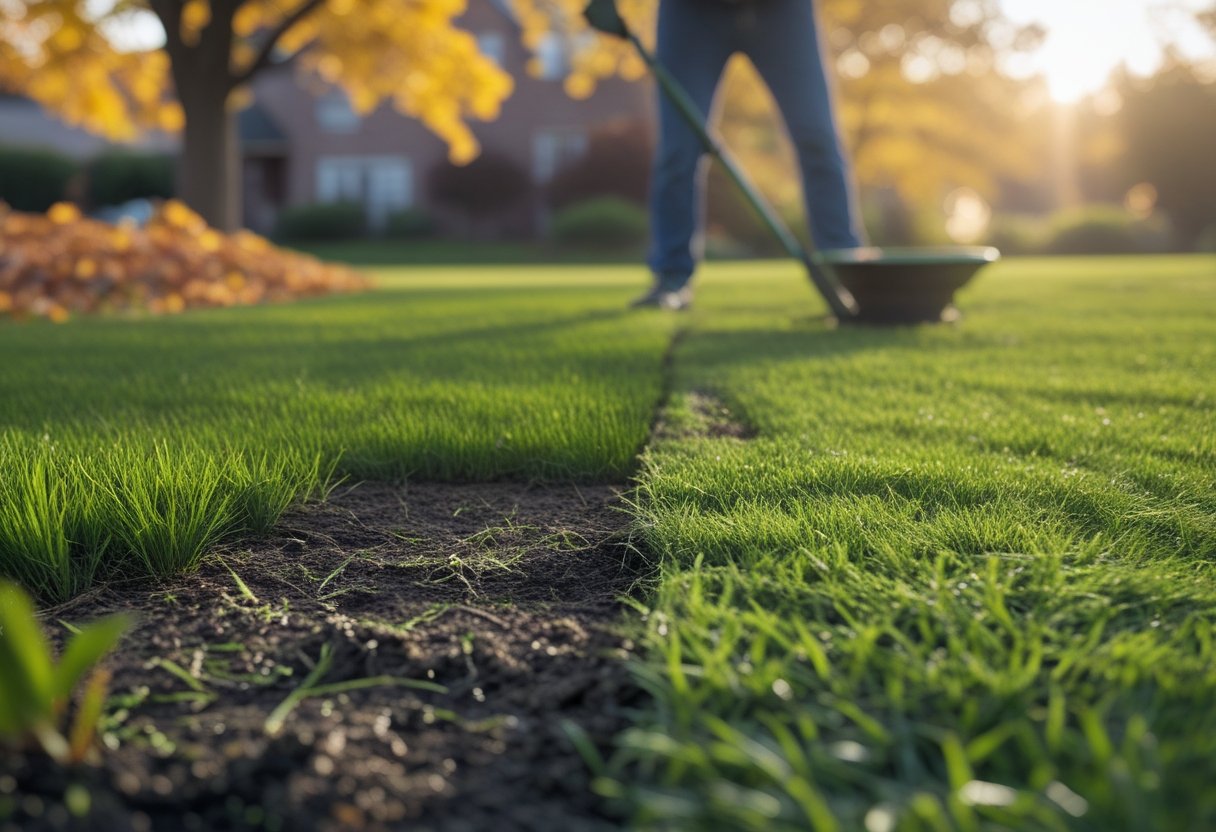
How New Seed Builds a Thicker, More Resilient Lawn
New grass plants fill gaps between established blades, increasing lawn density over time. A thicker stand shades the soil surface and reduces the space available for weed seeds.
Overseeding also introduces young plants after summer wear. With suitable seed, adequate moisture, and enough time for root development, the lawn enters winter with improved coverage and stronger recovery potential.
Weed Suppression
Dense turf suppresses weed growth by using available light, water, and nutrients. Fall also brings less crabgrass activity and reduced weed competition, giving new seedlings more access to soil moisture.
Overseeding will not remove established weeds or correct poor soil conditions. Address major weed problems and improve the growing site so new grass has room to establish.
Disease Resistance, and Better Recovery From Foot Traffic
A well-filled lawn distributes foot traffic across more grass plants, which reduces visible wear in busy areas. Greater density also limits exposed soil where stress and disease problems can spread more easily.
Choose a grass type suited to your yard’s moisture, shade, and traffic. Seed selection supports resilience, while mowing height, watering, and soil health determine how well that potential develops.
Why Fall Conditions Favor Root Development Before Winter
Fall soil stays warm enough for germination while cooler air reduces heat stress on seedlings. New grass can spend time developing roots before winter dormancy and the risk of winter kill.
Seed early enough for the seedlings to establish before your local first frost. Roots need contact with soil, steady moisture, and active growth conditions to develop before freezing weather arrives.
When Should You Overseed in Fall?
For cool-season lawns, overseed in early fall when soil temperatures support germination and seedlings have several weeks before the first frost. Soil conditions, local climate, and drainage should guide your timing.
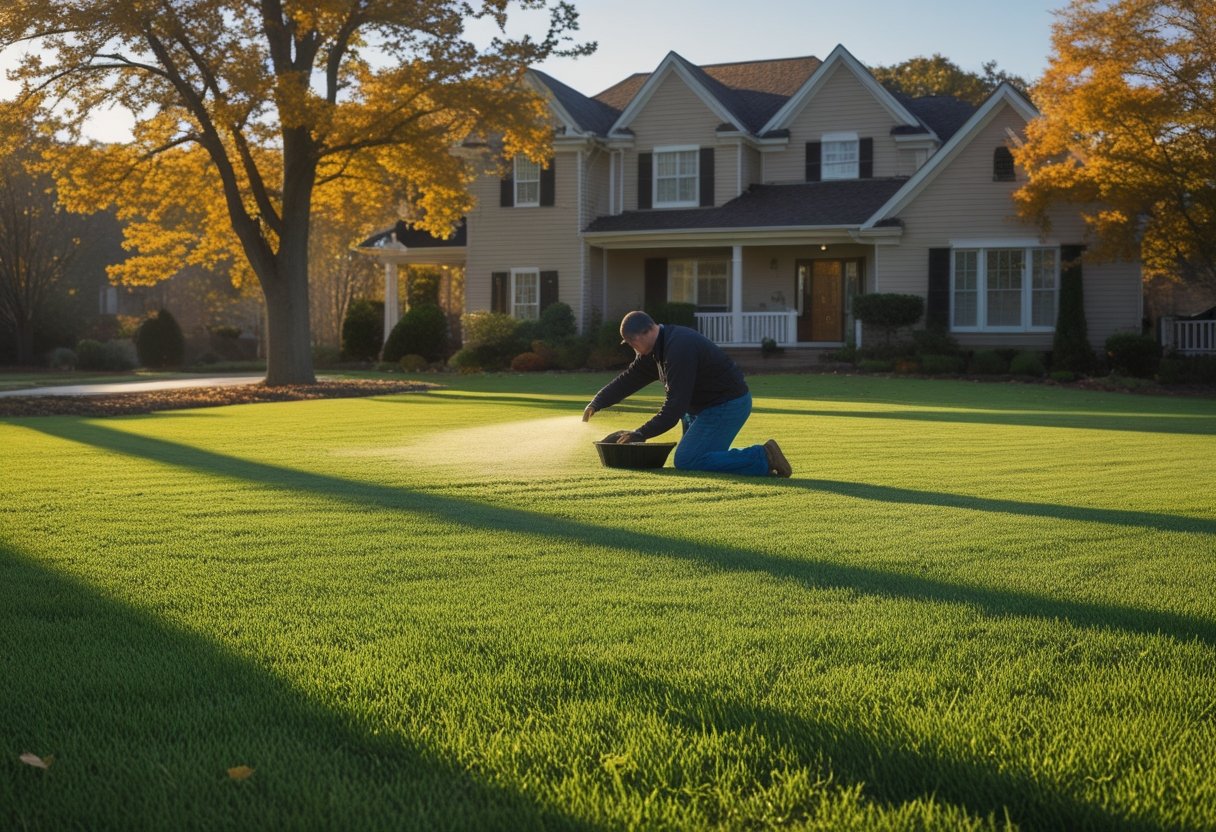
Use Soil Temperature and Air Temperature Instead of the Calendar
Use a soil thermometer to check the temperature a few inches below the surface. Cool-season grass seed performs well when soil temperature sits between 50 and 65 degrees Fahrenheit, while cooler air supports steady seedling growth.
Air temperature helps you judge stress and growth speed, while soil temperature gives you a closer look at germination conditions. Check the soil in several lawn areas because shaded and sunny spots can differ.
Plan Around Your Local Climate and First Frost Date
Cool-season lawns in much of the northern United States are commonly seeded from late August through early October. Your local climate can shift that window, so count backward from the expected first frost and allow time for germination and root development.
Seed when the soil remains warm and the grass is still actively growing. Later seeding leaves young plants with less time to establish before cold nights arrive.
When Fall Seeding Is Too Late or Conditions Are Too Wet
Seeding becomes a poor choice when soil temperatures stay too low for reliable germination or when freezing weather is close. Saturated soil also creates problems because traffic can cause compaction and seed can wash into low areas.
Poor drainage deserves attention before you spread seed. Correct standing water, improve runoff, and wait until the surface is workable enough to provide firm seed-to-soil contact.
How to Choose Grass Seed for Your Yard
Choose grass seed that matches your existing turf, soil type, sunlight, moisture, traffic, and local climate. Compatible cool-season grasses give overseeding a better chance of blending into the current lawn.

Match Seed Selection to Existing Turf and Growing Conditions
Identify the grass already growing in your yard before buying seed. A cool-season grass blend suits a cool-season lawn, while a major mismatch can create uneven color, texture, and growth habits.
Evaluate shade, soil condition, drainage, and foot traffic. A durable tall fescue blend may suit a high-use area, while fine fescue can fit a shaded site with lighter traffic. LawnFly’s regional grass-seed guide can help you compare choices by growing conditions.
Kentucky Bluegrass, Tall Fescue, and Perennial Ryegrass Compared
Kentucky bluegrass spreads through underground stems and can fill small gaps after establishment. It prefers sun and well-drained soil, with enough moisture to support growth.
Tall fescue develops a deep root system and handles heat, drought, and moderate shade well. Perennial ryegrass germinates quickly and produces a fine, attractive surface, though it benefits from suitable moisture and may need help in stressful sites. You can read more about its traits in LawnFly’s guide to perennial ryegrass.
What to Look for in a High-Quality Seed Blend
A high-quality grass seed blend lists the grass varieties, germination information, and coverage rate clearly. Look for varieties suited to your region, with disease resistance that fits known problems in your yard.
Avoid choosing by low price alone. Check the label for unwanted filler, compare pure live seed when listed, and follow the package seeding rate. A blend of compatible cool-season grasses can provide more reliable coverage across changing light and soil conditions.
How to Prepare and Seed the Lawn Correctly
Prepare the lawn by opening the soil surface, relieving compaction where needed, spreading the correct seeding rate, and pressing seed into the soil without burying it. These steps improve germination across both thin turf and bare patches.
Mow, Rake, and Dethatch to Expose the Soil Surface
Mow the lawn shorter than usual before overseeding, following the grass label and your mower’s safe cutting range. Bag the clippings so they do not cover the seed.
Rake away leaves, loose clippings, and debris, then loosen the surface lightly. Dethatch when a thick layer of dead material blocks the soil. Seed needs visible access to soil for dependable seed-to-soil contact.
When Core Aeration Is Worth Doing Before Seeding
Core aeration helps when compacted soil limits air, water, and root growth. A plug aerator removes small soil cores and creates openings where seed can reach the soil.
Test a questionable area by pushing a screwdriver into moist ground. If the tool meets strong resistance, aeration can improve the site. Skip unnecessary aeration when the soil is already loose, and avoid working wet soil because it smears and compacts.
Apply the Correct Seeding Rate With a Broadcast or Drop Spreader
Follow the grass seed label for the overseeding rate because the correct amount varies by grass type and brand. Calibrate your broadcast spreader or drop spreader, then apply half the seed in one direction and the rest across the first pass.
A drop spreader gives precise coverage near beds and paths. A broadcast spreader covers open lawn faster, though overlapping passes help prevent stripes. LawnFly’s guide on how to use a fertilizer and seed spreader provides practical handling tips.
Improve Seed-to-Soil Contact Without Burying the Seed
Press seed into the surface with a light pass from a roller or by gently raking. Grass seed needs contact with moist soil, while deep burial can prevent emerging shoots from reaching light.
Add a thin layer of compost when soil health or organic matter needs improvement. Keep the layer light enough that existing grass remains visible, and avoid covering seed with heavy soil or mulch.
Post-Overseeding Care That Protects New Seedlings
Post-overseeding care protects germinating seed through light, frequent moisture, gentle feeding, limited traffic, and careful mowing. New grass needs stable conditions while its roots develop.
Create a Watering Schedule That Avoids Overwatering
Water immediately after seeding, then keep the upper soil surface evenly moist with light applications. Water in the morning when possible, and adjust the schedule after rain.
Puddles, runoff, and spongy soil signal overwatering. Improve drainage and reduce irrigation until the surface firms up. As seedlings grow roots, water less often and more deeply, following local weather and soil conditions.
Starter Fertilizer, Phosphorus, and Slow-Release Feeding
Starter fertilizer supports early root growth, yet your soil test should guide nutrient choices. Include phosphorus when soil testing shows a need, and use potassium to support stress tolerance.
A slow-release fertilizer supplies nutrients over time and reduces the chance of a sudden flush of weak growth. Avoid weed-and-feed products during germination because some herbicides can injure young grass. LawnFly’s fall fertilizer guide offers additional seasonal feeding guidance.
When to Resume Mowing and Normal Lawn Use
Keep people and pets off newly seeded areas as much as practical while seedlings establish. Resume mowing when new grass reaches the height of the existing turf and the soil surface stays firm under light use.
Use a sharp mower blade and remove only a safe portion of the blade height. Wet soil and heavy traffic can pull up shallow-rooted seedlings, especially around turns and narrow paths.
How to Limit Weed Competition, Grubs, and Other Setbacks
Control existing weeds before seeding when the product label allows enough time before planting. Avoid applying pre-emergent products that block grass seed germination, and manage weed competition with mowing and healthy turf density.
Inspect for grubs and other pests if sections wilt, lift easily, or show unexplained damage. A soil test can reveal pH or nutrient issues that limit growth. Correct the cause before adding more seed.
A Denser Lawn Starts With Smart Fall Preparation
Fall overseeding improves a thin cool-season lawn when you connect the project to soil health, the right seed, proper timing, and consistent lawn maintenance. Seed fills gaps, while preparation determines whether those plants establish.
Check soil temperature, drainage, compaction, and existing grass before you begin. Mow and rake the surface, aerate compacted areas, use the labeled seeding rate, and protect seedlings with careful watering and limited traffic.
Frequently Asked Questions
Is overseeding in the fall a good idea?
Fall overseeding is a good choice for thin or summer-stressed cool-season lawns because warm soil and cool air support germination. New grass also has time to develop roots before winter and compete with fewer active weeds.
Can I just throw grass seed down in the fall?
You can spread seed, yet preparation improves the result. Mowing, raking, correcting thatch, relieving compaction, and creating firm seed-to-soil contact help more seed reach suitable soil.
How long does fall grass seed take to germinate?
Fall grass seed can germinate in several days to a few weeks, depending on grass variety, soil temperature, moisture, and light. Kentucky bluegrass may take longer than perennial ryegrass, so follow the seed label and keep the surface evenly moist.
Can you overseed without aerating the lawn?
You can overseed without aerating when the soil is loose and seed can contact the surface. Aeration helps with compacted soil, especially when water struggles to enter, or a screwdriver meets strong resistance.
Can you put too much seed down when overseeding a lawn?
Too much seed creates competition for water, light, and nutrients, which can produce weak, crowded seedlings. Follow the package seeding rate and improve seed-to-soil contact instead of adding extra seed.
When should I mow after fall overseeding?
Mow after new grass reaches the height of the established lawn and the soil is firm enough to support the mower. Keep blades sharp, avoid cutting wet ground, and limit heavy traffic until seedlings are rooted.
DISCLAIMER
This document is provided for general information purposes only and should not be relied upon as providing legal advice, technical, or specific operational guidance to the reader, whether as to the practices described in the document or the applicable legal requirements and regulations. LawnFly.com expressly disclaims any responsibility for liability arising from or related to the use or misuse of any information in this document.


