

What to Look for in a Good Organic Lawn Fertilizer
Choosing the right fertilizer can feel overwhelming. Every bag out there promises the greenest lawn on the block.
If you want real results without loading your yard with synthetic chemicals, organic lawn fertilizers offer a practical middle ground. They feed your grass, build soil health over time, and let kids and pets back on the lawn right away.
The biggest advantage of organic fertilizers over synthetic ones is their slow-release nitrogen. Organic options feed your lawn steadily over weeks instead of causing growth spikes and then leaving your soil depleted.
They also encourage beneficial microbial activity in the soil, which pays off season after season. The tradeoff? Organic products usually cost more per square foot and take longer to show results, so they're not ideal if you need a quick fix before a backyard party.
When you compare products, pay attention to the N-P-K ratio (nitrogen, phosphorus, potassium). Check the coverage area per bag, OMRI (Organic Materials Review Institute) certification, and re-entry safety for pets and children.
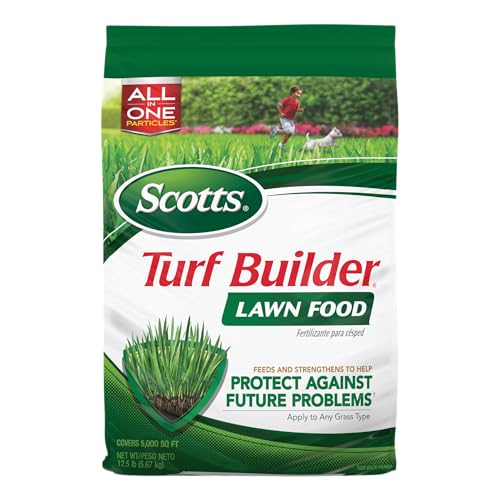
One product in this roundup, Scotts Green Max Lawn Food, isn't certified organic. It earns a spot here because it includes iron for rapid greening and is a go-to for homeowners willing to use a synthetic product for speed.
We include it transparently so you can weigh the tradeoff yourself.
Best for all-season organic feeding: Espoma EOLF28 Organic All Season Lawn Food
Best for sustained summer feeding: Jonathan Green Organic Lawn Food 8-0-1
Best for phosphorus-restricted areas: Purely Organic Products Lawn Food 10-0-2
Best for fast synthetic green-up: Scotts Green Max Lawn Food
Best OMRI-certified from a major brand: Scotts Natural Lawn Food
Best for soil-building with complete nutrition: Down To Earth Bio-Turf 8-3-5
Best for reviving a heat-stressed summer lawn: Espoma Organic Lawn Food Summer Revitalizer
Espoma EOLF28 Organic All Season Lawn Food

This one’s a reliable, OMRI-approved workhorse for anyone who wants a straightforward organic fertilizer. You can use it across multiple seasons without second-guessing the chemistry.
Pros
- Approved for organic gardening with no sludges or toxic ingredients
- Slow-release nitrogen prevents burning and leaching
- Works on a wide range of grass types, including St. Augustine and zoysia
Cons
- 9-0-0 formula provides nitrogen only; no phosphorus or potassium support
- Slower results than synthetic or iron-boosted fertilizers
- Coverage is limited to 5,000 sq. ft. per 28-lb. bag
Espoma's Bio-tone formula really sets it apart from generic organic fertilizers. Bio-tone, a proprietary blend of beneficial microbes, helps your soil process nutrients more efficiently so the nitrogen feeds your grass steadily instead of all at once.
People who use it two to three times a year, especially in warm climates like the Gulf Coast, often report deep green color without the flush-and-crash cycle you get from fast-release synthetics.
The 9-0-0 N-P-K ratio focuses on nitrogen, which makes sense for established lawns with decent soil. If your lawn is new or your soil tests show potassium deficiency, you might want to supplement.
For most homeowners just looking to keep a healthy, mature lawn green through the season, this product delivers.
Jonathan Green Organic Lawn Food 8-0-1

This is a strong organic option for anyone who wants a longer feeding window through the summer months without resorting to synthetic fertilizers.
Pros
- 8 to 10 weeks of gradual nutrient release suits a busy application schedule
- Contains iron for deeper greening without synthetic additives
- Safe for kids and pets immediately after application
Cons
- Fewer verified reviews than comparable products in this category
- Coverage rate requires careful measurement to avoid under-application
- Not explicitly OMRI listed on current packaging
The 10-0-1 N-P-K formula (the actual analysis, despite the "8-0-1" name) emphasizes water-insoluble nitrogen. Your lawn gets a slow drip of nutrition over weeks, not just a single big meal.
This is especially useful during summer when heavy watering or rain can flush fast-release nitrogen out of the soil before your grass can use it.
Reviewers in Southern states noticed darker green color within about ten days, even compared to neighbors using professional spray services. The homogeneous granules spread evenly through a standard broadcast spreader, which helps avoid streaky application patterns.
Purely Organic Products Lawn Food 10-0-2

This pick works best for homeowners in towns that restrict phosphorus runoff. Its zero-phosphate formula is made entirely from plant-based ingredients.
Pros
- Plant-based formula using distillers grains and soy; no manure or biosolids
- Zero phosphorus meets local ordinance restrictions in many towns
- No re-entry waiting period for children or pets
Cons
- 15-lb. bag covers only 3,000 sq. ft., making it pricier per square foot for larger yards
- Slower visible results compared to iron-enhanced or synthetic products
- Smaller brand with fewer long-term user reviews than Espoma or Scotts
The 10-0-2 ratio gives you solid nitrogen with a modest potassium boost. That helps grass tolerate drought and temperature swings.
The plant-based sourcing (distillers grains and soy) means there's no detectable odor compared to manure-based organics, which is a relief if you have close neighbors or a small yard.
Several buyers reported yellow-to-green turnarounds within a week, which is actually faster than expected for a fully organic product. The 30-day satisfaction guarantee gives you a low-risk entry point if you're new to this brand.
Scotts Green Max Lawn Food

This is the one non-organic pick in the roundup. It's here for homeowners who need rapid visible greening and are willing to use a synthetic product to get it.
Pros
- Visible greening in as few as three days, faster than any organic option here
- 5% iron content enhances color without causing staining on concrete
- One of the most widely reviewed lawn fertilizers available, with a strong track record
Cons
- Not organic; contains synthetic nitrogen, which is a dealbreaker for eco-conscious buyers
- Not available in Florida (check local restrictions before ordering)
- Synthetic nitrogen can leach from soil more readily than slow-release organic forms
This product doesn't belong in a purely organic lawn-care plan. It makes the list because a lot of homeowners searching for organic options are actually just looking for results-focused products that are safer than traditional fertilizers, and Scotts Green Max delivers fast, visible results with less environmental risk than those old high-nitrogen synthetics.
If you've got a party in two weeks and your lawn looks patchy and pale, this is the practical choice. For anyone building a long-term soil health program, one of the certified organic options in this list will serve you better over multiple seasons.
Scotts Natural Lawn Food

This is a truly natural, OMRI-listed fertilizer from a big-name brand. It's probably the easiest organic option to grab from your local hardware store.
Pros
- OMRI listed, so it meets verified standards for organic production
- 11-2-2 formula gives you nitrogen, phosphorus, and potassium for balanced feeding
- You can walk on the lawn right after applying, and it works in any season
Cons
- The bag is heavy (29.1 lbs.) and only covers 4,000 sq. ft.—not the best coverage out there
- You'll wait one to three weeks to see results
- Some folks noticed a bit of an odor before watering it in
The 11-2-2 N-P-K ratio makes this one of the more complete organic options, not just a nitrogen boost. That can matter if your lawn hasn't been tested in a while or you notice patchy, thin spots where phosphorus and potassium are running low.
People with St. Augustine grass saw strong results—thicker grass, fewer weeds. The OMRI certification also adds some real credibility, especially compared to other "natural" products that throw the word around loosely.
Down To Earth Bio-Turf 8-3-5
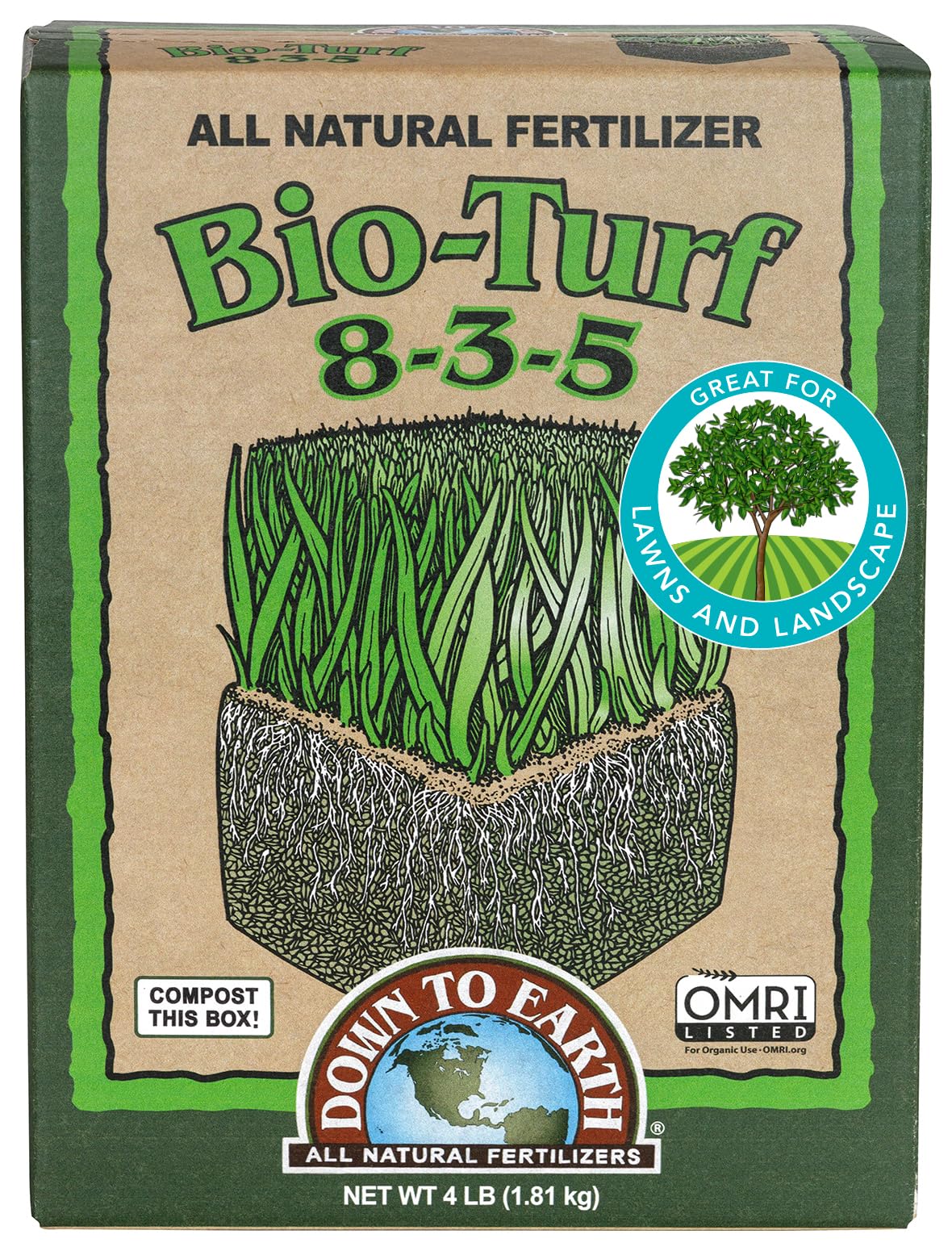
This OMRI-listed, animal-meal-based fertilizer is a good fit for homeowners who want a full N-P-K profile and care about building deep roots, not just surface greening.
Pros
- OMRI listed for certified organic use
- Balanced 8-3-5 formula helps with root growth, stress resistance, and color
- Works with standard broadcast spreaders
Cons
- Only comes in a 4-lb. box, so it's not practical for big lawns
- Made from feather meal, blood meal, and bone meal—can attract dogs or wildlife
- Not many reviews compared to others on this list
The ingredients read like a premium soil amendment: hydrolyzed feather meal, blood meal, meat meal, bone meal, and langbeinite. Langbeinite, a natural mineral, brings potassium, magnesium, and sulfur all at once. That's why this product has a strong potassium number and helps with stress during heat or drought.
The 4-lb. box is a real limitation. It's more like a garden bed supplement than a full-lawn treatment. For small urban lawns or spot repairs, it's fine. But for anything over 2,000 sq. ft., you'll need several boxes, and that can get expensive quickly.
Espoma Organic Lawn Food Summer Revitalizer

This is a summer-specific organic formula made to tackle yellowing and stress from heat on both cool and warm-season grasses.
Pros
- Extra iron helps with yellowing from summer heat and pH swings
- Won't stain your concrete or driveway
- 30-lb. bag covers up to 5,000 sq. ft. at a decent price per use
Cons
- Lower average rating than most Espoma products, with fewer reviews
- 8-0-0 formula gives only nitrogen and iron—no phosphorus or potassium
- Some users mentioned a strong smell until it's watered in
Iron is the big selling point here. Iron deficiency (chlorosis) is a common cause of pale, yellow lawns in midsummer, even if there's enough nitrogen. By combining slow-release organic nitrogen with iron, this formula targets both feeding and color in one go, without staining like some iron supplements.
People who use it as part of a three-times-a-year program (spring, summer, fall) are usually happy with the results. A few pro gardeners even call it their go-to for places where foot traffic and safety matter most. The lower ratings seem to come from mismatched expectations, not performance.
Buying Guide
Picking an organic lawn fertilizer isn't just about chasing the highest nitrogen number. When you're staring at a shelf full of options, here's what really matters.
Understand the N-P-K Ratio
Every fertilizer bag has three numbers: nitrogen (N), phosphorus (P), and potassium (K). For most lawns, nitrogen is the big deal—it drives green color and leafy growth. Phosphorus helps roots, so it's more critical for new seedings or soil that's been depleted. Potassium helps grass handle heat, drought, and disease.
Many cities now restrict phosphorus in lawn fertilizers to prevent runoff, so you might see a zero in the middle (like 10-0-2). Sometimes that's required, not just a preference.
| Lawn Situation | Recommended N-P-K Focus |
|---|---|
| Established, healthy lawn | High N, low or zero P and K |
| New seeding or sod | Balanced N-P-K |
| Summer stress/yellowing | Nitrogen plus iron |
| Poor or sandy soil | Balanced N-P-K with potassium |
Organic Certifications: What They Mean
OMRI listed means the Organic Materials Review Institute checked and approved the product for USDA National Organic Program standards. That's the certification you want. "Natural" and "organic" on a label don't mean much if there's no OMRI stamp—those are just marketing words.
Slow-Release vs. Fast-Release Nitrogen
Organic fertilizers almost always give you slow-release nitrogen because soil microbes need to break down the organic matter first. That means:
- No burn risk, even if you overdo it a bit
- Nutrients feed your lawn over weeks, not days
- Less nitrogen washes away when it rains
- You'll wait longer to see results—typically one to three weeks
Fast-release synthetic nitrogen works quickly, but it doesn't last, can burn grass in hot weather, and often washes away before your grass can use it.
Coverage Area and Cost Per Square Foot
Bigger bags aren't always the better deal. Do the math—figure out the cost per 1,000 sq. ft. so you can compare apples to apples. A 28-lb. bag that covers 5,000 sq. ft. is a very different value than a 15-lb. bag for 3,000 sq. ft., even if the sticker prices look close.
Re-Entry Safety for Pets and Children
Most all-organic products made from plant or animal meals are safe to walk on right after spreading. If the product has synthetic ingredients, you might need to wait. Always read the label. And heads up—animal-meal-based organics (like blood meal, bone meal) can attract dogs, so you might see some digging or chewing.
Application Method
Most granular fertilizers go on with a regular broadcast or drop spreader. Homogeneous granules (where every pellet is the same) spread more evenly than blends that can separate in the hopper. Even coverage matters—a patchy application leaves stripes on your lawn, and nobody wants that.
Frequently Asked Questions
What is the best natural fertilizer to use for a healthy, green lawn?
For most established lawns, I'd start with a slow-release, nitrogen-rich organic fertilizer that's OMRI certified. Plant meal–based products or those with Espoma's Bio-tone formula usually give you steady greening without burning or harming soil microbes. If your lawn looks pale or yellowish in summer, try a formula with iron added to the nitrogen base.
How often should I apply an organic fertilizer to my lawn throughout the year?
Most organic fertilizers work for two to four applications per year—think early spring, late spring, midsummer, and early fall. Since organic nitrogen releases slowly, you don't get that sudden growth spurt like with synthetics, but your turf stays healthier all season. Always check the bag for rates, and don't go overboard.
Which organic lawn fertilizers work best for improving soil health and microbial activity?
Fertilizers with microbial inoculants (like Espoma's Bio-tone) or those made from a mix of animal meals (feather, blood, bone) do the most for long-term soil health. The organic matter feeds your soil's microbes, which helps with nutrient uptake, water retention, and overall turf resilience.
Is Milorganite safe and effective for lawns, and how should it be applied?
Milorganite is a popular biosolid-based fertilizer that's generally safe if you follow the directions. It's made from treated municipal wastewater sludge, not plant or animal meals. It's not OMRI listed, so it's not technically organic. Use a broadcast spreader, water it in after applying, and let it dry before letting pets back on the grass.
Can I make a homemade natural grass fertilizer, and what ingredients work best?
Compost tea, diluted compost, and liquid kelp are the most common DIY organic lawn treatments. They deliver gentle, steady nutrients and boost soil biology without burning your lawn. Honestly, they're best as a supplement to a bagged organic fertilizer, not a full replacement—it's tough to control the nutrient levels consistently across a whole yard.
Where can I buy a good organic lawn fertilizer locally or at major retailers like Home Depot?
Scotts Natural Lawn Food and Espoma products show up at Home Depot, Lowe's, and most regional garden centers. If you're looking for Purely Organic or Down To Earth, you'll probably have better luck at smaller nurseries or just ordering online.
Online shopping usually means a bigger selection and sometimes better prices, especially for brands you don't see everywhere. Most of these fertilizers ship easily since they're dry and granular—no hazmat headaches.
DISCLAIMER
This document is provided for general information purposes only and should not be relied upon as providing legal advice, technical, or specific operational guidance to the reader, whether as to the practices described in the document or the applicable legal requirements and regulations. lawnfly.com expressly disclaims any responsibility for liability arising from or related to the use or misuse of any information in this document.


