Top 10 Lawn Care Tips for Homeowners: Expert Guide to a Lush Lawn
A healthy lawn takes more than just watering and mowing every so often. Lots of homeowners fight brown patches, weeds, and thin grass because they don’t really have a plan.
The secret to a vibrant lawn? You’ve got to know your grass type, stick to a regular care schedule, and use the right techniques at the right times of year.
Getting good results means paying attention to a few key steps. Start with soil testing to figure out what your grass actually needs.
Set your mower to the right height—too short and you’ll stress the grass. Water deeply, but not every day.
Key Takeaways
- Test your soil and know your grass type so you can make smart decisions about fertilizing and care
- Water deeply but less often, and do it early in the morning to help roots grow and keep disease away
- Set your mower to the right height for your grass, and keep your equipment in shape all year
Know Your Lawn: Assessing Soil and Grass Type
If you want a healthy lawn, start by understanding your soil and picking the right grass for your area. Soil testing tells you your pH and which nutrients are missing.
Choose a grass that matches your climate for a yard that actually lasts. It’s honestly a game-changer.
Conducting Soil Tests and Adjusting pH
Soil tests give you the real story behind your lawn. Most grass likes a pH between 6.0 and 7.0.
Test your soil every couple of years with an at-home kit. These kits show pH and nutrients like nitrogen, phosphorus, and potassium.
Watch for these signs your soil needs help:
- Yellow or thin patches
- Poor drainage
- Moss taking over
- Weeds crowding out grass
If your pH drops below 6.0, your grass can’t soak up nutrients. Add lime to raise the pH—best done in fall or early spring.
Lime application rates:
- Sandy soil: 25-50 lbs per 1,000 sq ft
- Clay soil: 50-100 lbs per 1,000 sq ft
If your pH is over 7.5, you’ll want to add sulfur. Use 5-10 pounds for every 1,000 square feet.
Choosing the Right Grass Species for Your Climate
Your local climate really decides which grass will thrive. Cool-season grasses do best up north, while warm-season types love the southern heat.
Cool-season grasses grow when it’s 60°F to 75°F, mostly in spring and fall.
Some good cool-season choices:
- Kentucky Bluegrass
- Perennial Ryegrass
- Fine Fescue
Warm-season grasses like it hot, between 80°F and 95°F. They grow in summer and go dormant in winter.
Popular warm-season options:
- Bermudagrass
- Zoysiagrass
- Buffalograss
Check your USDA Hardiness Zone. Zones 3-6 are best for cool-season grasses, while zones 7-10 favor warm-season types.
Think about your area’s rainfall and how hot your summers get before picking a grass.
Understanding Tall Fescue and St. Augustine Grass
Tall fescue is a solid pick for transition zones where other grasses struggle. It’s a cool-season grass but stands up to heat and drought better than most.
Tall fescue perks:
- Roots reach 2-3 feet deep
- Handles foot traffic well
- Needs less water than other cool-season types
- Grows in all sorts of soils
Tall fescue does best in zones 5-9. It stays green longer in hot summers than most cool-season grasses.
St. Augustine grass loves warm, humid places—think the Gulf Coast. It forms thick, carpet-like turf.
St. Augustine highlights:
- Wide, flat blades
- Great shade tolerance
- Spreads quickly
- Handles salty air near the coast
Zones 8-10 are best for St. Augustine. It needs more water than other warm-season grasses, but it covers shaded spots where Bermudagrass won’t grow.
Tall fescue and St. Augustine need different care based on their growth habits and where you live. Don’t treat them the same or you’ll get mixed results.
Effective Watering Practices
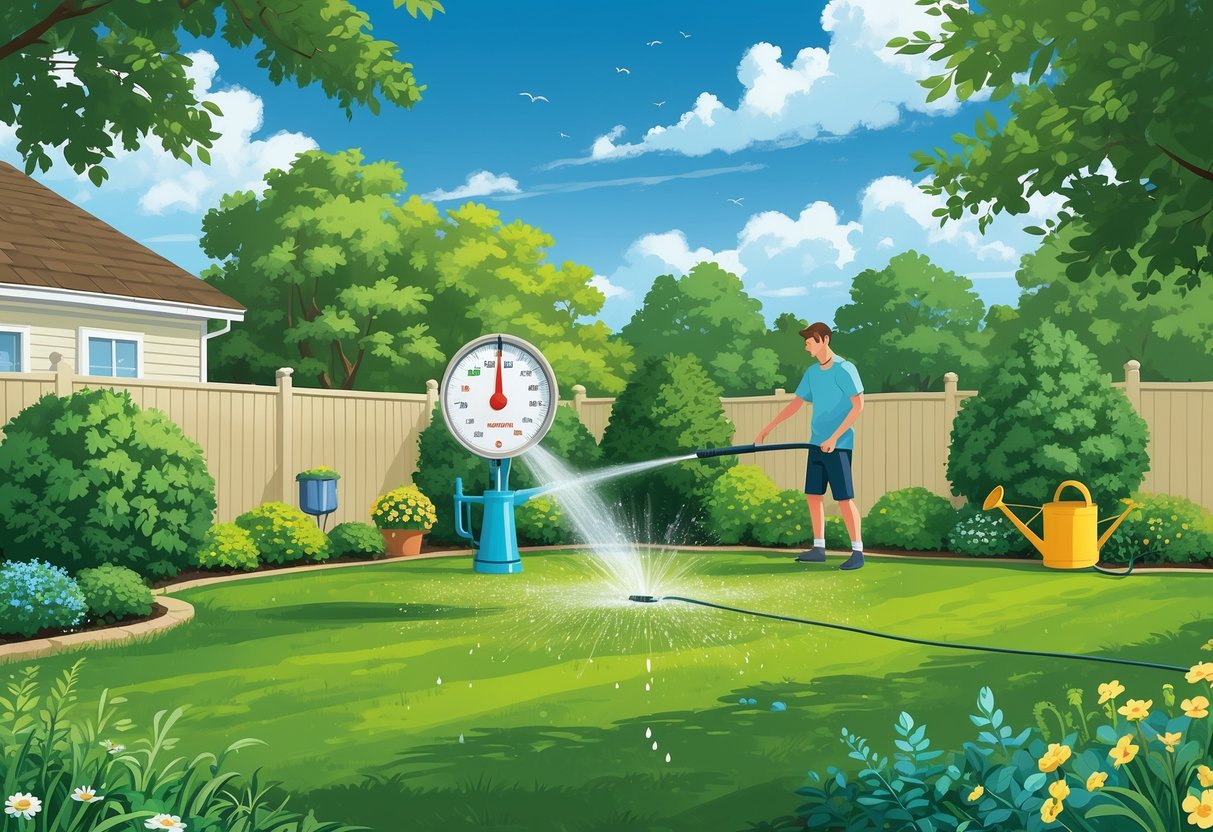
Watering smart saves water and actually makes your grass tougher. How and when you water matters way more than how often you do it.
How to Water Deeply and Infrequently
Deep watering means healthier, drought-resistant grass. Aim to get water 3 to 4 inches down, not just on the surface.
Here’s a quick way to check your watering depth:
- Water for 30 minutes
- Shut off the sprinkler
- Push a shovel in and tilt it forward
- See how deep the soil is wet
- Keep watering and checking every 30 minutes until you hit 3-4 inches
Most lawns only need water once or twice a week. This routine encourages roots to grow deeper and makes your grass stronger.
Don’t get stuck on a schedule. Weather, soil, and grass type all change how much water you need. Hot, windy days suck up more water than cool, calm ones.
If you water every day, roots stay shallow and your grass gets weak. That’s not what you want going into a dry spell.
Signs of Overwatering and Underwatering
Too much water? Look for:
- Squishy or soggy grass
- Yellow or pale green color
- Fungus or weird spots
- Shallow roots
- Puddles on the surface
Not enough water? Watch for:
- Grass that stays flat after you step on it
- Blue-gray or dull green blades
- Dry, crispy feel
- Brown patches that spread
- Grass pulls up easily
The easiest way to check? Stick a screwdriver or probe in the ground. If it’s dry 2-3 inches down, it’s time to water.
Climate always affects how much water your lawn needs. Hot summers mean more frequent watering, but don’t forget the grass in fall—keep watering until the ground freezes.
Best Times of Day for Watering
Early morning, between 6 and 10 AM, is the sweet spot. Cooler temps mean less evaporation, so more water reaches the roots.
Morning watering lets grass dry out during the day, which helps prevent disease. Leaving grass wet overnight is just asking for fungus.
Skip these times:
- Midday (10 AM - 4 PM): The sun zaps up to half your water
- Late evening: Grass stays wet too long, disease risk goes up
- Over 95°F: Most of the water evaporates before it helps the roots
Windy days? Not great for watering—wind blows water off target and speeds up evaporation.
Set your sprinkler to run in the early morning when water pressure is high and temps are low. You’ll save water and cash on your bill.
Mowing Techniques for Healthier Lawns

Mowing isn’t just about keeping things tidy. Blade height, cutting patterns, and timing really shape how your lawn looks and how well it grows.
These details work together to build stronger roots and tougher grass. Don’t overlook them.
Setting the Correct Mower Height
Every grass type has a sweet spot for cutting height. Kentucky bluegrass likes 2.5 to 3.5 inches, while Bermuda grass looks best at 0.5 to 1.5 inches.
Stick to the one-third rule: never cut off more than a third of the blade at a time. That keeps grass from getting stressed and helps it make food through photosynthesis.
Good height ranges:
- Kentucky Bluegrass: 2.5-3.5 in
- Tall Fescue: 3.0-4.0 in
- Bermuda Grass: 0.5-1.5 in
- Zoysia Grass: 1.0-2.0 in
Cutting too short weakens roots and opens up bare spots for weeds. Taller grass also shades the soil, which keeps it moist and stops weed seeds from sprouting.
Mowing Patterns and Frequency
Sharp blades make clean cuts that heal fast. Dull blades just rip the grass, leaving brown tips that invite disease.
Sharpen your mower blades every 20-25 hours of use, or at least twice a season. It’s worth it.
Change up your mowing direction each time. This stops the grass from leaning and keeps the soil from getting packed down by your mower wheels.
Try this pattern rotation:
- Week 1: North to south
- Week 2: East to west
- Week 3: Diagonal
- Week 4: Opposite diagonal
Most lawns need mowing once a week during the growing season. But honestly, it depends on your grass, weather, and how much you fertilize. Focus on keeping a steady height instead of sticking to a strict schedule.
Never mow wet grass. It clumps, cuts unevenly, and spreads disease with the wet clippings. Wait until things dry out.
Seasonal Adjustments for Mowing
Start mowing in spring when grass wakes up and soil hits about 50°F. The first pass should clear out winter debris, but follow the right height for your grass.
In summer, raise your mower by half an inch during heat waves. This helps grass hold onto moisture and handle the stress. You might mow less often if growth slows down.
Fall is your last shot to adjust height before winter. For cool-season grasses, a slightly lower cut helps prevent snow mold and pests. Don’t scalp it—leave grass at its normal height for the last mow.
Keep your mower clean and blades sharp, especially when seasons change. Dirty decks spread disease, and a sharp blade is key as grass density shifts.
Fertilizing and Feeding Your Lawn

Fertilizing your lawn well means picking the right products, applying them at the right times, and keeping nutrients balanced all year. When you get these three things working together, grass grows healthier and you sidestep those common mistakes that can wreck lawns or pollute the environment.
Selecting the Best Fertilizers
Slow-release fertilizers usually give the best results for most people. They feed your grass gradually over months, so you don’t risk burning the lawn and you get steady growth.
Check for bags labeled “controlled-release” or “slow-release nitrogen.” Sure, they cost more upfront, but you won’t need to fertilize as often as you would with quick-release stuff.
Fertilizer bags have three numbers showing nitrogen, phosphorus, and potassium. Nitrogen should be highest—that’s what keeps your lawn green and healthy-looking.
| Fertilizer Type | Benefits | Best For |
|---|---|---|
| Slow-release synthetic | Consistent feeding, less burning risk | Most lawns |
| Organic options | Environmentally friendly, soil improvement | Chemical-free yards |
| Quick-release | Fast green-up | Problem areas only |
Take a soil test before you pick out fertilizers. It’s a quick way to see what your lawn actually needs and it helps you avoid dumping on extra chemicals for no reason.
Timely Fertilization by Season
Fall fertilization works best for both warm-season and cool-season grasses. Warm soil, mild air, and regular moisture make perfect conditions for roots to grow deep.
Apply fertilizer when the grass is actively growing. If you’re mowing often, that’s a good sign the lawn can use the nutrients.
Spring fertilizing is tricky. Too much nitrogen early on makes grass shoot up but leaves roots weak. That can set up the lawn for drought or disease later—nobody wants that.
Recommended schedule:
- Late spring: Light application (1 pound nitrogen per 1,000 square feet)
- Late summer: Full application
- Late fall: Winterizer fertilizer with high nitrogen and potassium
After you fertilize, wait four to eight weeks for results. If grass doesn’t green up fast, piling on more fertilizer won’t help—it just doesn’t work like that.
Balancing Lawn Nutrition
Most lawns in full sun need 3 pounds of nitrogen per 1,000 square feet each year. Shaded spots only need about half that—1.5 pounds per 1,000 square feet.
Give the lawn a light watering after fertilizing—about 1/4 inch. That helps nutrients reach the roots and gets things moving.
Leave grass clippings on the lawn after mowing. Studies show this can replace one fertilizer application per year, saving you up to a third on costs. Not bad for just skipping the bagging step.
Avoid weed-and-feed products if you can. The best timing for weed control doesn’t usually match up with when your lawn actually needs fertilizer.
Measure your lawn’s square footage before you buy fertilizer. Only get what you’ll use this season. Otherwise, you end up wasting money and space storing leftovers.
Aeration, Dethatching, and Overseeding
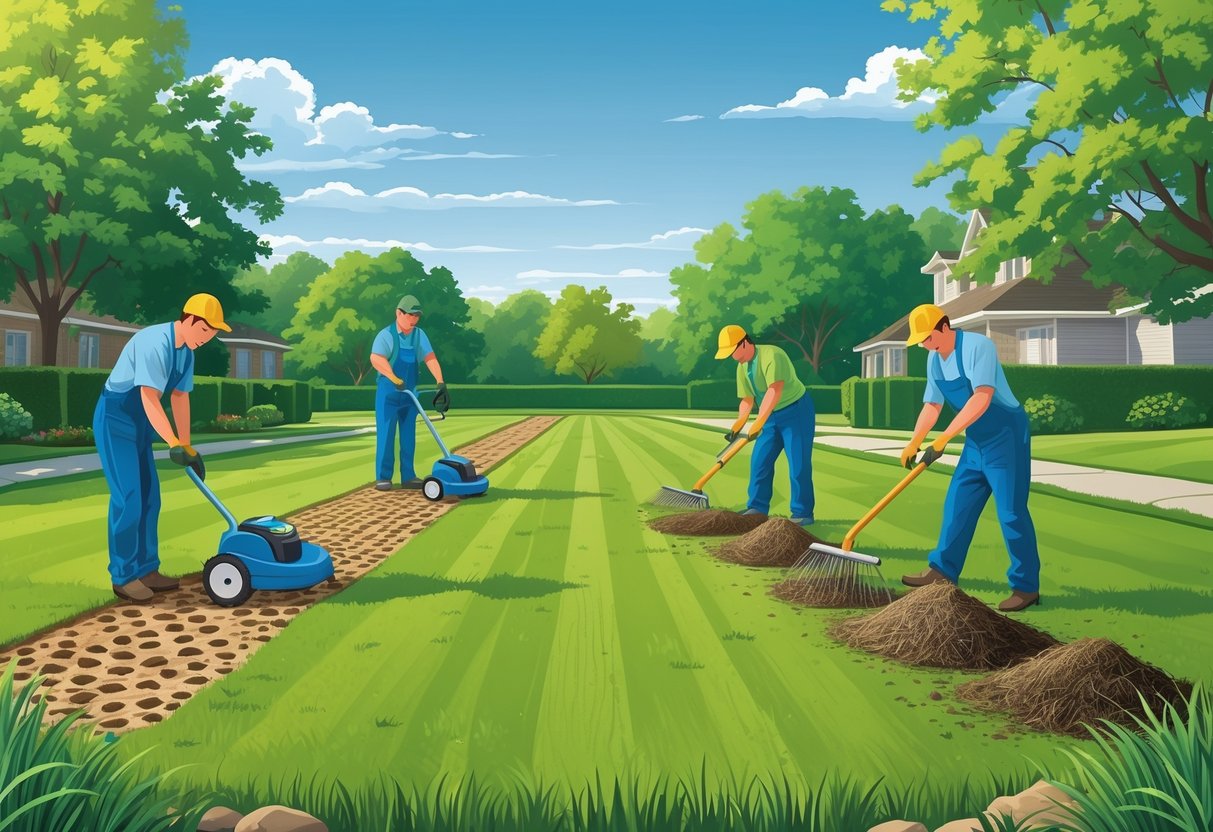
Aeration, dethatching, and overseeding all help your lawn by opening up the soil, clearing out dead stuff, and thickening thin patches with new seed. Each one solves a different problem, but you can use them together for even better results.
When and How to Use an Aerator
Test for soil compaction by pushing a screwdriver into the ground. If it’s tough to get in, your lawn needs aeration.
Core aeration works best during the main growing season. For cool-season grasses, fall is ideal when it’s 65 to 75 degrees out.
Aerators pull out plugs of soil about 3/4 inch wide and 2 to 4 inches long. These plugs break down pretty quickly and return nutrients back to the grass.
Most aerators are self-propelled machines with hollow tines. You can usually rent one from a local hardware store for the weekend.
Timing is everything. The soil should be moist but not soggy. Dry ground makes it hard for tines to get in, and if it’s too wet, the plugs just stick inside the machine.
If the lawn’s too dry, water it for a day or two before you aerate. That’ll make the job way easier.
Identifying and Removing Thatch
Thatch is a layer of dead roots and stems between the green grass and the soil. A little bit actually helps by insulating plants and holding moisture.
Problems pop up when thatch gets thicker than half an inch. Thick thatch blocks air, water, and nutrients from reaching the roots. The lawn feels spongy or bouncy when you walk on it.
Check how deep the thatch is by looking closely at your grass. Find the woody layer between green shoots and soil. If your finger pushes through easily, you’re fine.
Small spots can be dethatched with a convex rake. Just pull the rake through the grass to bring dead stuff to the top. It’s a workout, honestly.
For bigger lawns, use a power rake or dethatching machine. These have blades that rip up the thatch and toss it on the surface.
Cut the grass shorter than usual before dethatching. You’ll need to rake up a lot of debris afterward, so be ready for that.
Overseeding for a Thicker Lawn
Overseeding fills in thin spots and dead patches, and it strengthens your whole lawn. The best time is about 45 days before the first expected frost.
Prep matters here. Mow the grass to 2 inches or less and clear away all the clippings. Seeds need to touch the soil and get sunlight to sprout.
Use a broadcast spreader for big areas, or a handheld one for small patches. Follow the overseeding rates on the label—they’re different from what you’d use for new lawns.
| Overseeding Steps | Details |
|---|---|
| Mow short | Set blade to 2 inches or less |
| Remove clippings | Seeds need soil contact |
| Apply seed | Follow label rates |
| Use starter fertilizer | Choose nitrogen and phosphorus blend |
| Water consistently | Keep soil moist for germination |
Consistent watering is huge. Seeds need steady moisture to sprout and build strong roots. Dry spells can wipe out new seedlings fast.
If you can, overseed right after aerating. The holes left by the aerator make perfect spots for seeds to settle in and start growing.
Controlling Weeds and Lawn Pests
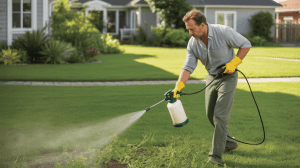
Thick, healthy grass naturally keeps weeds and pests in check. If you time herbicides right and target pests directly, you can stop problems before they take over your yard.
Preventing Weeds with Proper Lawn Care
Dense grass crowds out weeds before they get a chance. The best move? Keep your grass at 3-4 inches for most cool-season types.
Mowing matters a lot. Never chop off more than a third of the blade at once. Taller grass shades the soil and keeps weed seeds from sprouting.
Patch bare spots fast so weeds don’t move in. Every empty patch is an open invite for crabgrass, dandelions, and all those usual suspects. Overseed thin spots in early fall for best results.
Water deeply, not often. Shoot for about 1 inch a week, including rain. Two deep soakings beat out daily light sprinkles every time.
Aerate compacted soil every fall. Compaction stresses grass and opens the door for weeds like plantain that love hard ground.
Using Herbicides Effectively
Pre-emergent herbicides stop weeds like crabgrass before they sprout. Apply when soil hits 50-55°F for a few days in a row—usually late March or early April.
Timing is key. Too early, and you waste product. Too late, and the weeds are already growing.
Post-emergent herbicides kill weeds that are already up. For dandelions, clover, and plantain, use selective broadleaf killers with 2,4-D—they won’t hurt your grass.
| Weed Type | Best Treatment Time | Product Type |
|---|---|---|
| Crabgrass | Before germination | Pre-emergent |
| Dandelions | Spring or fall | Post-emergent selective |
| Nutsedge | Mid-summer | Specialized sedge killer |
Spot-treat weeds instead of spraying the whole lawn. You’ll use less product and get better results than with those generic weed-and-feed combos.
Dealing with Ants and Common Pests
Ant control starts by getting rid of food and moisture sources. Fix leaky sprinklers and keep pet food indoors. Sometimes, ants show up because aphids are hanging out on your plants.
Sprinkle granular ant baits around ant hills instead of using sprays. The workers carry the bait back home, taking out the whole colony—including the queen.
Grub control stops beetle larvae from wrecking your lawn by eating roots. Apply grub treatments in late spring or early summer before eggs hatch.
If you spot brown patches that feel spongy, try pulling up the grass. If it lifts like carpet, grubs are probably the problem.
Beneficial insects help keep bad bugs in check. Avoid broad-spectrum insecticides that kill off the good guys along with the pests. Try to target only the bugs causing trouble.
Seasonal Lawn Care and Maintenance Tips
Your lawn needs different things as the seasons change if you want it to stay green and healthy. Every season brings its own set of jobs—some are more fun than others, but they all matter.
Spring and Fall Preparation
Spring kicks off the main lawn care season. Start with a soil test to check pH and nutrients.
Key Spring Tasks:
- Remove dead leaves and debris
- Aerate compacted soil areas
- Apply pre-emergent herbicide for weed control
- Overseed thin or bare spots
Spring is your chance to fix winter damage. Cold and snow can leave behind brown patches that need some TLC.
Fall is about getting the lawn ready for next year. Focus on building strong roots before winter sets in.
Essential Fall Activities:
- Keep mowing until grass stops growing
- Apply winter fertilizer with lots of potassium
- Rake leaves often so grass can breathe
- Seed patchy spots while soil is still warm
Fall seeding usually beats spring because grass gets more time to root. Cool temps and steady rain help new grass take off.
Adapting to Seasonal Changes
Summer lawn care really comes down to water management and keeping heat stress at bay. During those hot months, grass needs around 1 to 1.5 inches of water each week.
Try mowing high in summer to protect the roots. Taller grass shades the soil and does a much better job holding onto moisture than short grass ever could.
Winter doesn't require much active care, but a bit of prep helps. Stop fertilizing about six weeks before the first expected frost rolls in.
Seasonal Mowing Guidelines:
- Spring: Gradually lower cutting height
- Summer: Keep grass 3-4 inches tall
- Fall: Continue regular mowing schedule
- Winter: Store mower after final cut
Different grass types react in their own ways to the seasons. Cool-season grasses like fescue thrive in spring and fall. Warm-season varieties hit their stride during summer.
Visiting Your Local Garden Center for Supplies
Garden centers usually stock up on seasonal lawn care products right when you need them most. In spring, you'll see fertilizers, seeds, and pre-emergent treatments on the shelves.
The staff at your local garden center can offer tips tailored to your area. They really know the local soil quirks and the grass problems that pop up around here.
Best Times to Shop:
- Early spring: Fertilizers and weed prevention
- Late spring: Grass seed and soil amendments
- Summer: Watering supplies and pest control
- Fall: Winter fertilizers and leaf management tools
Many centers offer soil testing during the busy seasons. That way, you can pick products that actually work for your lawn's needs.
Local garden centers often carry grass types that fit your climate zone. If you've got shady spots under trees or dry areas, they'll suggest seeds that can handle it.
Frequently Asked Questions
People usually have questions about when to do what, how much to water, and the right way to handle basic lawn care. A lot of concerns come down to setting up routines, steering clear of expensive mistakes, and figuring out things like the 1/3 mowing rule.
What are the essential steps for maintaining a healthy lawn year-round?
To keep your lawn healthy, stick to regular mowing, proper watering, and fertilizing throughout the growing season. Try mowing every week when grass is growing fast, and keep it about 2.5 to 3 inches tall for most types.
Aerate your soil at least once a year—fall or early spring works best. Aeration lets air, water, and nutrients reach the roots where they're needed.
Fertilize with a balanced product during the right seasons. Spring feeding gets things growing, while fall fertilizer helps roots toughen up for winter.
For weed control, prevention is key, but sometimes you'll need to spot-treat trouble areas. A thick, healthy lawn usually keeps weeds at bay.
How often and how much should I water my lawn for optimal growth?
Most lawns do best with 1 to 1.5 inches of water each week, including rainfall. It's better to water deeply two or three times a week instead of sprinkling a little every day.
Deep, less frequent watering pushes roots deeper into the soil. That makes your lawn more drought-resistant and just stronger overall.
Water early in the morning, between 6 and 10 AM. This keeps evaporation low and gives grass time to dry out before nightfall, which helps prevent disease.
If you're not sure how much water your lawn is getting, put a few empty containers out during watering. Once they've collected about an inch, you're good.
What is the 1/3 rule in lawn mowing and why is it important?
The 1/3 rule means you shouldn't cut more than a third of the grass blade in one go. So if your grass is 4.5 inches tall, cut it down to no less than 3 inches.
Cutting too much at once puts a lot of stress on the grass and weakens the roots. That kind of stress leaves your lawn open to disease, drought, and weeds.
Stick to this rule and you'll probably need to mow more often in spring and early summer. Most lawns need a cut every 5-7 days during the peak growth spurt.
Sharp mower blades matter for clean cuts. Dull blades will just tear the grass, leaving brown tips and making it easier for diseases to sneak in.
What techniques can I use to water my lawn efficiently without a sprinkler system?
Soaker hoses are great for smaller lawns and use less water than traditional sprinklers. They deliver water slowly, right to the soil's surface.
If you prefer, hand watering with a sprinkler attachment gives you more control. You can target dry patches and avoid overdoing it in healthy areas.
Rain barrels are another option—they collect natural water for your lawn during dry spells. It's a budget-friendly way to water and it's chemical-free.
Adjust your watering schedule based on the weather. Skip watering after rain and bump it up during hot, windy stretches.
What are common lawn care mistakes that homeowners should avoid?
Mowing wet grass leads to clumps that block sunlight and invite disease. Wet grass also makes mower blades slip and tear instead of cutting cleanly.
Over-fertilizing can burn the roots and cause too much top growth, which actually weakens the plant. Plus, you'll end up mowing and watering more than you'd like.
If you water too often with small amounts, the roots stay shallow and weak. That makes your lawn needy and less able to handle dry spells.
Using dull mower blades damages the grass, leaving brown, ragged edges. These spots heal slowly and give diseases a way in.
Letting soil get compacted shuts out air, water, and nutrients from the roots. You'll need to aerate compacted soil to get things growing right again.
How can I develop a DIY lawn care routine that promotes a lush, green yard?
A good routine means mowing the lawn once a week during the growing season. When things slow down, you can get away with mowing monthly instead.
Keep the cutting height steady to help your grass look thick and even. It’s surprising how much difference that makes for curb appeal.
Test your soil every month to figure out what fertilizer your yard actually needs. Most grasses like their soil a bit on the acidic side, somewhere between 6.0 and 7.0 pH.
Each season throws its own curveballs. Spring calls for a big cleanup, summer means tweaking your watering habits, fall is for aerating, and winter… well, prepping for the cold matters more than you’d think.
Jotting down what you do—like when you fertilize or water—makes it easier to spot what’s helping or hurting your lawn. These notes come in handy for next year’s plans.
Take care of your tools. Sharp mower blades and hoses that don’t leak make lawn care way less of a headache.
DISCLAIMER
This document is provided for general information purposes only and should not be relied upon as providing legal advice, technical, or specific operational guidance to the reader, whether as to the practices described in the document or the applicable legal requirements and regulations. Lawnfly.com expressly disclaims any responsibility for liability arising from or related to the use or misuse of any information in this document.