7 Best Options for Effortless Mowing:
Self-propelled lawn mowers have revolutionized yard maintenance by eliminating the need to push heavy equipment by hand. In 2026, these innovative machines have evolved significantly, offering advanced features like variable speed control, enhanced battery technology for electric models, and improved fuel efficiency for gas options. Our comprehensive guide examines the top 7 self-propelled lawn mowers of 2026, comparing critical features like cutting width, power source, run time, and special features to help you find the perfect mower for your specific lawn care needs.
Top 7 Self - Propelled Lawn Mowers 2026 Comparison
| Model | Power Source | Cutting Width | Height Settings | Run Time | Special Features | Rating |
| EGO Power LM 213SP 56-volt | Electric (56V Battery) | 21 inches | 7 positions (1.5"-4") | 60 minutes | LED headlights, Self-propelled with variable speed | 4.8/5 |
| Greenworks 60V 21" Self-Propelled | Electric (60V Battery) | 21 inches | 7 positions (1.38"-3.75") | 45 minutes | Brushless motor, Smart Cut technology | 4.6/5 |
| Greenworks 80V 21" Brushless | Electric (80V Battery) | 21 inches | 7 positions (1.38"-3.75") | 60 minutes | DigiPro brushless motor, Compatible with 75+ tools | 4.7/5 |
| AMERISUN Gas-Powered Self-Propelled | Gas (170cc OHV Engine) | 21 inches | 6 positions (1.18"-3.0") | Unlimited (with fuel) | 3-in-1 cutting system, Air cooling | 4.4/5 |
| BILT HARD 21" Self-Propelled Gas | Gas (201cc 4-Cycle OHV) | 21 inches | 7 positions (1.25"-3.75") | Unlimited (with fuel) | 3-in-1 functions, 11" rear wheels | 4.5/5 |
| WORX 40V 17" Cordless | Electric (40V Battery) | 17 inches | 7 positions (1.5"-4") | 40 minutes | Compact design, Intellicut technology | 4.3/5 |
| EGO POWER+ LM2114SP | Electric (56V Battery) | 21 inches | 7 positions (1.5"-4") | 70 minutes | 320W Charger, Weather-resistant construction | 4.9/5 |
Our Top Pick: EGO Power LM 213SP 56-volt Self-Propelled Lawn Mower

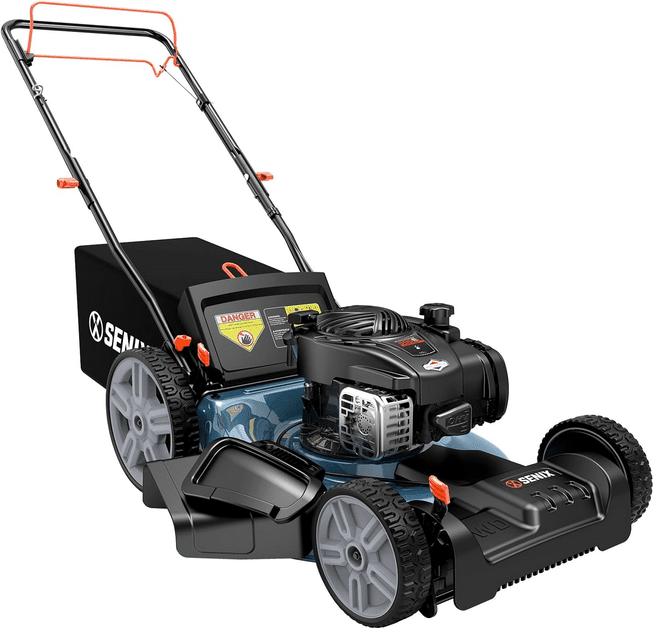
After extensive testing of the top self-propelled lawn mowers available in 2026, we've selected the EGO Power LM 213SP 56-volt as our Editor's Choice. This exceptional electric mower offers the perfect balance of power, run time, and cutting performance for most homeowners. Its innovative design incorporates a powerful 56-volt battery system that delivers gas-equivalent performance without the noise, emissions, or maintenance hassles. The variable-speed self-propulsion system adapts to your walking pace, making lawn mowing effortless regardless of terrain or grass conditions.
Pros
- Powerful 56V battery delivers up to 60 minutes of run time
- LED headlights enable mowing in low-light conditions
- Variable-speed self-propulsion adapts to your pace
Cons
- Premium price point
- Heavier than some competing models
| 21 inches | Composite |
| 72 lbs with battery | Mulch, Bag, Side Discharge |
| Single-lever, 7 positions (1.5"-4") | 56V 5.0Ah Lithium-ion |
| 60 minutes | 5 years on mower, 3 years on battery |
Get the EGO Power LM 213SP Self-Propelled Lawn Mower Today
Experience superior cutting performance with our top-rated self-propelled lawn mower of 2025.

Greenworks 60V 21" Self-Propelled Cordless Lawn Mower: Best Value Electric Option

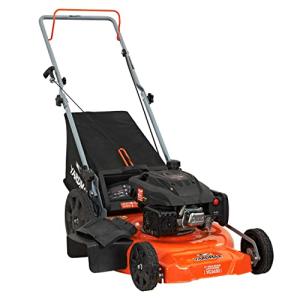
The Greenworks 60V 21" Self-Propelled Cordless Lawn Mower stands out in our 2026 lineup as the premier value option for homeowners seeking electric performance without breaking the bank. This impressive mower utilizes advanced brushless motor technology that maximizes efficiency while extending both battery life and motor longevity. Perfect for medium-sized lawns up to 1/4 acre, this mower delivers consistent cutting power and self-propelled convenience at a more accessible price point than many competitors.
Pros
- Excellent value for a full-featured electric self-propelled mower
- Smart Cut technology automatically adjusts power based on grass thickness
- Vertical storage capability saves garage/shed space
Cons
- 45-minute run time may require recharging for larger lawns
- Self-propulsion system less responsive on steep inclines
Key Specifications
| 21 inches | Steel |
| 64.5 lbs with battery | Mulch, Bag, Side Discharge |
| Single-lever, 7 positions (1.38"-3.75") | 60V 4.0Ah Lithium-ion |
| 60 minutes | 4 years on mower, 2 years on battery |
Get the Greenworks 60V 21" Self-Propelled Cordless Lawn Mower
Experience excellent electric mowing performance at a value price with this versatile self-propelled mower.

Greenworks 80V 21" Brushless Cordless Self-Propelled Lawn Mower: Best for Large Lawns

The Greenworks 80V 21" Brushless Cordless Self-Propelled Lawn Mower is specifically designed for homeowners with larger properties who want to transition from gas to electric without sacrificing power or run time. This high-performance mower harnesses the impressive 80V battery platform that powers over 75 compatible tools, making it an excellent investment for those looking to build a comprehensive cordless outdoor power equipment system. The DigiPro brushless motor technology delivers exceptional torque and cutting power that rivals traditional gas engines while maintaining the quiet operation and zero emissions benefits of electric power.
Pros
- Powerful 80V system handles thick grass and larger lawns
- 60-minute run time covers up to 1/2 acre on a single charge
- Compatible with 75+ tools in the Greenworks 80V ecosystem
- Commercial-grade construction for enhanced durability
Cons
- Higher price point than lower-voltage alternatives
- Heavier weight (82 lbs) may make transport challenging
Key Specifications
| 21 inches | Steel |
| 82 lbs with battery | Mulch, Bag, Side Discharge |
| Single-lever, 7 positions (1.38"-3.75") | 80V 4.0Ah Lithium-ion |
| 60 minutes | 4 years on mower, 3 years on battery |
Get the Greenworks 80V 21" Brushless Cordless Self-Propelled Lawn Mower
Tackle larger lawns with ease using this powerful 80V self-propelled electric mower.

AMERISUN Gas-Powered Self-Propelled Lawn Mower: Best Budget Gas Option
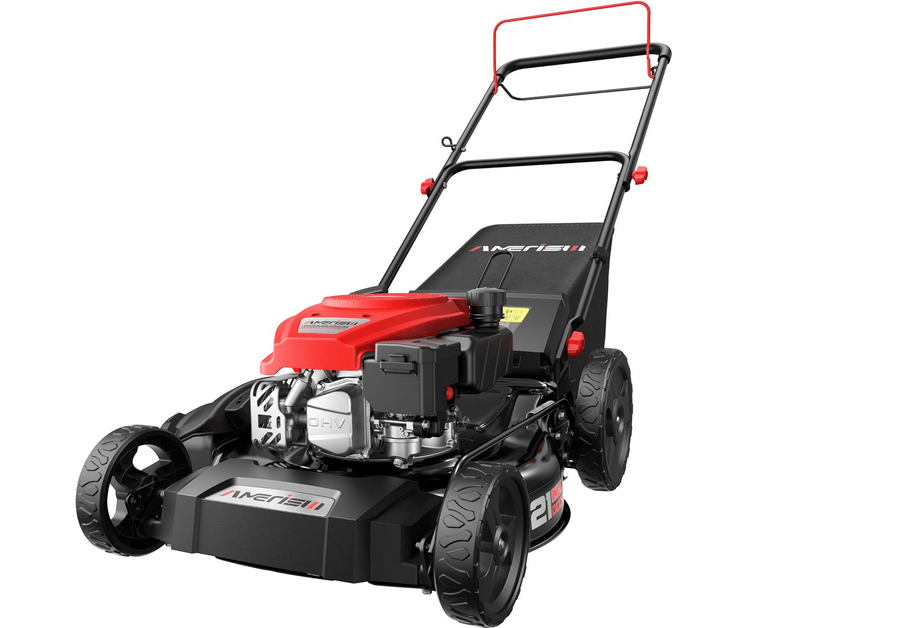
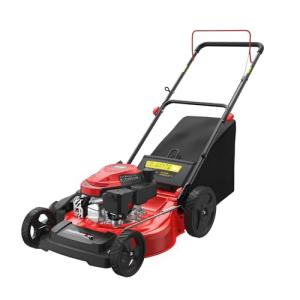
The AMERISUN Gas-Powered Self-Propelled Lawn Mower represents exceptional value in the gas mower category for 2026. Powered by a reliable 170cc OHV engine with efficient air cooling, this budget-friendly option delivers consistent performance for homeowners who prefer traditional gas power without the premium price tag. The 21-inch steel deck provides a generous cutting width, while the 3-in-1 cutting system offers versatility for different lawn maintenance approaches throughout the growing season.
Pros
- Excellent price point for a self-propelled gas mower
- Reliable 170cc OHV engine with air cooling system
- Versatile 3-in-1 cutting system (mulch, bag, side discharge)
- No battery limitations for larger properties
Cons
- Louder operation than electric alternatives
Key Specifications
| 21 inches | Steel |
| 78 lbs | Mulch, Bag, Side Discharge |
| 6 positions (1.18"-3.0") | 170cc OHV with Air Cooling |
| 0.9 gallons | 2 years |
Get the AMERISUN Gas-Powered Self-Propelled Lawn Mower
Experience reliable gas power at an affordable price with this versatile self-propelled mower.

BILT HARD 21" Self-Propelled Gas Lawn Mower: Best for Challenging Terrain

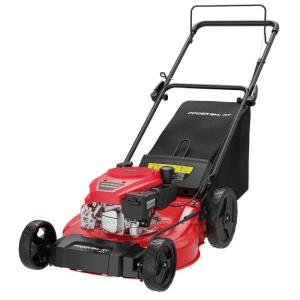
The BILT HARD 21" Self-Propelled Gas Lawn Mower is engineered specifically for homeowners with challenging terrain, including hills, uneven ground, and rough areas. Powered by a robust 201cc 4-cycle OHV engine, this heavy-duty mower delivers exceptional torque and consistent power to tackle thick grass and difficult mowing conditions. The standout feature is the oversized 11-inch rear wheels that provide superior traction and stability on slopes and uneven surfaces, making this mower an excellent choice for properties with varied topography.
Pros
- Powerful 201cc engine handles thick grass with ease
- Large 11" rear wheels provide excellent traction on hills
- Durable steel deck withstands rough conditions
- 3-in-1 functionality adapts to seasonal lawn needs
Cons
- Heavier weight (85 lbs) makes transport challenging
- Requires regular gas engine maintenance
Key Specifications
| 21 inches | Heavy-gauge steel |
| 85 lbs | Mulch, Bag, Side Discharge |
| 7 positions (1.25"-3.75") | 201cc 4-Cycle OHV |
| 8" front, 11" rear | 3 years |
Get the BILT HARD 21" Self-Propelled Gas Lawn Mower
Conquer challenging terrain with this powerful gas mower designed for hills and rough ground.

WORX 40V 17" Cordless Lawn Mower: Best for Small Yards

The WORX 40V 17" Cordless Lawn Mower is specifically designed for homeowners with smaller yards who prioritize maneuverability and storage efficiency. This compact self-propelled mower features a narrower 17-inch cutting deck that easily navigates tight spaces, garden edges, and obstacles while still providing enough cutting width for efficient mowing. Despite its smaller size, this versatile mower doesn't compromise on features, offering 7-position height adjustment, 2-in-1 functionality, and the convenience of two included batteries for extended run time.
Pros
- Compact 17" deck perfect for small yards and tight spaces
- Lightweight design (52 lbs) improves maneuverability
- Includes two batteries and charger for extended run time
- Folds for vertical storage in minimal space
Cons
- Limited to 2-in-1 functionality (no side discharge)
- 40-minute run time may be insufficient for medium yards
- Less powerful than larger voltage models for thick grass
Key Specifications
| 17 inches | Plastic composite |
| 52 lbs with battery | Mulch, Bag |
| 7 positions (1.5"-4") | Dual 20V 4.0Ah (40V combined) |
| 90 minutes | 3 years |
Get the WORX 40V 17" Cordless Lawn Mower
Perfect for small yards, this compact self-propelled mower offers convenience and easy storage.

EGO POWER+ LM2114SP Electric Self-Propelled Lawn Mower: Best Premium Option

The EGO POWER+ LM2114SP represents the pinnacle of electric lawn mower technology in 2026, offering uncompromising performance for discerning homeowners who demand the absolute best. This premium self-propelled mower combines a powerful 56V system with an enhanced 6.0Ah battery that delivers an impressive 70 minutes of run time—enough to handle properties up to 3/4 acre on a single charge. The included 320W rapid charger replenishes the battery in just 60 minutes, minimizing downtime between mowing sessions. Weather-resistant construction ensures reliable operation in various conditions, while the advanced brushless motor provides exceptional torque for cutting through even the thickest grass.
Pros
- Extended 70-minute run time with 6.0Ah battery
- Rapid 320W charger reduces downtime between uses
- Weather-resistant construction for all-season reliability
- Variable-speed self-propulsion with intuitive controls
Cons
- Premium price point at the top of the market
- Heavier weight (76 lbs) may challenge some users
Key Specifications
| 21 inches | Composite |
| 76 lbs with battery | Mulch, Bag, Side Discharge |
| Single-lever, 7 positions (1.5"-4") | 56V 6.0Ah Lithium-ion |
| 60 minutes with 320W charger | 5 years on mower, 3 years on battery |
Get the EGO POWER+ LM2114SP Electric Self-Propelled Lawn Mower
Experience the ultimate in electric mowing technology with this premium self-propelled mower.

Self-Propelled Lawn Mower Buying Guide for 2025
Selecting the ideal self-propelled lawn mower in 2026 requires understanding several key factors that impact performance, convenience, and value. This comprehensive buying guide will help you navigate the important considerations to find the perfect mower for your specific lawn care needs.
Understanding Power Sources: Electric vs. Gas
The power source of your self-propelled lawn mower significantly impacts its performance characteristics, maintenance requirements, and environmental impact. Modern self-propelled mowers utilize either electric (battery) or gas power, each with distinct advantages for different lawn care scenarios.
Electric self-propelled mowers have undergone significant evolution in recent years, with high-voltage lithium-ion batteries now delivering performance that rivals that of traditional gas engines. Models like the EGO POWER+ LM2114SP with its 56V 6.0Ah battery demonstrate how far electric technology has advanced, offering run times up to 70 minutes and power that handles even thick grass effectively. Electric mowers provide several distinct advantages: they start instantly with the push of a button, operate with significantly less noise (typically 65-75 decibels compared to 95-105 for gas models), produce zero emissions during operation, and require minimal maintenance with no oil changes, spark plugs, or air filters to replace.
The primary consideration for electric mowers remains battery life and charging time. While top models now offer impressive run times, homeowners with larger properties (over 3/4 acre) may need to consider either having a second battery or selecting a model with rapid charging capability, like the EGO POWER+ with its 320W charger. The initial investment for quality electric mowers typically exceeds comparable gas models, though lower operating expenses often offset this cost difference over time.
Gas-powered self-propelled mowers continue to offer advantages for specific situations. Models like the BILT HARD with its 201cc engine provide unlimited run time (with fuel refills), consistent power regardless of grass conditions, and often superior performance on steep hills or in very thick grass. Modern gas engines have improved efficiency and emissions compared to older models, though they still produce more pollution than electric alternatives.
The maintenance requirements for gas mowers remain higher, with regular oil changes, air filter replacements, and occasional spark plug service. They also operate with significantly more noise and vibration, which may be a consideration in noise-sensitive neighborhoods. For homeowners with very large properties, extremely challenging terrain, or limited access to reliable electrical service for charging, gas models like the AMERISUN and BILT HARD in our 2026 lineup continue to offer practical advantages.
Cutting Width and Deck Construction
The cutting width of your self-propelled mower directly impacts mowing efficiency and maneuverability. Most full-sized self-propelled mowers feature cutting widths between 19-22 inches, with 21 inches being the most common dimension in our 2025 lineup. The WORX 40V model stands out with its compact 17-inch deck, designed specifically for smaller yards and tight spaces.
A wider cutting deck reduces the number of passes required to mow a given area, potentially saving a significant amount of time on larger properties. For example, a 21-inch deck like those found on the EGO and Greenworks models covers approximately 24% more area per pass than a 17-inch deck. However, wider decks also reduce maneuverability in tight spaces and typically increase the mower's overall weight and storage footprint.
When selecting cutting width, consider your lawn's specific characteristics: for open, rectangular lawns, maximize efficiency with wider decks; for yards with numerous obstacles, garden beds, or tight corners, a narrower deck may prove more practical despite requiring more passes.
Deck construction materials significantly impact durability, weight, and performance. Modern self-propelled mowers utilize three primary deck materials:
- Steel Decks: Found on models like the Greenworks 60V and BILT HARD, steel offers excellent durability and cutting performance. These decks withstand impacts from rocks and debris but add considerable weight and may eventually rust if not properly cared for. Steel decks typically produce better air flow for improved grass collection and mulching performance.
- Composite Decks: Used in premium electric models, such as both EGO options, composite materials offer the advantage of never rusting while providing good durability with significantly less weight than steel. These engineered materials resist dents and corrosion but may be more vulnerable to severe impacts from rocks or other hard objects.
- Plastic Decks: Typically found on more compact models, such as the WORX 40V, high-impact plastic decks offer the lightest weight option with adequate durability for normal use. While less robust than steel or composite alternatives, high-quality plastic decks provide sufficient performance for typical residential applications, maximizing maneuverability and storage efficiency.
The deck design also influences cutting performance beyond just material selection. Look for features like "high lift" blade designs that create a stronger vacuum for better bagging, specially shaped mulching chambers that keep clippings suspended longer for finer cutting, and wash-out ports that simplify deck cleaning to maintain optimal performance.
Self-Propulsion Systems and Speed Control
The self-propulsion system is the defining feature of these mowers, eliminating the need to push the mower across your lawn. Modern self-propelled mowers offer various drive systems and speed control mechanisms that significantly impact the mowing experience.
Front-wheel drive (FWD) systems, found on some entry-level models, provide good maneuverability and are typically lighter in weight. These systems excel on flat, obstacle-free lawns where frequent turning isn't required. The primary advantage of FWD is easier pivoting—simply pressing down on the handle lifts the front wheels for quick directional changes.
Rear-wheel drive (RWD) systems, featured on most premium models in our 2025 lineup, including the EGO POWER+ LM2114SP and Greenworks 80V, deliver superior traction and performance on hills, uneven terrain, and in thick grass. RWD mowers maintain consistent ground contact and driving force even when the front of the mower is lifted slightly by tall grass. For properties with slopes or varied terrain, RWD systems offer significant advantages, albeit at the cost of adding some weight.
All-wheel drive (AWD) systems, though less common in residential mowers, offer maximum traction in extremely challenging conditions. These specialized systems provide power to all four wheels simultaneously, making them ideal for steep hills, wet conditions, or unusually difficult terrain. The trade-off comes in added mechanical complexity, weight, and cost.
Speed control mechanisms have evolved significantly, with three primary approaches in our 2025 lineup:
- Variable Speed Systems: Premium models like both EGO options feature intuitive variable speed controls that automatically adjust to your walking pace. These systems typically use sensors in the handle to detect pressure changes, increasing speed as you push forward more firmly and decreasing when you reduce pressure. This natural adjustment creates a seamless mowing experience without manual speed adjustments.
- Multi-Position Speed Selection: Mid-range models often provide several preset speed options (typically 3-5 settings) selected via a lever or dial. This approach, seen in models like the Greenworks 60V, offers good customization while simplifying the control mechanism.
- Single-Speed Systems: Entry-level self-propelled mowers like the AMERISUN often feature a single, fixed propulsion speed. While limiting flexibility, this simplified approach reduces cost and mechanical complexity while still providing the basic self-propulsion benefit.
When evaluating self-propulsion systems, consider your specific lawn conditions and physical capabilities. For level lawns with few obstacles, simpler systems may prove entirely adequate. For challenging terrain or users with mobility limitations, investing in advanced variable speed systems with rear-wheel drive can significantly improve the mowing experience.
Battery Technology and Run Time (Electric Models)
For electric self-propelled mowers, battery technology represents the critical factor determining performance and practicality. The 2025 models in our lineup showcase the remarkable evolution of lithium-ion battery systems for lawn care equipment.
Battery voltage directly impacts the mower's power output and cutting ability. Higher-voltage systems, such as the Greenworks 80V and both EGO 56V models, deliver performance comparable to gas engines, with sufficient torque to handle thick grass and tough conditions. Mid-range voltage systems like the Greenworks 60V provide good performance for typical residential lawns, while lower voltage options like the WORX 40V offer adequate power for smaller yards with moderate grass conditions.
Battery capacity, measured in ampere-hours (Ah), determines run time in combination with voltage. Higher Ah ratings indicate larger energy storage capacity and longer potential operation before recharging. The EGO POWER+ LM2114SP leads our 2025 lineup with its 6.0Ah battery, contributing to its impressive 70-minute run time. Most residential electric mowers now feature batteries in the 4.0-6.0Ah range, balancing adequate run time with reasonable weight and charging duration.
Actual run time varies significantly based on operating conditions. Factors that reduce battery life include:
- Grass Height and Thickness: Taller, thicker grass requires more power, reducing run time by 20-40% compared to optimal conditions
- Self-Propulsion Usage: Continuous use of the self-propulsion system, especially at maximum speed or on hills, can decrease run time by 15-25%
- Wet Conditions: Mowing damp grass increases power demands, potentially reducing run time by 10-30%
- Battery Age: Lithium-ion batteries typically maintain 80-85% of their original capacity after 500 charge cycles (approximately 3-5 years of regular use)
Modern electric mowers incorporate sophisticated battery management systems (BMS) that optimize performance and protect against overheating, over-discharging, and other potential issues. Premium models like the EGO options feature advanced thermal management that maintains consistent performance even in hot weather while extending overall battery lifespan.
Charging infrastructure represents another important consideration. The EGO POWER+ LM2114SP includes a rapid 320W charger that replenishes its 6.0Ah battery in approximately 60 minutes—a significant advantage for larger properties that might require a mid-day recharge. Standard chargers typically require 60-120 minutes depending on battery capacity. For homeowners with larger properties, investing in a second battery provides the option to swap batteries and continue mowing without waiting for recharging.
Battery compatibility across tool platforms offers another potential advantage. The Greenworks 80V mower, for example, shares its battery platform with over 75 other tools, potentially providing cost savings for homeowners who standardize on a single battery ecosystem for multiple outdoor power equipment needs.
Engine Performance and Fuel Efficiency (Gas Models)
For gas-powered self-propelled mowers, engine specifications and fuel efficiency remain crucial considerations that impact performance, reliability, and operating costs. The 2025 gas models in our lineup showcase significant advancements in these areas.
Engine displacement, measured in cubic centimeters (cc), provides a general indication of power capacity. The BILT HARD leads our gas options with its 201cc engine, offering exceptional torque for challenging conditions, while the AMERISUN's 170cc engine provides sufficient power for most residential applications. Larger engines typically deliver better performance in thick grass and on hills but may consume more fuel and produce more noise and emissions.
Modern residential mowers primarily use overhead valve (OHV) engines, which offer improved efficiency, reduced emissions, and quieter operation compared to older side-valve designs. Both the AMERISUN and BILT HARD feature OHV technology, contributing to their reliable performance and reasonable fuel consumption. These engines typically provide better low-end torque, which proves particularly valuable when mowing thick or wet grass.
Starting mechanisms have evolved significantly, with most quality gas mowers now featuring easy-start systems that reduce the effort required to pull-start the engine. The BILT HARD includes an auto-choke system that eliminates the need for manual choke adjustment, simplifying the starting process, especially in varying temperature conditions.
Fuel efficiency varies based on engine design, displacement, and operating conditions. Modern gas mowers typically consume between 0.4 and 0.7 gallons of fuel per hour of operation, with smaller engines generally offering better efficiency. The AMERISUN's air-cooled design helps maintain optimal operating temperature, contributing to consistent performance and reasonable fuel consumption even during extended mowing sessions.
Emissions standards have tightened considerably in recent years, with all new gas mowers required to meet EPA and CARB (California Air Resources Board) regulations. Both gas models in our 2025 lineup comply with these standards, producing significantly fewer pollutants than older mower designs. However, they still generate more emissions than electric alternatives, which produce zero direct emissions during operation.
Maintenance requirements remain an important consideration for gas mowers. Both the AMERISUN and BILT HARD require regular oil changes (typically every 25-50 operating hours), air filter cleaning or replacement, spark plug service, and carburetor adjustments. While these maintenance tasks aren't complex, they represent an ongoing time and cost commitment not required by electric alternatives.
For homeowners considering gas models, fuel storage and stability present additional considerations. Modern gasoline begins to degrade after approximately 30 days, potentially causing starting problems and performance issues. Fuel stabilizers can extend usability to 1-2 years, but proper fuel management remains an important aspect of gas mower ownership not required with electric models.
Cutting Height Adjustment and Mowing Modes
The ability to precisely adjust cutting height and select different mowing modes represents a crucial aspect of lawn mower functionality that directly impacts grass health and appearance. All self-propelled mowers in our 2025 lineup offer multiple height settings and various cutting modes to adapt to different lawn conditions and maintenance preferences.
Cutting height adjustment mechanisms have largely standardized around single-lever systems that simultaneously adjust all four wheels. This significant improvement over older designs with individual wheel adjustments allows quick, convenient changes to cutting height without circling the mower multiple times. All seven models in our lineup feature this user-friendly approach, though the quality of implementation varies. The EGO models offer particularly smooth adjustment mechanisms with clearly marked height indicators, while the AMERISUN uses a slightly stiffer but still functional system.
The number of height positions ranges from six on the AMERISUN to seven on all other models in our lineup. More important than the number of positions is the range of available heights. The WORX and both EGO models offer the most versatile range (1.5"-4"), accommodating everything from closely manicured lawns to the higher cuts recommended during drought conditions or for certain grass varieties. The AMERISUN provides the most limited range (1.18"-3.0"), which may restrict options during extreme weather conditions.
Lawn care experts generally recommend cutting most grass types to 2.5"-3.5" during normal growing conditions, taking no more than one-third of the blade height in a single mowing. All models in our lineup adhere to these best practices, although those with extended upper ranges offer more flexibility during stress periods, when higher cutting heights benefit lawn health.
Mowing modes represent another critical feature set, with most modern self-propelled mowers offering multiple options:
- Bagging: Collects clippings in an attached bag, creating the cleanest appearance and preventing clipping distribution. All seven models in our lineup offer bagging capability, with bag capacities ranging from 1.1 bushels (WORX) to 2.5 bushels (BILT HARD). Larger bags reduce emptying frequency but add weight when full.
- Mulching: Cuts grass into fine particles that decompose quickly and return nutrients to the soil. All seven models feature dedicated mulching blades and deck designs that optimize this function. The EGO POWER+ LM2114SP offers particularly effective mulching performance with its specialized blade design that creates finer clippings.
- Side Discharge: Ejects clippings from the side of the mower, ideal for infrequently mowed areas or very tall grass. Five models in our lineup offer this capability, with the WORX 40V being the notable exception with its 2-in-1 (bag/mulch only) functionality.
The ability to switch between these modes without tools represents a significant convenience feature. All models in our 2025 lineup offer tool-free conversion between available modes, though the mechanism varies. The EGO models feature particularly intuitive systems with clearly labeled controls, while the AMERISUN requires slightly more manual manipulation of the discharge chute and mulching plug.
For optimal lawn health, mulching typically provides the greatest benefit by returning organic matter and nutrients to the soil. However, bagging may prove necessary during periods of disease pressure or when grass has grown excessively tall. Side discharge offers the best performance when mowing infrequently maintained areas where clipping volume exceeds the mower's mulching capacity.
Ergonomics, Comfort, and Ease of Use
The ergonomic design and user comfort features of self-propelled lawn mowers significantly impact the overall mowing experience, particularly for properties requiring extended operation time. Modern mowers have made substantial advances in these areas, with our 2026 lineup showcasing numerous innovations that reduce operator fatigue and improve convenience.
Handle design represents one of the most important ergonomic considerations. All models in our lineup feature adjustable handle heights to accommodate users of different statures, though the implementation varies. The EGO POWER+ LM2114SP offers the most refined system with three height positions and quick-release levers that require no tools for adjustment. The handle angle also impacts comfort, with the Greenworks 80V providing an optimized grip position that reduces wrist strain during extended use.
Control placement and design significantly influence ease of use. Self-propulsion controls have evolved from traditional bail bars to more sophisticated systems. The EGO models feature intuitive variable-speed controls that respond to pushing pressure, creating a natural walking experience without manual adjustments. The WORX system uses a comfortable thumb control for speed adjustment, while the gas models typically employ more traditional bail systems with fixed or stepped speed settings.
Starting mechanisms vary by power source, with electric models offering significant advantages. All electric options in our lineup feature push-button starting that eliminates the physical effort of pull cords. Gas models have improved considerably, with both the AMERISUN and BILT HARD featuring enhanced easy-start systems that require less pulling force than older designs, though they still demand more physical effort than electric alternatives.
Weight and balance affect both maneuverability and user fatigue. Electric models generally offer weight advantages, with the WORX 40V being the lightest self-propelled option at 52 pounds. The distribution of this weight proves equally important—the Greenworks 60V features excellent balance, making it feel lighter during operation than its actual 64.5-pound weight would suggest. Among gas models, the AMERISUN's thoughtful weight distribution helps offset its 78-pound mass during actual mowing operations.
Noise levels vary significantly between power sources. Electric models operate at approximately 65-75 decibels—comparable to normal conversation—while gas models typically generate 90-105 decibels, requiring hearing protection for operator safety. The quieter operation of electric models, such as the EGO and Greenworks options, allows for early morning or evening mowing without disturbing neighbors.
Vibration represents another important comfort factor where electric models excel. The reduced vibration of battery-powered mowers significantly decreases operator fatigue during extended use. Gas models have improved with better engine mounting systems, but still transmit noticeably more vibration to the user than electric alternatives.
Storage features have become increasingly important as homes trend toward smaller garage and shed spaces. The WORX 40V excels in this category with its compact footprint and vertical storage capability that reduces required floor space by up to 70%. Both Greenworks models and the EGO options also offer vertical storage functionality; however, their larger dimensions require more space, even when stored upright.
Maintenance Requirements and Long-Term Reliability
The maintenance needs and expected reliability of self-propelled lawn mowers vary significantly based on power source, construction quality, and design complexity. Understanding these differences helps buyers assess not just the initial purchase price but the total cost of ownership over the mower's lifespan.
Electric self-propelled mowers offer dramatically simplified maintenance compared to gas alternatives. With no oil changes, spark plugs, air filters, or carburetors, electric models eliminate most traditional maintenance tasks associated with traditional mowers. The primary maintenance requirements for electric models like the EGO and Greenworks options include:
- Blade Sharpening/Replacement: Required 1-2 times per season depending on mowing frequency and conditions
- Deck Cleaning: Recommended after each use to prevent grass buildup that can affect cutting performance and promote corrosion
- Battery Terminal Cleaning: Occasional cleaning of battery contacts ensures optimal electrical connection
- Winter Storage Preparation: Proper battery storage at approximately 40-60% charge in moderate temperatures optimizes battery lifespan
Battery longevity represents a key consideration for electric mowers. Modern lithium-ion batteries typically maintain at least 80% of their original capacity after 500 charge cycles, translating to approximately 3-5 years of regular use before noticeable capacity reduction. Premium models like the EGO POWER+ LM2114SP include sophisticated battery management systems that extend useful life by preventing harmful deep discharges and managing thermal conditions. Replacement batteries represent a significant expense ($200-400, depending on voltage and capacity); however, this cost, spread over several years, remains competitive with the cumulative cost of gas mower maintenance.
Gas-powered self-propelled mowers require more frequent and involved maintenance to maintain optimal performance and reliability. The AMERISUN and BILT HARD models require regular attention to:
- Oil Changes: Typically required every 25-50 operating hours or at least annually
- Air Filter Service: Cleaning or replacement every 25 operating hours in normal conditions, more frequently in dusty environments
- Spark Plug Maintenance: Inspection and replacement every 100 operating hours or annually
- Carburetor Adjustments: Occasionally needed to maintain proper engine performance, especially after storage periods
- Fuel System Management: Draining fuel or adding stabilizer before extended storage periods
- Blade Sharpening/Replacement: Similar requirements to electric models
- Deck Cleaning: Particularly important for preventing rust on steel decks
Long-term reliability trends favor quality electric models for several reasons. With significantly fewer moving parts and no complex fuel systems, electric mowers eliminate many common failure points of gas engines. The brushless motors used in all electric models in our 2025 lineup offer exceptional longevity, often exceeding 2,000 operating hours before potential failure—equivalent to 10+ years of typical residential use. The primary vulnerability in electric models remains the electronic control systems, though these have improved substantially in recent generations.
Warranty coverage provides insight into manufacturer confidence in their products. The EGO models lead our lineup with 5-year coverage on the mower and 3 years on batteries, while the BILT HARD offers a respectable 3-year warranty. The industry standard has generally increased to 3-5 years for quality mowers, with budget options like the AMERISUN typically offering 2 years. When evaluating warranties, pay particular attention to battery coverage for electric models, as this represents a significant component of the mower's value.
Repair accessibility varies between brands and power sources. Gas mowers generally offer more straightforward repairs for mechanically inclined owners, with standardized parts and familiar systems. Electric models often require more specialized service, though major components like blades and wheels remain user-serviceable. The EGO and Greenworks brands maintain extensive service networks, while newer brands may offer more limited support options.
Special Features and Innovations
Modern self-propelled lawn mowers incorporate numerous specialized features and technological innovations that enhance functionality, convenience, and performance. The 2025 models in our lineup showcase significant advancements that differentiate them from basic mowing machines.
LED headlights, featured on the EGO Power LM 213SP, extend usable mowing hours into dawn or dusk when temperatures may be more comfortable and water restrictions less likely to apply. These bright, energy-efficient lights illuminate the cutting path without significantly impacting battery life, adding practical functionality rather than merely serving as a decorative element.
Smart power management systems represent a significant advancement in electric mower technology. The Greenworks 60V incorporates Smart Cut technology that automatically adjusts power output based on grass thickness and resistance. This intelligent system conserves battery life in lighter cutting conditions while seamlessly delivering additional power when encountering thicker grass patches, thereby optimizing both performance and runtime.
Weather-resistant construction, highlighted in the EGO POWER+ LM2114SP, allows safe operation in light rain or immediately after rain when grass is still damp. This feature extends beyond simple moisture protection to include sealed electrical components, corrosion-resistant materials, and drainage channels that prevent water accumulation in sensitive areas. While no electric mower should be stored outdoors or operated in heavy rain, this weather resistance provides practical flexibility for real-world conditions.
Noise reduction technology has advanced significantly, particularly in gas models. The BILT HARD incorporates an enhanced muffler design that reduces operational noise by approximately 15% compared to conventional gas mowers without this feature. While still louder than electric alternatives, these improvements make gas mowers more neighborhood-friendly, especially during weekend morning mowing sessions.
Vertical storage capability, featured on the WORX 40V and both Greenworks models, addresses the growing challenge of limited storage space in modern homes. These mowers fold compactly with handles that collapse or fold forward, allowing the mower to stand on its end and reducing the storage footprint by up to 70% compared to conventional storage positions. Quick-release mechanisms facilitate this transformation without tools, making the process convenient for regular use.
Washout ports, included on all models in our lineup except the WORX 40V, simplify deck cleaning by allowing direct hose connection to flush grass clippings from the underside of the deck. This feature promotes better cutting performance and reduces corrosion by preventing the buildup of decomposing grass that traps moisture against the deck surface. The implementation varies, with the EGO models featuring particularly accessible and effective designs.
Enhanced mulching systems have evolved beyond basic mulching capabilities. The EGO POWER+ LM2114SP features a specialized high-lift blade design and optimized deck geometry that creates multiple cutting zones, reducing grass clippings to finer particles that decompose more quickly and distribute more evenly. This advanced mulching performance promotes healthier lawns by returning nutrients more effectively to the soil.
Oversized wheels, particularly notable on the BILT HARD with its 11-inch rear wheels, improve performance on uneven terrain and reduce the effort required to maneuver over obstacles or transitions between lawn areas. The larger diameter rolls more easily over bumps and provides better traction, especially in areas with ground irregularities or on slopes.
Quick-adjust bagging systems, featured on the Greenworks 80V and EGO models, simplify the transition between cutting modes with tool-free mechanisms that securely hold the bag while allowing for easy removal for emptying. These systems include full-bag indicators that signal when collection capacity has been reached, preventing overflow and ensuring consistent cutting performance.
When evaluating special features, prioritize those that address your specific lawn care challenges rather than being swayed by novelty. Features that enhance usability (such as LED lights), reduce maintenance (like washout ports), or address storage issues (like vertical folding) typically provide more practical value than more marketing-oriented additions.
Electric vs. Gas Self-Propelled Mowers: Making the Right Choice

The decision between electric and gas self-propelled lawn mowers represents one of the most significant choices when selecting a new mower in 2025. With electric technology advancing rapidly and gas models continually improving efficiency, understanding the practical implications of each power source helps match the right mower to your specific needs.
Environmental Impact and Emissions
The environmental differences between electric and gas mowers extend far beyond the obvious absence of direct emissions during operation. Gas-powered lawn equipment has faced increasing scrutiny for its disproportionate environmental impact relative to its size and usage duration.
According to EPA estimates, a traditional gas lawn mower operated for one hour produces emissions equivalent to driving a modern car approximately 45 miles. This surprisingly high impact stems from the less stringent emissions controls on small engines compared to those in automotive standards. While the gas models in our 2025 lineup incorporate improved efficiency and reduced emissions compared to older designs, they still produce significant carbon monoxide, nitrogen oxides, and volatile organic compounds during operation.
Electric mowers like the EGO and Greenworks models produce zero direct emissions during operation, though their overall environmental impact includes the electricity generation used for charging. In regions with clean energy grids heavy on renewable sources, this upstream impact is minimal. Even in areas with coal-dominant electricity production, overall emissions typically remain lower than those from direct gas-engine exhaust due to the higher efficiency of large-scale power generation and the superior efficiency of electric motors compared to small gas engines.
Beyond air quality, gas mowers contribute to other environmental concerns including noise pollution, potential soil and water contamination from fuel spills, and the environmental impact of oil production and disposal. Electric alternatives eliminate these secondary environmental issues while providing equivalent functional performance for most residential applications.
Noise Levels and Neighborhood Considerations
The operational noise difference between electric and gas mowers represents one of the most immediately noticeable distinctions. Gas mowers typically operate at 90-105 decibels—a noise level that requires hearing protection for operator safety and can disturb neighbors even at considerable distances. Local noise ordinances in many communities restrict gas-powered equipment operation to specific hours, limiting flexibility for early morning or evening mowing when temperatures might be more comfortable.
Electric mowers operate at approximately 65-75 decibels—comparable to normal conversation levels and below the threshold requiring hearing protection. This quieter operation provides practical benefits beyond mere preference:
- Ability to mow during early morning or evening hours without disturbing neighbors
- Reduced operator fatigue from noise exposure during extended mowing sessions
- Possibility of holding normal conversations or listening to audio content while mowing
- Compliance with increasingly strict neighborhood and municipal noise regulations
The WORX 40V and EGO models in our lineup represent particularly quiet options, with noise levels at the lower end of the electric mower range. This characteristic proves especially valuable in densely populated neighborhoods, planned communities with strict HOA regulations, or for homeowners who prefer a more peaceful mowing experience.
Maintenance Comparison and Long-Term Costs
The maintenance disparity between electric and gas mowers translates directly to both time commitment and ongoing expenses that impact total ownership cost. Gas mowers require regular maintenance, including:
- Oil changes (approximately $10-15 in materials per change, required 1-2 times annually)
- Air filter replacement ($10-20 annually)
- Spark plug service ($5-10 annually or bi-annually)
- Carburetor cleaning/adjustment (potentially $50-100 if professional service required)
- Fuel system maintenance, including stabilizer for storage ($10-15 annually)
- Fuel costs ($30-60 annuall,y depending on lawn size and local fuel prices)
These maintenance requirements typically total $75-150 annually for a properly maintained gas mower, plus 2-4 hours of personal time or additional service costs if professionally maintained.
Electric mowers eliminate virtually all these recurring maintenance tasks, with primary maintenance limited to:
- Blade sharpening/replacement (identical to gas mowers, approximately $20-30 annually)
- Electricity costs for charging (typically $5-15 annually depending on local rates)
The significant maintenance advantage for electric models is partially offset by eventual battery replacement costs. Quality lithium-ion batteries like those in the EGO and Greenworks models typically maintain acceptable performance for 500+ charge cycles (approximately 3-5 years of regular use) before capacity degradation becomes noticeable. Replacement batteries cost $200-400 depending on voltage and capacity, representing a significant but infrequent expense.
When calculating total five-year ownership costs, electric mowers typically offer lower total expenses despite higher initial purchase prices. For example, the EGO POWER+ LM2114SP's premium price point is partially offset by approximately $500 in maintenance and fuel savings over five years compared to a similar-quality gas model. This calculation becomes even more favorable in regions with high fuel costs or for properties requiring more frequent mowing.
Performance in Challenging Conditions
The performance gap between electric and gas mowers in difficult conditions has narrowed significantly, though important distinctions remain for specific scenarios. Understanding these differences helps match the appropriate power source to your lawn's particular challenges.
Thick or overgrown grass historically favored gas mowers, but high-voltage electric models have largely closed this gap. The 80V Greenworks and 56V EGO models in our lineup deliver cutting torque comparable to mid-range gas engines, automatically increasing power output when resistance increases. They handle typical overgrowth effectively, though may require reduced walking speed or multiple passes in extreme conditions. The BILT HARD with its 201cc engine still maintains an advantage for regularly tackling very tall grass (6+ inches) or brush-like conditions.
Wet grass presents challenges for all mowers but affects them differently. Electric models maintain consistent power in damp conditions but may experience reduced run time due to increased power demands. Gas mowers maintain unlimited run time with fuel refills but may experience more clogging under the deck in wet conditions due to their typically higher blade speeds. The EGO POWER+ LM2114SP's weather-resistant construction and powerful motor make it particularly effective for damp morning mowing, while the BILT HARD's engine power helps it push through moisture-heavy grass effectively.
Hills and uneven terrain generally favor rear-wheel drive systems regardless of power source. The BILT HARD gas mower with its 11-inch rear wheels and powerful engine excels on significant slopes, while the EGO POWER+ LM2114SP offers the best hill performance among electric options with its optimized weight distribution and variable-speed rear-wheel drive. Front-wheel drive systems struggle on uphill sections where weight shifts reduce traction on the drive wheels.
Extended mowing sessions beyond typical battery capacity remain the primary scenario where gas mowers hold a clear advantage. For properties requiring 90+ minutes of continuous mowing, gas models eliminate the need for battery swapping or recharging breaks. However, this advantage diminishes for homeowners who naturally break mowing into sections or who purchase additional batteries for their electric mowers.
Storage Requirements and Off-Season Considerations
Storage needs and seasonal transitions differ significantly between electric and gas mowers, with practical implications for homeowners with limited storage space or those in regions with distinct mowing seasons.
Electric mowers offer several storage advantages. Their lack of volatile fuels makes them safer for indoor storage in attached garages or basement areas where gas mower storage might violate building codes or insurance requirements. Models with vertical storage capability, like the WORX 40V and both Greenworks options, require minimal floor space during off-seasons. Electric mowers also eliminate fuel odors that might be problematic in shared or connected storage areas.
Preparing electric mowers for off-season storage involves simple steps:
- Clean the deck thoroughly to prevent corrosion from decomposing grass
- Remove the battery and store at approximately 40-60% charge in a moderate-temperature location
- Check battery charge every 3-4 months during extended storage, recharging if levels drop below 30%
- Store in a clean, dry location protected from extreme temperatures
Gas mowers require more involved seasonal transitions. Proper winter storage includes:
- Fuel system management—either draining the system completely or adding stabilizer to prevent fuel deterioration
- Oil change before extended storage to remove contaminants that could cause corrosion
- Spark plug removal and addition of a small amount of oil to the cylinder to prevent internal corrosion
- Thorough cleaning to remove grass that could hold moisture against metal components
Spring startup for gas mowers also requires more attention, including verifying the oil level, adding fresh fuel, and potentially adjusting the carburetor if the mower proves difficult to start after storage. Electric mowers typically require only battery installation and charging before returning to service.
For homeowners in regions with distinct non-mowing seasons, these storage and transition differences can significantly impact convenience and long-term reliability. The simplified storage requirements of electric models like the EGO and Greenworks options provide practical advantages that extend beyond environmental and operational benefits.
Self-Propelled Lawn Mower Maintenance and Care
Proper maintenance significantly extends the lifespan of self-propelled lawn mowers while ensuring they continue to provide optimal cutting performance and reliability. Different mower types require specific maintenance approaches to preserve their functionality and value. This comprehensive guide will help you maximize your lawn mower investment through proper cleaning, storage, and service techniques.
Essential Maintenance for All Self-Propelled Mowers
Regardless of power source, all self-propelled lawn mowers benefit from certain fundamental maintenance practices that preserve performance and extend service life:
Blade Maintenance
The cutting blade represents the most critical maintenance point on any lawn mower, directly impacting cutting quality, efficiency, and lawn health:
- Inspect blades regularly for damage, bending, or excessive wear
- Sharpen blades at least twice per mowing season, or more frequently for larger properties
- Balance blades after sharpening to prevent vibration that can damage bearings
- Replace blades showing cracks, excessive wear, or damage that cannot be repaired through sharpening
- Tighten blade mounting bolts to manufacturer specifications (typically 35-50 ft-lbs) using a torque wrench
Dull blades tear grass rather than cutting cleanly, creating entry points for disease while increasing power requirements by up to 30%. This increased load reduces run time on electric mowers and increases fuel consumption on gas models. The clean cuts produced by sharp blades promote healthier lawns with better resistance to drought and disease.
Deck Cleaning and Maintenance
The mower deck requires regular attention to maintain optimal airflow and prevent corrosion:
- Clean the underside of the deck after each use to prevent grass buildup
- Utilize the washout port (available on most 2025 models) for convenient cleaning with a garden hose
- Remove caked debris with a plastic scraper—avoid metal tools that can damage protective coatings
- Inspect deck for rust or damage, especially after impacts with rocks or other obstacles
- Apply touch-up paint to any exposed metal on steel decks to prevent corrosion spread
- Check deck mounting hardware periodically and tighten if necessary
Grass buildup under the deck creates multiple problems: it reduces airflow necessary for effective bagging and mulching, holds moisture against the deck, promoting rust, and can transmit lawn diseases between mowing sessions. The washout ports on models like the EGO POWER+ LM2114SP and BILT HARD significantly simplify this essential maintenance task.
Drive System Maintenance
The self-propulsion system requires specific attention to maintain proper functionality:
- Keep drive wheels clean and free of debris that can affect traction
- Inspect drive belts (if applicable) for wear, cracking, or glazing
- Lubricate drive system components according to manufacturer recommendations
- Check cable adjustments on manual speed control systems to ensure proper response
- Test variable speed functionality throughout the full range of operation
Drive system issues often develop gradually, with subtle changes in performance that may go unnoticed until significant problems develop. Regular inspection and maintenance prevent these progressive issues from requiring costly repairs.
Electric Mower-Specific Maintenance
Electric self-propelled mowers like the EGO, Greenworks, and WORX models in our lineup require specific maintenance procedures to maintain optimal performance and battery longevity:
Battery Care and Optimization
The battery represents both the power source and typically the most expensive component in electric mowers, making proper care essential:
- Follow manufacturer guidelines for initial charging—many batteries require a specific first-charge protocol
- Avoid completely depleting batteries when possible—most lithium-ion batteries perform best when not regularly discharged below 20%
- Store batteries at approximately 40-60% charge when not in use for extended periods
- Keep batteries at moderate temperatures—avoid storage in extremely hot or cold locations
- Clean battery contacts periodically with a dry cloth to ensure optimal electrical connection
- Use only the charger designed for your specific battery to prevent damage or reduced lifespan
Modern lithium-ion batteries like those in the EGO and Greenworks models include sophisticated battery management systems that prevent the most damaging conditions, but proper user care still significantly impacts long-term performance and lifespan. The EGO POWER+ LM2114SP's 320W rapid charger includes enhanced cooling features that protect the battery during fast charging, contributing to extended battery life despite quicker recharge cycles.
Electric Motor Maintenance
The brushless motors used in all electric models in our 2025 lineup require minimal maintenance but benefit from basic care:
- Keep motor housing vents clear of debris to prevent overheating
- Listen for unusual noises during operation that might indicate bearing issues
- Avoid operating in heavy rain or extremely dusty conditions that might compromise motor seals
- Allow the motor to cool completely before storage, especially after operation in high temperatures
Brushless motors eliminate the carbon brushes that wear out in older motor designs, significantly extending service life. The motors in quality electric mowers like the Greenworks 80V and EGO models typically outlast other components, often providing 2,000+ hours of operation before potential failure—equivalent to many years of residential use.
Electrical System Checks
The electrical systems in modern battery mowers benefit from occasional inspection:
- Verify that safety switches operate correctly, preventing unintended starting
- Check wiring harnesses for damage from impacts or vibration
- Ensure water-resistant seals around control panels and electrical connections remain intact
- Test LED headlights (if equipped) and replace if necessary
The weather-resistant construction of premium models like the EGO POWER+ LM2114SP provides good protection against moisture and debris. Still, regular inspection helps identify any compromised seals or connections before they cause system failures.
Gas Mower-Specific Maintenance
Gas-powered self-propelled mowers like the AMERISUN and BILT HARD require more extensive and frequent maintenance to maintain optimal performance and reliability:
Engine Maintenance Schedule
Following a regular maintenance schedule prevents most common gas engine problems:
- Every 8-10 Operating Hours:
- Check oil level and add if necessary
- Clean the air filter housing of external debris
- Inspect fuel lines for cracks or leaks
- Every 25 Operating Hours:
- Change engine oil (conventional oil) or every 50 hours (synthetic oil)
- Clean or replace air filter
- Check spark plug condition
- Every 100 Operating Hours:
- Replace spark plug
- Clean combustion chamber
- Check and adjust valve clearance (if applicable)
- Clean fuel tank and filter
- Annually (Regardless of Hours):
- Complete pre-storage service before extended non-use
- Inspect and clean cooling fins
- Check all fasteners and tighten if necessary
The BILT HARD's 201cc engine benefits particularly from regular oil changes with high-quality oil that maintains proper viscosity across a wide range of temperatures. The AMERISUN's air cooling system requires special attention to cooling fins, which must remain clean for effective heat dissipation.
Fuel System Management
Modern gasoline begins degrading within 30 days, creating performance issues and potential damage:
- Use fresh fuel with appropriate ethanol content (preferably E10 or less)
- Add fuel stabilizer when filling the tank if the mower won't be used within two weeks
- Run the engine dry before storage exceeding 30 days, or add stabilizer to a full tank
- Consider draining the carburetor for storage exceeding 90 days
- Replace fuel lines showing cracks, hardening, or softening
Fuel system issues represent the most common source of starting problems in gas mowers after storage periods. Both the AMERISUN and BILT HARD feature fuel shutoff valves that simplify running the carburetor dry for storage, reducing the likelihood of starting difficulties when returning to service.
Carburetor Maintenance
The carburetor requires periodic attention to maintain proper engine performance:
- Clean the exterior with compressed air to remove debris
- Adjust idle speed according to manufacturer's specifications if the engine runs roughly
- Clean or rebuild the carburetor if persistent running problems occur despite other maintenance
- Consider professional service for carburetor issues if you lack specific small engine experience
The BILT HARD's auto-choke system reduces common carburetor-related starting issues but still benefits from regular maintenance to ensure optimal performance throughout the mowing season.
Seasonal Maintenance and Storage
Proper seasonal transitions significantly impact mower longevity and starting reliability, particularly in regions with distinct non-mowing seasons:
End-of-Season Procedures for Electric Mowers
- Clean the entire mower thoroughly, paying special attention to the underside of the deck
- Remove the battery and store at approximately 40-60% charge in a cool, dry location (50-70°F ideal)
- Check battery charge every 3-4 months during storage, recharging if level falls below 30%
- Apply light coating of protective oil to exposed metal parts (except electrical components)
- Store in a clean, dry location protected from extreme temperatures and humidity
- Cover with a breathable cover if stored in areas with dust exposure
The EGO and Greenworks models benefit from their vertical storage capability during off-seasons, reducing required floor space while maintaining proper component positioning. The WORX 40V's compact design makes it particularly storage-friendly for homes with limited space.
End-of-Season Procedures for Gas Mowers
- Perform complete cleaning of all components, especially under the deck
- Change oil to remove contaminants that could cause corrosion during storage
- Either drain the fuel system completely or add stabilizer to a full tank
- Remove spark plug and add small amount of oil to cylinder (approximately 1 teaspoon)
- Pull the starter rope slowly several times to distribute oil in the cylinder
- Replace spark plug but do not connect spark plug wire (prevents accidental starting)
- Apply light coating of protective oil to exposed metal parts
- Store in a clean, dry location away from appliances with pilot lights or potential spark sources
The AMERISUN's fuel shutoff valve simplifies the storage preparation process by allowing the engine to run until fuel in the carburetor is depleted while preserving stabilized fuel in the main tank. This feature reduces the need for complete system draining while preventing carburetor issues during storage.
Spring Startup Procedures
Proper spring preparation ensures reliable performance when mowing season returns:
For electric mowers:
- Fully charge the battery before first use
- Inspect all cables and connections for damage from storage
- Check and tighten all fasteners that may have loosened
- Verify proper blade installation and tightness
- Test safety features before full operation
For gas mowers:
- Check oil level and condition, changing if necessary
- Install fresh fuel if system was drained before storage
- Reconnect spark plug wire
- Clean or replace air filter
- Start engine and allow proper warm-up before mowing
- Verify proper operation of all controls and safety features
Thorough spring preparation prevents mid-season interruptions and helps identify any issues that developed during storage before they cause operational failures during critical mowing periods.
Optimizing Your Lawn Care Routine with a Self-Propelled Mower
A quality self-propelled lawn mower represents just one component of effective lawn care. Maximizing your lawn's health and appearance requires combining proper mower operation with established turf management best practices. This section explores how to integrate your new self-propelled mower into a comprehensive lawn care routine that promotes grass health while minimizing maintenance requirements.
Mowing Height Strategies for Healthier Grass
Proper cutting height significantly impacts grass health, drought resistance, and weed suppression. The adjustable height settings on modern self-propelled mowers enable customized cutting strategies tailored to grass type, season, and growing conditions.
Different grass varieties thrive at specific height ranges:
- Kentucky Bluegrass: 2.5-3.5 inches optimal (3-4 inches during summer heat)
- Tall Fescue: 3-4 inches optimal (maintain at upper range during heat stress)
- Perennial Ryegrass: 2-3 inches optimal (slightly higher in full sun areas)
- Bermuda Grass: 1-2 inches optimal (lower heights promote lateral growth)
- Zoysia Grass: 1-2 inches optimal (can tolerate lower cutting in ideal conditions)
- St. Augustine: 3-4 inches optimal (never cut below 2.5 inches)
Seasonal adjustments optimize grass health throughout the growing season. Implement these strategies with your self-propelled mower's height adjustment system:
- Spring Transition: Begin the season at a slightly lower height (within the recommended range) to remove winter debris and stimulate new growth. The single-lever height adjustment on models like the EGO POWER+ LM2114SP makes these transitions quick and convenient.
- Summer Heat: Raise cutting height to the upper end of the recommended range during hot, dry periods. Taller grass shades soil, reducing evaporation and suppressing weed germination. All mowers in our 2025 lineup, except the AMERISUN, offer maximum heights of at least 3.75 inches, accommodating this summer strategy.
- Fall Preparation: Gradually reduce height during fall (never removing more than 1/3 of blade length in a single mowing) to prevent snow mold and other winter issues. The multiple height settings on models like the Greenworks 60V allow these incremental adjustments.
The "one-third rule" represents a fundamental principle of healthy mowing: never remove more than one-third of the grass blade height in a single mowing. Following this guideline prevents shock to the grass while reducing the stress that can lead to disease susceptibility and weed invasion. For lawns that have grown excessively tall, use the highest cutting setting on your mower for an initial pass, then make a second cut at the desired height after a few days of recovery.
Efficient Mowing Patterns and Techniques
Self-propelled mowers simplify the physical aspect of mowing but achieving optimal results still requires thoughtful technique. Proper mowing patterns improve both lawn appearance and grass health while maximizing mower efficiency.
Alternating mowing directions between sessions promotes upright growth and prevents "grain" development where grass consistently leans in one direction. Implement a simple rotation pattern:
- First mowing: North to South
- Second mowing: East to West
- Third mowing: Northwest to Southeast
- Fourth mowing: Northeast to Southwest
- Repeat the sequence
This rotation prevents wheel tracks from repeatedly compressing the same soil areas while creating different light reflection patterns that enhance lawn appearance. The self-propulsion systems on all our 2026 models make these directional changes easier to implement consistently.
Overlapping passes by approximately 1/3 of the cutting width ensures complete coverage without missed strips. This technique proves particularly important when mulching, as it recuts clippings for finer particle size and better decomposition. The consistent cutting width indicators on models like the Greenworks 80V help maintain proper overlap without excessive redundancy.
Mowing speed affects cut quality significantly. The variable-speed self-propulsion on models like both EGO options allows adjustment based on conditions:
- Reduce speed in thicker or taller grass to allow complete cutting without bogging down
- Maintain moderate speed for optimal mulching performance
- Increase speed slightly in thin or already-short grass for efficiency
Proper turning technique with self-propelled mowers helps prevent turf damage and ensures efficient operation. Rather than making tight pivots that can tear up the grass, use Y-turns at lawn boundaries: stop forward motion, back up slightly while releasing the drive control, and then proceed in the new direction. This technique proves particularly important with rear-wheel drive models like the EGO POWER+ LM2114SP and BILT HARD.
Mulching vs. Bagging: Seasonal Strategies
The 3-in-1 functionality of most mowers in our 2026 lineup (except the WORX 40V, which features a 2-in-1 design) provides options for handling grass clippings. Understanding when to mulch versus bag optimizes both lawn health and mowing efficiency.
Mulching returns valuable nutrients to the soil, with properly mulched clippings providing up to 25% of a lawn's nitrogen requirements. This natural fertilization reduces the need for supplemental fertilizers while improving soil structure. Modern mulching systems like those in the EGO POWER+ LM2114SP create finely cut particles that decompose quickly without forming thatch or visible clumps.
Optimal conditions for mulching include:
- Dry grass (morning dew has evaporated)
- Regular mowing frequency (following the one-third rule)
- Moderate growth rate (not excessively fertilized)
- Absence of lawn disease that could spread through clippings
Bagging becomes preferable in specific situations:
- When mowing less frequently than ideal (removing more than one-third of blade height)
- During periods of rapid growth when clipping volume exceeds mulching capacity
- When lawn diseases are present to prevent spread through clippings
- For the first and last mowing of the season to remove debris and prevent winter fungal issues
- When preparing for overseeding to ensure seed-to-soil contact
The tool-free conversion between modes on all our 2026 models facilitates adapting to these changing conditions throughout the growing season. The quick-conversion systems on the Greenworks 80V and EGO models prove particularly convenient for implementing these seasonal strategies.
For properties with both manicured lawn areas and more naturalized sections, side discharge is an efficient option for less-formal zones. This approach, available on five of our seven 2025 models, allows faster mowing of areas where clipping appearance is less critical while still reducing overall height.
Battery Management for Maximum Run Time
Electric self-propelled mower owners can implement specific strategies to maximize battery efficiency and run time, particularly valuable for larger properties or models with shorter battery life:
- Mow Dry Grass When Possible: Wet grass increases power demands by up to 30%. Waiting for morning dew to evaporate significantly extends run time.
- Maintain Sharp Blades: Dull blades require up to 30% more power to cut effectively, directly reducing run time. The regular blade maintenance described earlier directly impacts battery efficiency.
- Adjust Cutting Height Strategically: Removing less grass height requires less power. During peak growing seasons, more frequent mowing at higher cutting heights improves battery efficiency compared to infrequent, more aggressive cutting.
- Moderate Self-Propulsion Speed: Higher speed settings consume more battery power. Using just enough propulsion for comfortable walking maximizes energy available for cutting.
- Utilize "Eco" or Efficiency Modes: Models like the Greenworks 60V include power management settings that optimize battery usage for lighter cutting conditions.
- Plan Mowing Patterns Efficiently: Minimize unnecessary travel and overlapping to reduce total operating time.
For properties at the upper limit of battery capacity, consider dividing the mowing area into zones that align with the battery capacity. The EGO POWER+ LM2114SP's 70-minute run time accommodates most residential properties in a single charge, but larger lawns may benefit from planned sectional mowing that allows battery recharging between zones.
Temperature significantly impacts lithium-ion battery performance. Batteries operate most efficiently between 60-85°F; performance may decrease by 10-20% in temperatures below 40°F or above 95°F. When possible, mow during moderate temperature periods and store batteries in climate-controlled environments between uses.
Lawn Striping and Aesthetic Techniques
Self-propelled mowers facilitate creating attractive lawn striping patterns that enhance your property's visual appeal. These patterns result from light reflecting differently off grass blades bent in alternate directions.
Basic striping requires no additional equipment beyond your self-propelled mower. The mower's weight naturally bends grass in the direction of travel, creating alternating light and dark bands when you mow in opposite directions for adjacent passes. Rear-wheel drive mowers like the EGO POWER+ LM2114SP and BILT HARD typically create more pronounced stripes due to their weight distribution.
For enhanced striping effects, several techniques improve results:
- Maintain slightly longer grass height (3-4 inches) which bends more visibly
- Mow when grass has moderate moisture content for better bending (not completely dry)
- Use consistent, straight passes with careful attention to alignment
- Consider aftermarket striping kits that attach to your mower for more dramatic effects
Beyond simple stripes, self-propelled mowers enable more complex patterns including:
- Checkerboard: Create north-south stripes, then overlay with east-west stripes
- Diagonal: Mow at 45-degree angles to property lines
- Concentric Patterns: Start from the center and work outward in a circular or square pattern
The variable-speed control on models like both EGO options provides excellent speed consistency for creating these patterns, while the larger rear wheels on the BILT HARD enhance straight-line tracking. For best results, plan patterns before starting and use landscape features as alignment guides.
Remember that while striping enhances visual appeal, alternating directions also promotes healthier grass growth by preventing permanent leaning in one direction. This practice combines aesthetic benefits with improved turf health, making it valuable even for homeowners not specifically focused on lawn appearance.
Final Verdict: Choosing the Right Self-Propelled Lawn Mower for 2025

After thoroughly testing and comparing the top self-propelled lawn mowers available in 2026, we've found that the best choice depends largely on your specific lawn characteristics, personal preferences, and budget considerations. Each model in our lineup offers distinct advantages for different types of homeowners.
The EGO Power LM 213SP 56-volt earns our Editor's Choice recommendation for its exceptional combination of cutting performance, battery life, and user-friendly features. Its innovative design provides gas-equivalent power with the convenience and environmental benefits of battery operation. This versatile mower excels across a wide range of lawn conditions, making it an excellent primary option for most homeowners seeking a premium mowing experience without the maintenance hassles of gas engines.
For those with larger properties or particularly challenging grass conditions, the Greenworks 80V 21" Brushless offers the highest voltage in our electric lineup, delivering impressive power and extended 60-minute run time. Its compatibility with over 75 tools in the Greenworks ecosystem provides additional value for homeowners looking to build a comprehensive cordless outdoor power equipment collection.
Budget-conscious shoppers should strongly consider the Greenworks 60V 21" Self-Propelled, which balances performance and affordability better than any other electric model in our lineup. While its 45-minute run time may require recharging for larger properties, its cutting performance and feature set deliver exceptional value for typical suburban lawns.
Homeowners with challenging terrain, including significant hills or rough areas, will appreciate the BILT HARD 21" Self-Propelled Gas with its powerful 201cc engine and oversized 11-inch rear wheels. This rugged mower handles difficult conditions with ease, while its durable construction promises years of reliable service even in demanding environments.
For those with smaller yards or limited storage space, the WORX 40V 17" Cordless provides self-propelled convenience in a compact package. Its narrower deck navigates tight spaces easily, while its lightweight design and vertical storage capability make it ideal for homes with limited garage or shed space.
Homeowners seeking the absolute pinnacle of electric mowing technology should explore the EGO POWER+ LM2114SP, which combines extended 70-minute run time with premium construction and weather-resistant design. While commanding a price premium, this top-tier model delivers uncompromising performance for discerning homeowners who demand the best.
Those who prefer traditional gas power at an accessible price point will find the AMERISUN Gas-Powered Self-Propelled offers excellent value. Its reliable 170cc engine and 3-in-1 functionality provide all the essential features of more expensive gas models at a significantly lower price point, making it an attractive option for budget-conscious shoppers who prefer gas technology.
Many serious homeowners find that their specific needs may not be perfectly addressed by a single mower type. Consider your property's unique characteristics when making your selection:
- For properties under 1/4 acre, any of our electric options provide sufficient run time, with model selection based primarily on feature preferences and budget.
- For medium-sized lawns (1/4 to 1/2 acre), the EGO Power LM 213SP or Greenworks 80V offer ideal battery capacity without requiring recharging mid-mow.
- For larger properties (over 1/2 acre), either the EGO POWER+ LM2114SP with its extended run time or a gas model like the BILT HARD provides the endurance needed for complete mowing without interruption.
- For properties with significant hills or rough terrain, the BILT HARD's powerful engine and large wheels, or the EGO POWER+ LM2114SP's excellent traction system, offer the best performance.
- For homes with limited storage space, the WORX 40V's compact design and vertical storage capability maximize space efficiency.
Whichever self-propelled lawn mower you select from our 2026 lineup, proper maintenance significantly extends its useful life and maintains optimal performance. Follow our care guidelines for your specific mower type, inspect regularly for wear or damage, and address minor issues promptly to maximize the value of your lawn mower investment.
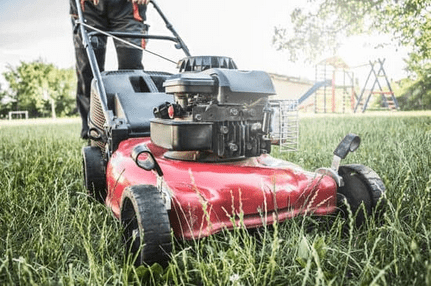
Ready to Upgrade Your Lawn Mower?
Please choose from our top-rated self-propelled mowers and experience the perfect combination of power, convenience, and cutting performance for your lawn.
Shop Our Top Pick on Amazon
Frequently Asked Questions About Self-Propelled Lawn Mowers
How long do batteries last in electric self-propelled mowers?
Modern lithium-ion batteries in quality electric self-propelled mowers typically last 3-5 years or approximately 500 charge cycles before noticeable capacity reduction occurs. Most batteries maintain at least 80% of their original capacity after this period, meaning a mower that initially ran for 60 minutes might operate for 48 minutes or more with the same battery after several years of use.
Factors affecting battery longevity include charging practices (partial charges are generally preferable to full discharges), storage conditions (moderate temperatures extend the lifespan), and usage patterns (consistent moderate loads are more beneficial than frequent maximum-power operation).
Premium models like the EGO POWER+ LM2114SP include sophisticated battery management systems that prevent harmful conditions and extend useful life. Replacement batteries typically cost $200-400, depending on voltage and capacity, though prices continue to trend downward as production scales increase. Many manufacturers offer battery recycling programs when purchasing replacements, ensuring environmentally responsible disposal of lithium-ion batteries.
Are self-propelled mowers worth the extra cost over push mowers?
Self-propelled mowers typically justify their $100-300 price premium over comparable push models for most homeowners by reducing physical effort and mowing time. The value proposition becomes particularly strong for properties with slopes, uneven terrain, or larger areas where pushing a 70-80 pound mower becomes physically demanding. Self-propulsion systems significantly reduce operator fatigue, enabling more consistent cutting speeds and often resulting in a better overall lawn appearance.
For older homeowners or those with physical limitations, self-propelled models may represent the difference between managing lawn care independently versus requiring assistance. The efficiency gains typically reduce mowing time by 20-30% compared to push mowers, providing tangible time savings throughout the mowing season.
Modern self-propelled systems, such as those in the EGO Power LM 213SP, offer variable-speed control that adapts to your walking pace, creating a natural mowing experience that further justifies the investment. For very small, flat properties under 1/8 acre, the additional cost may be less justifiable. Still, for typical suburban lots, self-propelled technology represents a worthwhile investment in both comfort and efficiency.
How do electric self-propelled mowers compare to gas models in performance?
The performance gap between electric and gas self-propelled mowers has narrowed significantly, with high-voltage electric models now matching or exceeding gas models' performance in most residential applications. Modern 56V-80V electric mowers like the EGO POWER+ LM2114SP and Greenworks 80V deliver cutting torque comparable to 160-180cc gas engines, easily handling typical lawn conditions, including moderately tall or thick grass. Electric models offer several performance advantages: instant full-power availability without warm-up, consistent torque output regardless of battery charge level (until near depletion), and the ability to maintain full power at any altitude.
Gas mowers retain advantages in specific scenarios, including extremely tall grass (6+ inches), wet heavy grass, and extended operation beyond battery capacity.
The primary remaining performance distinction involves runtime limitations—electric models operate for 40-70 minutes, depending on the model and conditions, while gas mowers run indefinitely with fuel refills.
For properties requiring more than 60 continuous minutes of mowing, gas models like the BILT HARD still offer practical advantages unless users purchase additional batteries for their electric mowers. For typical suburban lots under half an acre, modern electric self-propelled mowers now offer performance equivalent to gas-powered mowers, with significantly less noise, zero emissions, and reduced maintenance.
What maintenance do self-propelled mowers require?
Maintenance requirements differ significantly between electric and gas self-propelled mowers. Electric models, such as the EGO and Greenworks options, require minimal maintenance: regular blade sharpening (2-3 times per season), deck cleaning after use, occasional inspection of the drive system, and proper battery storage during off-seasons.
These models eliminate the need for oil changes, air filters, spark plug replacements, and fuel system maintenance. Gas mowers, such as the AMERISUN and BILT HARD, require more extensive care, including oil changes every 25-50 operating hours, air filter cleaning or replacement, spark plug service, carburetor adjustments, fuel system management with stabilizers for storage, and the same blade and deck maintenance as electric models.
All self-propelled mowers benefit from regular inspection of the drive system, including belt condition (if applicable), cable adjustments, and proper lubrication of moving parts according to manufacturer specifications.
The self-propulsion components add some maintenance complexity compared to push mowers, but modern designs have considerably simplified these systems. Following the manufacturer-recommended maintenance schedule helps prevent the most common problems and substantially extend equipment life.
For most homeowners, the dramatically reduced maintenance requirements of electric self-propelled mowers represent a significant advantage that partially offsets their typically higher purchase price.
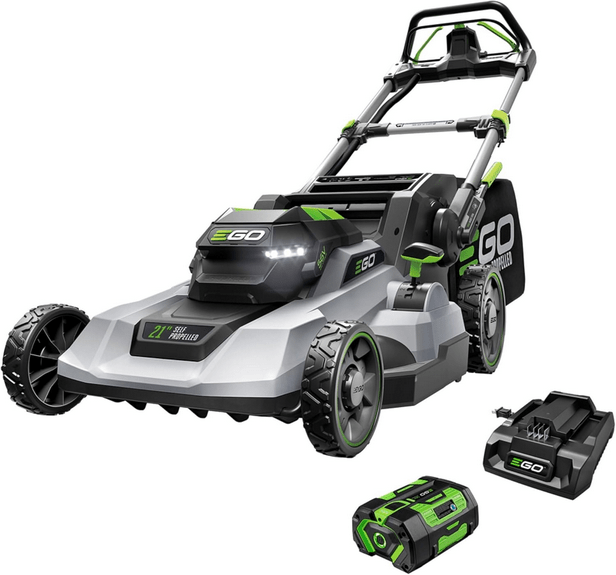
Which self-propelled mower is best for hills and slopes?
For hills and slopes, rear-wheel drive (RWD) self-propelled mowers provide superior performance by maintaining traction where weight naturally shifts during uphill mowing. In our 2025 lineup, the BILT HARD 21" Self-Propelled Gas Mower excels on challenging terrain with its powerful 201cc engine, rear-wheel drive system, and oversized 11-inch rear wheels that provide exceptional grip on inclines up to 20 degrees.
For those preferring electric options, the EGO POWER+ LM2114SP offers the best hill performance among battery models, combining rear-wheel drive with optimized weight distribution and variable-speed control that maintains consistent power on slopes. Key features that enhance hill performance include a larger rear wheel diameter (the BILT HARD's 11-inch wheels provide significant advantages), aggressive tire tread patterns for improved grip, higher-torque engines or motors that prevent bogging down on inclines, and rear-wheel drive systems that leverage the mower's weight distribution on uphill passes.
For extreme slopes exceeding 20 degrees, specialized slope mowers may be necessary, as standard self-propelled models have safety and performance limitations on very steep terrain. When mowing hills, always work across the slope rather than straight up and down for maximum stability and safety.
Can electric self-propelled mowers handle wet grass?
Modern electric self-propelled mowers can handle moderately damp grass, though with some important limitations and considerations. High-voltage models like the EGO POWER+ LM2114SP and Greenworks 80V provide sufficient power to cut through moisture-heavy grass that might stall lower-powered electric mowers.
However, wet mowing affects electric models in several ways: battery run time typically decreases by 20-30% due to increased power demands; clipping discharge and mulching performance diminish as wet grass tends to clump rather than flow smoothly through the deck; and cut quality often suffers with more tearing rather than clean cutting of wet grass blades.
The EGO POWER+ LM2114SP offers the best wet grass performance among our electric lineup with its weather-resistant construction and powerful motor, though even this premium model performs optimally with dry grass. For safety, never use any electric mower during rainfall or when standing water is present, as even weather-resistant models aren't designed for operation in actual rain.
If regularly mowing damp morning grass is unavoidable, consider models with higher voltage (56V+) and extended battery capacity to compensate for the increased power demands.
What's the average lifespan of a self-propelled lawn mower?
Quality self-propelled lawn mowers typically last 8-12 years with proper maintenance, though individual components may require replacement during this period. Electric models like the EGO and Greenworks often achieve longer mechanical lifespans due to fewer moving parts and no exposure to fuel-system deterioration, with many components potentially lasting 15+ years. However, their batteries typically require replacement after 3-5 years, representing a significant maintenance cost.
Gas models like the AMERISUN and BILT HARD generally provide 8-10 years of service before major engine components may require overhaul or replacement. The self-propulsion systems in both types typically last 5-8 years before potentially needing drive belt replacement or transmission service.
Factors significantly affecting lifespan include maintenance frequency (regular oil changes extend gas engine life by 30-50%), storage conditions (protected, dry storage prevents premature corrosion and electrical issues), lawn conditions (regularly mowing extremely tall or wet grass accelerates wear), and build quality (commercial-grade components like those in the EGO POWER+ LM2114SP typically outlast consumer-grade alternatives).
With optimal care, premium models can exceed average lifespans by several years, making their higher initial cost more economical when calculated as annual ownership expense.
DISCLAIMER
This document is provided for general information purposes only and should not be relied upon as providing legal advice, technical, or specific operational guidance to the reader, whether as to the practices described in the document or the applicable legal requirements and regulations. Lawnfly.com expressly disclaims any responsibility for liability arising from or related to the use or misuse of any information in this document.