Spring Pruning Guide: What to Cut Now and What to Leave Alone
Spring rolls in with a rush of new growth and, honestly, a mountain of yard chores. But if you prune at the right time, you’ll see a real difference.
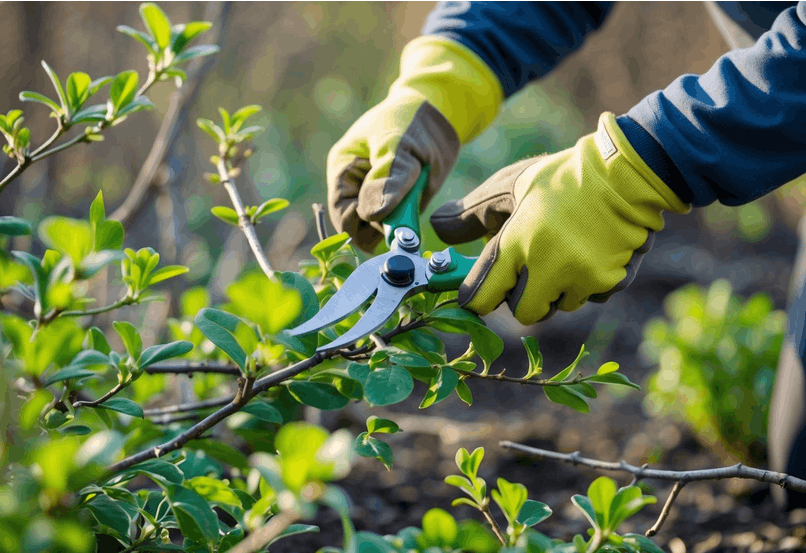
Go ahead and cut dead or damaged branches, and prune shrubs that bloom on new wood now. Leave spring-flowering plants that set buds last year alone until after they bloom.
Just stick to a few simple rules and you’ll help your plants stay healthy and keep those blooms coming.
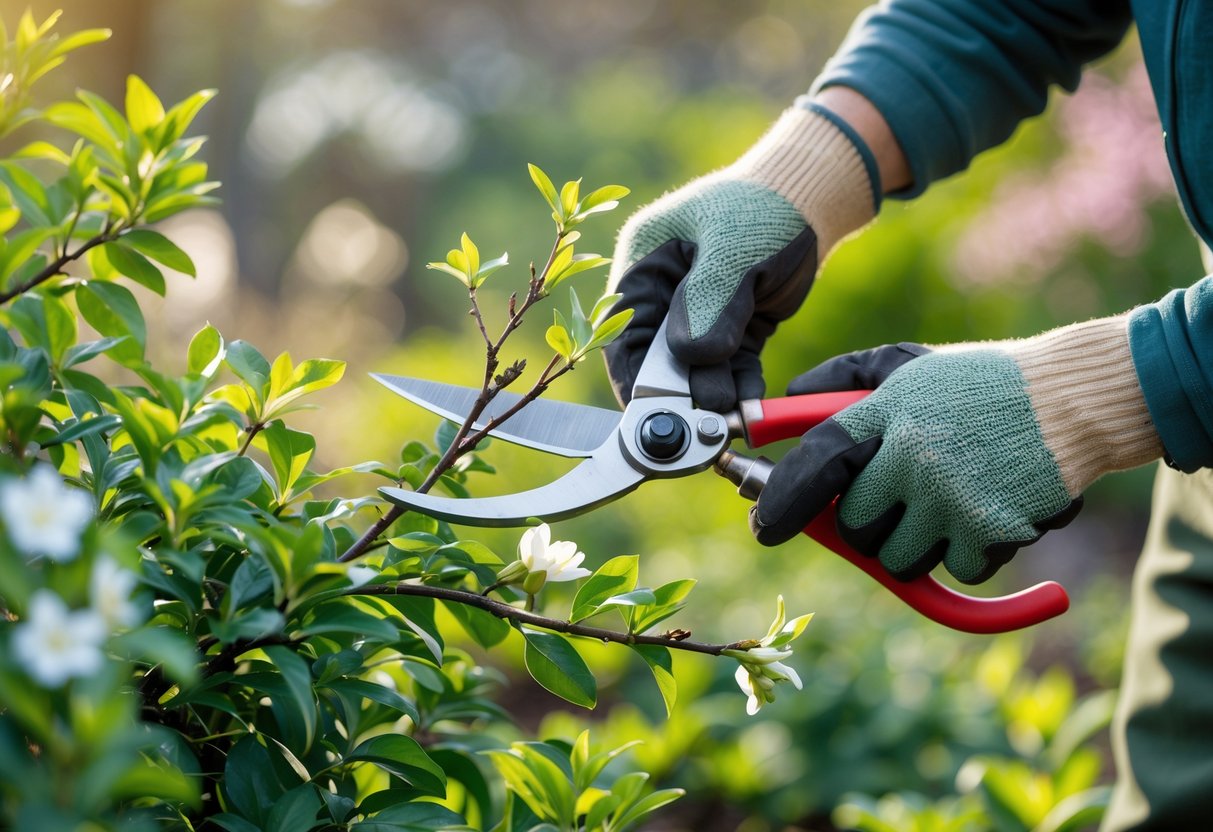
Let’s talk about which tools and cuts actually help plants heal. I’ll flag some common timing mistakes and share quick fixes for overgrown shrubs so your yard looks sharp all season.
Key Takeaways
- Prune dead wood and new-wood bloomers now to encourage healthy growth.
- Wait to prune plants that bloom on old wood until after they finish flowering.
- Use proper tools and timing to avoid common pruning mistakes.
Why Spring Pruning Is Essential
Spring pruning gets rid of dead wood, shapes growth, and boosts flowering while lowering the risk of disease. It lets new shoots catch more light and air, so your plants get a strong start.
Benefits for Plant Health and Flowering
When you prune in spring, you take off winter-damaged branches and dead stems that can hide bugs and disease. That way, the plant puts its energy into healthy buds instead of trying to fix broken stuff.
Shrubs and perennials that bloom on new wood love an early spring pruning. You’ll get more side shoots and bigger summer or fall flowers.
For repeat-blooming roses, a light prune in spring clears out old canes and opens things up, which means more blooms later. Don’t prune spring-flowering shrubs until after they bloom or you’ll be cutting off this season’s flowers. That’s just a bummer.
How Pruning Improves Air Circulation
Thinning out crowded branches opens up the plant’s center so air can move through. Good airflow dries leaves faster after rain and keeps those nasty fungal diseases in check.
Snip out crossing branches, weak shoots, and anything growing inward. Try not to cut more than a third of a shrub at once, unless you’re doing a serious rejuvenation prune.
Disinfect your tools between plants. Clean cuts heal faster, which means less chance of infection and a healthier garden overall.
Timing and the Growth Cycle
Spring pruning works best just before or as buds start to swell, but before leaves open. If you prune too early, frost can mess things up. Too late, and you might cut off flower buds.
Here’s a quick rule: prune new-wood bloomers in early spring, and wait until after flowering for old-wood bloomers. For perennials, cut back dead stems before new shoots pop up so you don’t hurt fresh growth.
Know when each plant blooms. That’s the trick to keeping your pruning game strong (and your flowers safe).
What to Cut Back in Spring: Must-Prune Plants
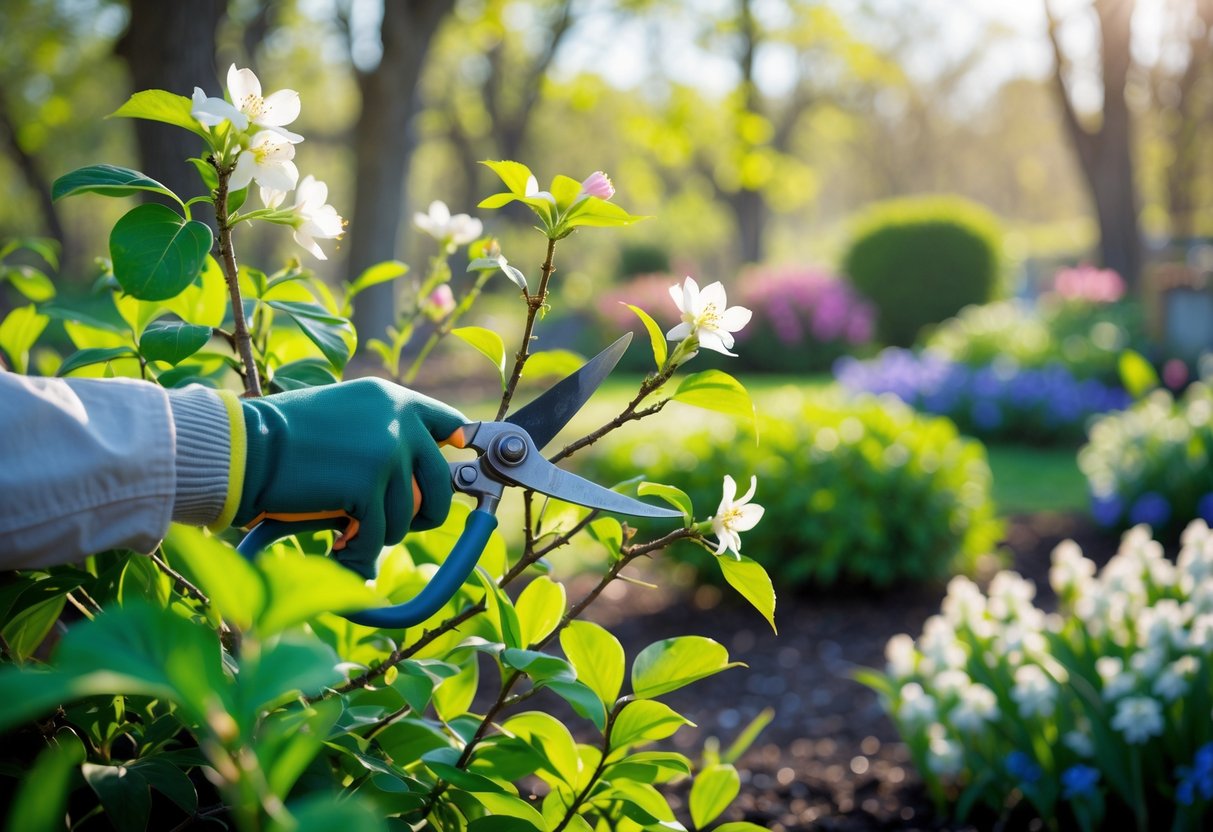
Start by removing broken wood, opening up the canopy, and making space for strong new shoots. Focus on dead or damaged limbs first, then shape plants that bloom on new wood, tidy up perennials that died back, and reduce overgrown shrubs and hedges.
Dead or Damaged Branches
Cut out any branches that are clearly dead, cracked, or diseased. Look for dry, brittle wood, missing bark, or brown inner wood when you slice a limb.
Remove these back to healthy tissue or the main trunk. That stops decay and helps the plant heal.
Use clean, sharp tools and make cuts just outside the branch collar—don’t leave stubs. For big limbs, do the three-cut method: undercut, top cut, then take off the stub.
Toss diseased branches in the trash, not the compost. No need to spread trouble around.
Summer-Flowering Shrubs and New Wood Bloomers
Give a hard trim in early spring to shrubs that flower on new wood. Butterfly bush, rose of Sharon, and most summer spireas love this.
Cutting back wakes up vigorous shoots for summer blooms. For panicle (H. paniculata) and smooth hydrangea (H. arborescens), prune down to a few strong buds or about 6–12 inches tall. These bloom on this year’s wood, so don’t be shy—a firm cut helps the flowers look great.
Stick to the one-third rule for most shrubs: take off up to a third of the plant’s height. Snip out crossing or weak stems to let in more air and light.
Perennials That Died Back Over Winter
Cut back herbaceous perennials that left dead stems and leaves after frost. Hostas, daylilies, bee balm, coneflowers, black-eyed Susans—they all need old foliage out of the way for new shoots.
Cut to the crown or base where new growth is popping up. If you like winter interest or want to feed the birds, leave some seed heads. Otherwise, clear out the dead stuff to keep pests and disease down.
For ornamental grasses, trim them to a few inches above the soil before new growth appears. Use hand pruners for small stems and shears for big clumps. Clean cuts help plants bounce back and let you spot new buds easier.
Overgrown Shrubs and Hedges
When a shrub gets leggy or a hedge is just too tall, spring is the time to jump in and reshape. Cut out the oldest, thickest stems first to spark new growth at the base.
For multi-stemmed shrubs, thin by taking a few of the biggest stems down to the ground each year. If you’re reducing height, don’t remove more than a third of a mature shrub at once. For hedges, trim so the base is a bit wider than the top—helps the lower branches get sun.
If you need to do a hard renewal, cut it back severely in spring only if you know the species can handle it. Always step back and eyeball your work so things look natural, not hacked up.
What Not to Prune in Spring
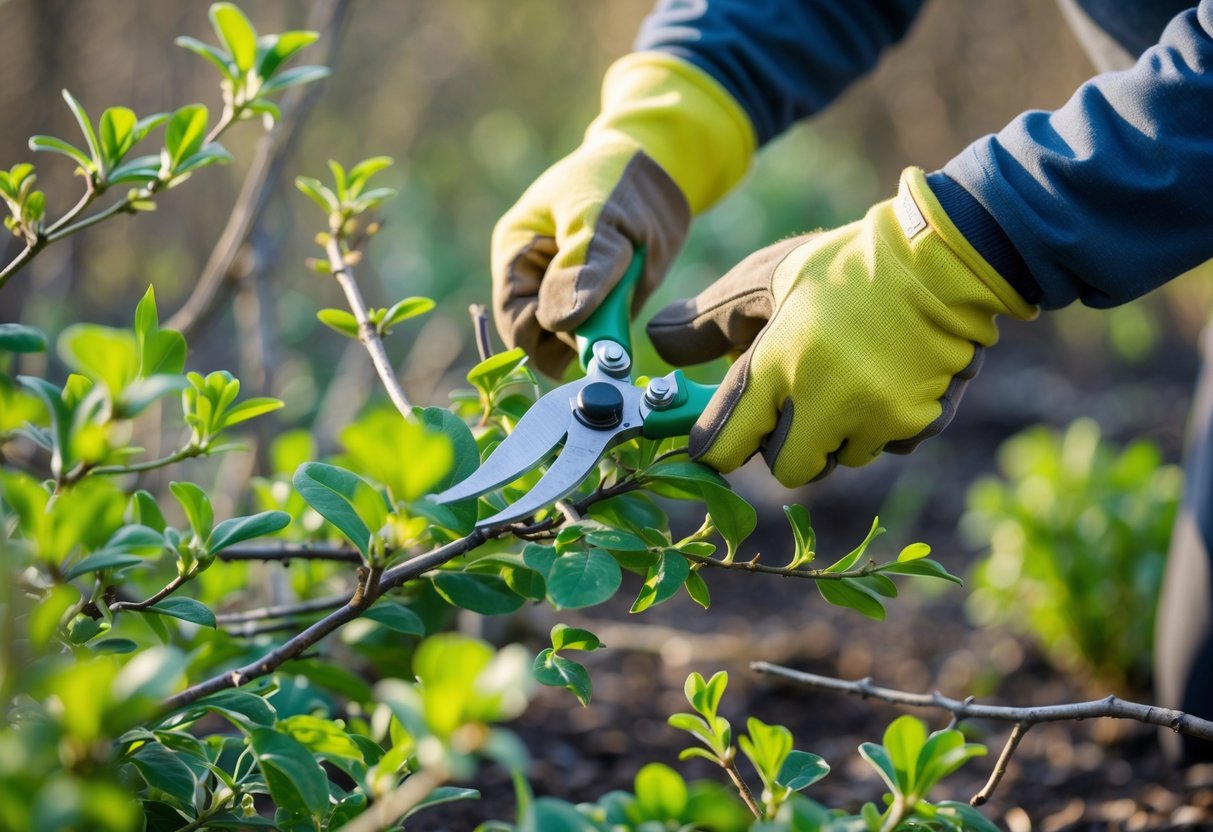
Only prune when you’re sure you won’t chop off this year’s flowers, weaken fresh growth, or open the door to disease. Wait until plants finish blooming, fully leaf out, or go dormant after spring growth before you cut.
Spring-Blooming Shrubs and Old Wood Bloomers
Don’t prune shrubs that bloom on last year’s wood in spring. If you do, you’ll cut off the flower buds that formed last season. Lilac, forsythia, many viburnums, and azaleas all fall into this category.
Oakleaf and bigleaf hydrangeas also flower on old wood. Wait until after they finish blooming before you shape or thin them. Only take out dead or damaged branches now—leave healthy stems alone.
If you’re not sure if a shrub blooms on old or new wood, just wait until after it blooms. Better safe than sorry.
Early-Blooming Bulbs
Don’t cut back the leaves on bulbs like tulips, daffodils, and crocus until they turn yellow. The leaves feed the bulb for next year’s flowers.
Deadhead spent blooms if you want, but leave the leaves for at least four to six weeks. That gives the bulbs time to recharge. If you’re not sure about a bulb’s timing, check the label or do a quick search.
Don’t bother lifting or dividing bulbs right after bloom unless they’re crowded and looking rough. Let them store up energy in the ground first.
Ornamental Grasses: When to Wait
Most ornamental grasses should stay uncut through early spring. They protect crowns from frost and give helpful bugs a place to hang out.
Cut them back in late winter or very early spring, but only after you see new green shoots. If you trim too early, you could slice off new growth or stress the plant.
For fountain grass, maiden grass, and miscanthus, wait for firm new blades at the base before you prune. Use clean shears and cut a few inches above the crown.
If you like winter structure, don’t rush—wait until late March or April, depending on your weather.
Sap-Bleeding Trees and Special Cases
Skip pruning trees that bleed sap in spring, such as maples, birches, and walnuts. Fresh wounds when sap is rising can drip and attract pests or disease.
Wait until late spring or summer when sap flow slows down. Also, don’t prune plants that set flower buds in late summer for next year’s bloom, like some camellias and magnolias.
Only remove dead, diseased, or unsafe wood now. Save shaping cuts for after blooming or summer.
How to Prune: Tools and Techniques
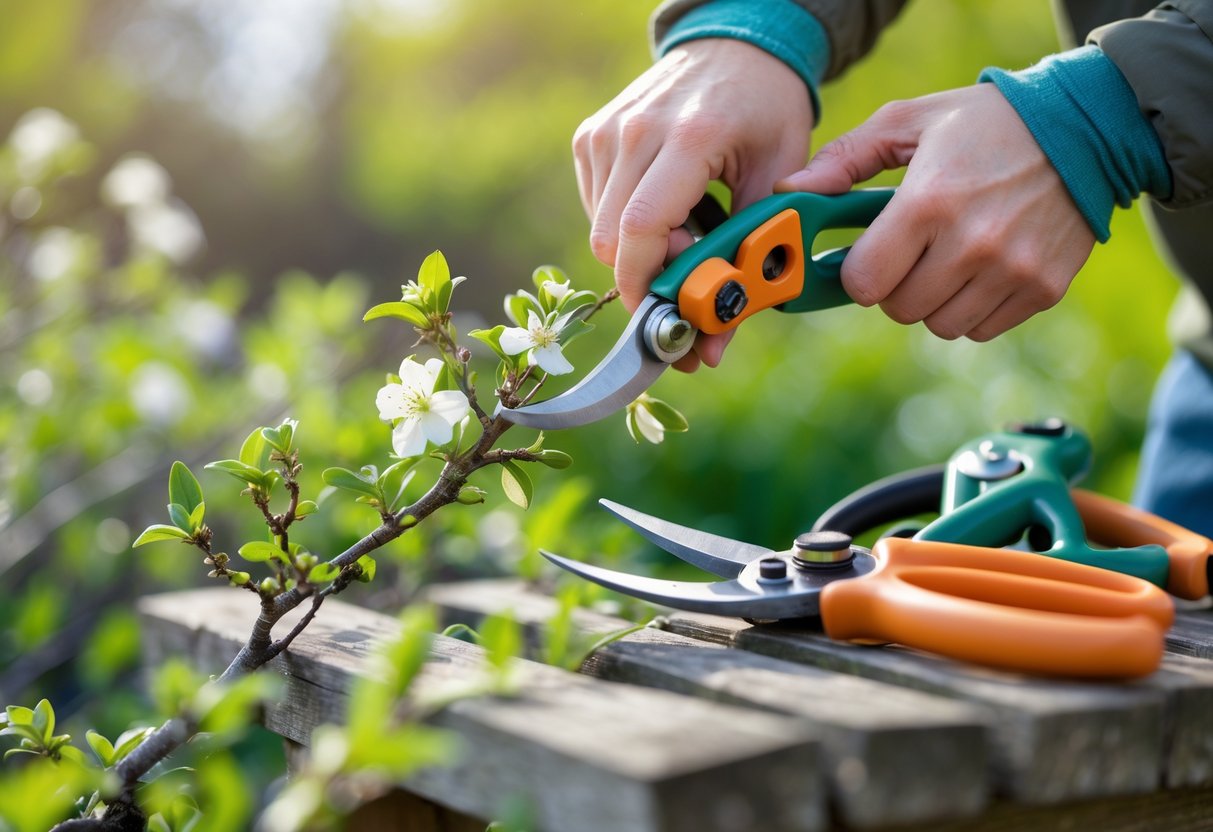
You really just need the right tools, clean cuts, and solid timing to keep plants healthy and blooming. Use sharp secateurs or loppers that fit the branch size, sterilize between plants, and prune before new growth or right after flowering—depends on the plant.
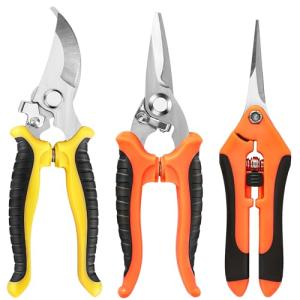
Choosing the Right Pruning Shears, Loppers, and Secateurs
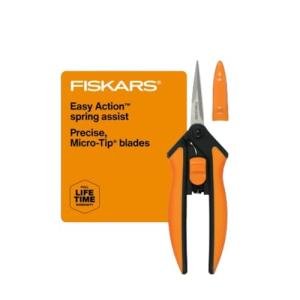
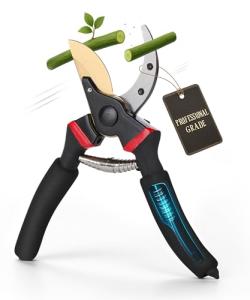
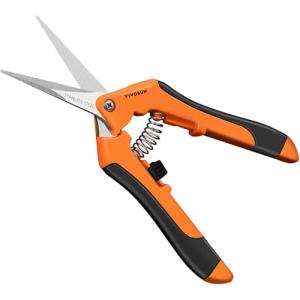
Pick tools that suit the job. Use bypass secateurs (pruning shears) for green stems up to about 1 cm wide—they make clean cuts that heal fast.
Grab long-handled loppers for 1–3 cm branches. The extra length gives you leverage and saves your back from awkward bending.
Keep blades sharp. A sharp blade slices cleanly and avoids ragged wounds that invite disease.
Test sharpness by slicing tissue paper or snipping a small twig. If the blades drag or crush, sharpen them with a file or whetstone.
Fit really matters. Buy secateurs that feel comfy in your hand and open easily.
If you prune a lot, only use ratchet or anvil styles for cutting dead, hard wood. Swap out worn springs and tighten any loose bolts before you start.
Making Clean Cuts and Preventing Disease
Always cut at a 45° angle, just above a bud or side branch. This keeps water from pooling and helps wounds heal faster.
For big branches, go with the three-cut method: notch underneath, make a top relief cut, then finish just outside the collar.
Sterilize tools between plants—especially if you see rust, fungal spots, or oozing sap. Wipe blades with 70% isopropyl alcohol or a 10% bleach mix, then let them dry.
Clean blades help stop blight, canker, and other nasty infections. Skip dressing deep wounds unless you really have to; most cuts heal better left open.
Wear gloves and eye protection when sawing or handling thorny material. Trust me, it's not worth the scratches.
Pruning Before New Growth or After Flowering
Figure out if your plant blooms on new wood or old wood before you start. Shrubs that flower on new wood (like buddleia or roses that bloom on new shoots) want pruning in early spring—this encourages long, flowering stems.
Cut back hard to a framework of strong buds. If a plant flowers on old wood (think lilac, forsythia, rhododendron), let it bloom first, then prune right after.
Remove dead or crossing branches whenever you spot them. That won't mess with flowering.
Time your cuts with your local climate. In frosty areas, wait until the last hard frost passes before pruning tender perennials.
For structural or safety pruning, don’t wait—get rid of dangerous limbs as soon as you can.
Pruning Common Garden Favorites
Here’s when to cut and when to hold off, plus the exact cuts that help each plant bloom their best. Stick to the right timing and style for each species so you don’t accidentally snip off next season’s flowers.
Roses: Hybrid Teas, Floribundas, and Shrub Varieties
For hybrid teas and floribundas, prune in early spring when the buds start to swell but before new leaves open. Cut out dead wood and any canes that look thin, weak, or brown inside.
Make a clean 45° cut about 1/4 inch above an outward-facing bud. Try to keep 3–5 sturdy canes and remove any crossing stems to open up the center for airflow.
Shrub roses like a lighter touch. Take out up to one-third of old wood to shape and promote new growth.
Snip off any diseased or dead branches whenever you see them. If your shrub is wild and overgrown, rejuvenate it by cutting one-third of the oldest canes down to the base each spring for three years.
Sterilize tools between cuts to keep disease from spreading. Always wear gloves and prune on a dry day to lower infection risk.
Hydrangeas: Panicle, Smooth, Oakleaf, and Bigleaf
Panicle and smooth hydrangeas bloom on new wood, so prune in late winter or early spring before growth starts. Cut back last year’s stems by a third to half to get strong new shoots and bigger flowers.
Remove weak or spindly stems at the base. Oakleaf hydrangeas usually flower on old wood, so wait until after they’re done blooming before you prune.
Remove dead flowered stems and just lightly shape them. Heavy cuts in spring will cost you this season’s blooms.
Bigleaf hydrangeas (mophead) can be tricky. Most bloom on old wood, so just deadhead lightly in spring and prune after flowering.
If you have a reblooming type that flowers on new wood, treat it like a panicle hydrangea and prune in early spring.
Always cut to healthy wood and thin out crossing or crowded stems for better air flow.
Butterfly Bush and Other Summer-Flowering Shrubs
Butterfly bush (Buddleja) blooms on new wood, so prune hard in early spring before new growth. Cut stems back to about 12–24 inches above the ground, leaving a framework of strong buds.
This hard cut brings on loads of summer flowers and keeps the shrub from getting leggy. Most summer-flowering shrubs follow the same rule: prune in early spring if they bloom mid-to-late summer.
Remove dead or damaged wood and thin crowded branches. Shape the plant by cutting to outward-facing buds.
Don’t prune early-flowering shrubs that bloom on old wood until after they finish flowering. Toss diseased or pest-ridden prunings in the trash—not the compost pile.
Spring Pruning Mistakes to Avoid
Let’s talk about what not to do, how to bounce back from over-pruning, and a few habits that keep shrubs and trees thriving year after year.
Common Errors and How to Prevent Them
One big mistake? Pruning without a plan. Decide if you’re removing dead wood, shaping, or opening up the center for air.
Mark the branches you want to cut and step back to check the shape before you start snipping. Using dull or dirty tools is another classic blunder—it leaves ragged cuts and spreads disease.
Keep your shears and loppers sharp, and wipe blades with rubbing alcohol between plants. Always make clean, angled cuts just above a bud or branch collar to help wounds close up fast.
Pruning at the wrong time can also set plants back. Skip heavy pruning during peak growth (late spring into summer) for most trees and shrubs.
Let spring-flowering shrubs bloom before you touch them. If you need to prune a lot, break it up over a couple of years.
Over-thinning happens more than you’d think. Don’t take off more than 20–30% of live growth from shrubs or mature trees in one season.
For hedges, prune a little each year to keep their shape without shocking them.
Recovering from Over-Pruning
If you’ve gone too far, stop pruning unless you really need to remove dead wood. Plants need their leaves to make food and bounce back.
Over-pruned plants can get weak, so give them time and keep disturbance to a minimum. Help them recover with good care.
Water deeply during dry spells and add a 2–3 inch mulch layer around the roots, but keep it away from the trunk. Hold off on heavy fertilizers after a big prune; a light, balanced feed next season is safer.
Use selective pruning to restore structure. Cut back to healthy lateral branches, not just stubs.
If you lost major scaffold branches, stake young trees for a while to help them stand up to wind. Watch for pests and disease—open wounds are easy entry points.
Keep cuts clean and practice good sanitation to lower infection risk. If the plant doesn’t push out new growth by the end of the season, maybe it’s time to try something better suited to your spot.
Tips for Long-Term Plant Health
Make pruning part of your yearly routine. Jot down major cuts and dates—it helps you avoid overdoing it and lets you plan for blooms or fruit.
Get the right tools. Hand pruners for small stems, loppers for thicker stuff, and a pruning saw for anything over 1 inch thick.
Sharpen tools at the start of the season and clean them after each use. Learn each plant’s natural habit.
Some shrubs bloom on last year’s wood and should be pruned just after flowering. Others bloom on new wood and want pruning in late winter or early spring.
Match your timing to the plant to protect blooms and fruit. Follow the basics: remove dead or crossing branches first, thin crowded centers, and make angled cuts above outward-facing buds.
These habits might seem small, but they save you big headaches later and keep your landscape looking solid.
Frequently Asked Questions
Here are real-world answers you can use right now. Wondering how much to cut, when to wait, or how to make a clean, safe cut? Let’s dive in.
What is the 1-2-3 rule of pruning, and how do you apply it in spring?
The 1-2-3 rule means cut back one-third, two-thirds, or three-quarters depending on the plant’s size and age. Use one-third for routine shaping, two-thirds for rejuvenating overgrown shrubs, and three-quarters only if the plant is really old or on its last legs.
In spring, use the rule after you figure out if the plant blooms on new or old wood. For new-wood bloomers, prune in late winter or early spring using the right fraction. For old-wood bloomers, wait until after flowering and keep cuts light.
Which shrubs should be pruned in early spring, and which should wait until after flowering?
Prune summer-flowering shrubs in early spring. That includes butterfly bush, crape myrtle, and panicle hydrangea.
Hold off on pruning spring-flowering shrubs until their blooms fade. Leave lilac, forsythia, azalea, rhododendron, and old-wood hydrangea alone until after they flower.
How do you identify and remove dead, damaged, or diseased branches correctly?
Watch for wood that’s dry, brittle, dark, or missing leaf buds. Scrape a small spot with your thumbnail—live wood is green underneath, dead wood is brown.
Cut diseased or dead branches back to healthy wood or the main stem. Sterilize tools between cuts if you see disease, and toss infected clippings in the trash or burn them (if that’s allowed).
What is the proper way to make a pruning cut to avoid tearing bark and encourage healing?
Use sharp, clean tools for smooth cuts. Cut just outside the branch collar—the swollen bit where the branch meets the trunk—so the tree can seal up the wound.
For big limbs, try the three-step cut: undercut 6–12 inches from the trunk, then a top cut a few inches further out, and finally remove the stub at the branch collar. This keeps the bark from tearing.
How much can you safely cut back in spring without stressing the plant?
Don’t remove more than one-third of a healthy shrub’s branches in a season. That way, the plant keeps enough leaves for energy and growth.
With herbaceous perennials, go ahead and cut all dead stems. For evergreens and trees, stick to thinning and removing damaged wood—gentle is better.
Which trees should not be pruned in spring because of heavy sap flow or disease risk?
Don't go heavy on pruning maple, birch, or walnut in early spring. If you do, you'll notice they bleed sap like crazy.
That sap loss doesn't just look messy—it actually weakens the tree and can attract pests.
For oaks, it's a bit tricky. If oak wilt is a problem in your area, definitely skip spring pruning.
It's usually safer to prune oaks in late spring or summer, or just check with your local extension for the best timing. Better safe than sorry, right?
DISCLAIMER
This document is provided for general information purposes only and should not be relied upon as providing legal advice, technical, or specific operational guidance to the reader, whether as to the practices described in the document or the applicable legal requirements and regulations. lawnfly.com expressly disclaims any responsibility for liability arising from or related to the use or misuse of any information in this document.