The Best First Fertilizer of the Year: Match to Lawn Type & Region
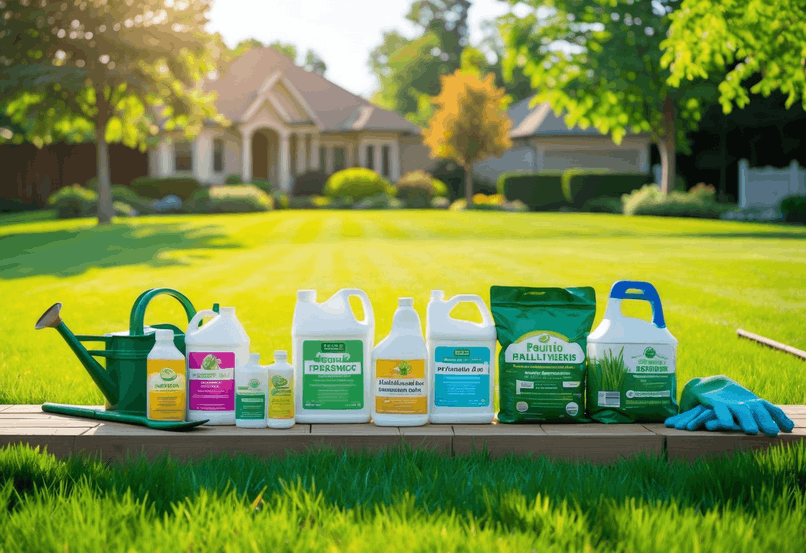
Picking the right first fertilizer of the year can make or break your lawn’s whole season. Your grass type and where you live decide what nutrients your lawn craves when it wakes up after winter.
A cool-season fescue lawn in the Northeast? That’s a totally different story than warm-season Bermuda grass in Texas.
The best first fertilizer depends on whether you’ve got cool-season or warm-season grass. Cool-season types like an early spring feeding, while warm-season grasses want their first boost in late spring.
If you mess up the timing or formula, you can waste money or even damage your grass. Some lawns love nitrogen-heavy options; others do better with balanced blends.
This guide breaks down which fertilizer works for your grass and region. You’ll get tips on reading fertilizer labels, nailing the timing, and picking products for common grasses like St. Augustine, Zoysia, Bermuda, and Fescue.
Understanding Lawn Types and Regions
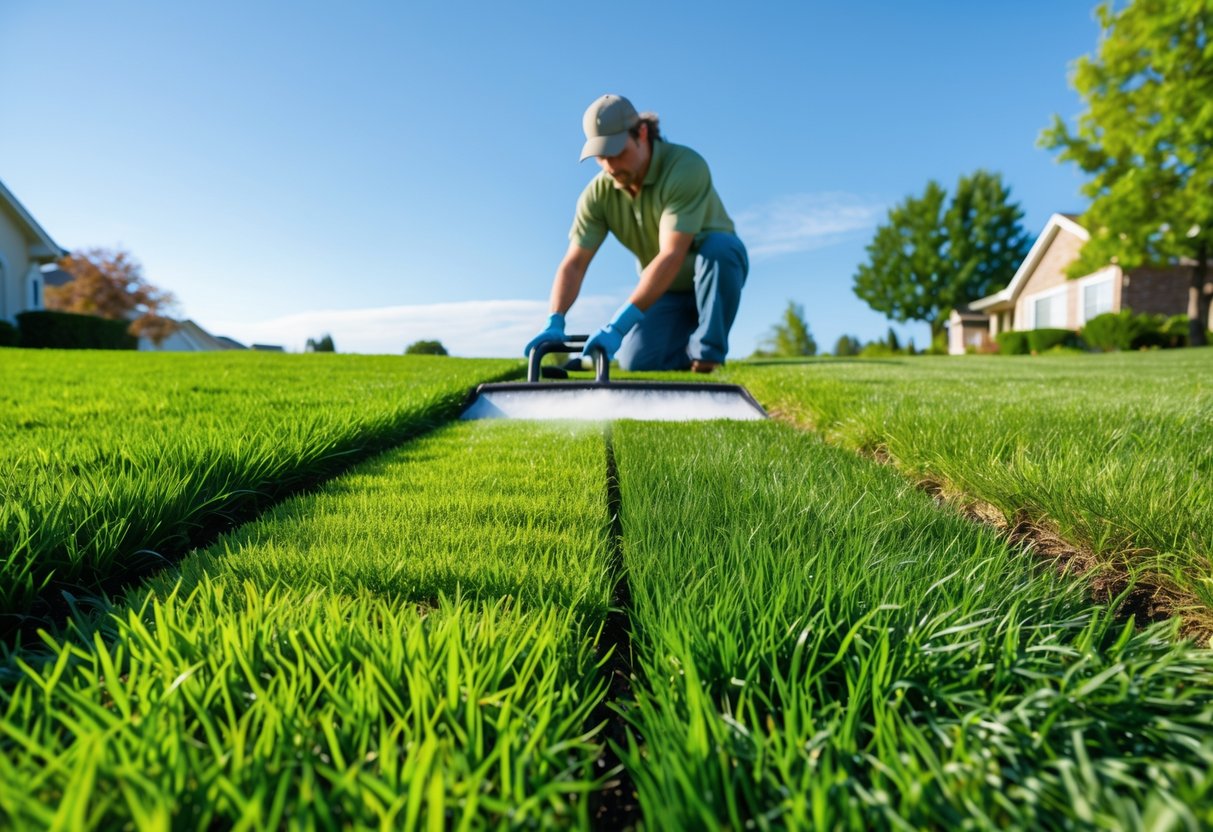
Your grass type and location really shape your fertilizer needs. Cool-season grasses thrive up north and want different nutrients than the warm-season kinds down south.
Identifying Cool-Season Grasses and Their Needs
Cool-season grasses grow best when it’s 60°F to 75°F outside. Think Kentucky bluegrass, tall fescue, fine fescue, and perennial ryegrass.
They hit their stride in spring and fall, so those are your main windows for feeding. Kentucky bluegrass is dense and dark green, but it’s thirsty and hungry—figure on 3 to 4 pounds of nitrogen per 1,000 square feet each year.
Tall fescue digs deep roots and handles heat better, making it a solid choice for transition zones. It needs a bit less—about 2 to 3 pounds of nitrogen per 1,000 square feet annually.
Fine fescue likes shady spots and asks for less fertilizer. Perennial ryegrass pops up quickly and handles foot traffic, but it wants steady moisture.
These grasses go dormant in hot summers and again during winter freezes.
Recognizing Warm-Season Grasses and Their Requirements
Warm-season grasses start growing when soil temps hit 65°F to 70°F and the air stays above 80°F. Bermudagrass, St. Augustine, Zoysia, and Centipede grass are the big names here.
You’ll want to fertilize these between late spring and late summer. Bermudagrass is a fertilizer hog, needing 3 to 6 pounds of nitrogen per 1,000 square feet per year. It spreads fast and handles lots of traffic.
St. Augustine thrives in coastal spots and can handle salt, but it struggles with cold. Zoysia asks for less water and fertilizer—2 to 3 pounds of nitrogen per 1,000 square feet does the trick.
Centipede grass is easygoing and needs very little fertilizer. If you dump too much nitrogen on warm-season lawns before they wake up, you’re wasting money and hurting water quality.
The Impact of Climate and Regional Factors
Your region decides when soil temps get warm enough for fertilizer. In northern states, you’ll want to wait until mid-April or early May to fertilize warm-season grass.
Down south, you can usually start in March once the soil holds steady above 65°F. Transition zones like Tennessee, North Carolina, and southern Missouri can be tricky.
You can grow both cool- and warm-season grasses in these in-between spots. Split applications work best—lighter doses in spring and fall help avoid stressing the lawn during wild temperature swings.
Coastal regions get salt spray and sandy soils that drain super fast. Desert lawns deal with alkaline soils and serious heat. Mountain areas? Short seasons and wild temperature swings.
All of these factors tweak your fertilizer timing and type. Local bans on fertilizer help protect waterways from runoff. For example, Maryland restricts applications from November 15 to March 1. Minnesota and Michigan ban phosphorus unless a soil test proves you need it. It’s worth checking your county extension office for local rules.
Soil Type and pH Considerations
Soil type changes how your grass takes up nutrients. Sandy soils drain quickly, so you’ll need more frequent, lighter applications. Clay soils hold onto nutrients but can get compacted, choking roots.
Loam soils? Those are the sweet spot—good drainage and nutrient retention. Your soil pH also matters. Most grasses like it between 6.0 and 7.0.
Below 6.0, nutrients like phosphorus and calcium get locked up. Above 7.5, iron and manganese just hang out in the soil, unavailable to your grass.
Common soil pH by region:
| Region | Typical pH Range | Common Amendment Needed |
|---|---|---|
| Pacific Northwest | 5.0-6.0 | Lime to raise pH |
| Midwest | 6.5-7.0 | Usually balanced |
| Southeast | 5.5-6.5 | Lime every 2-3 years |
| Southwest | 7.5-8.5 | Sulfur to lower pH |
| Northeast | 5.5-6.5 | Lime application |
Test your soil every 2 or 3 years to keep tabs on pH and nutrients. Take samples from about 10 spots, six inches deep, mix them up, and send them to a lab. Spending $15 to $30 gives you a solid read on what your lawn actually needs.
Key Fertilizer Types for Lawn Success
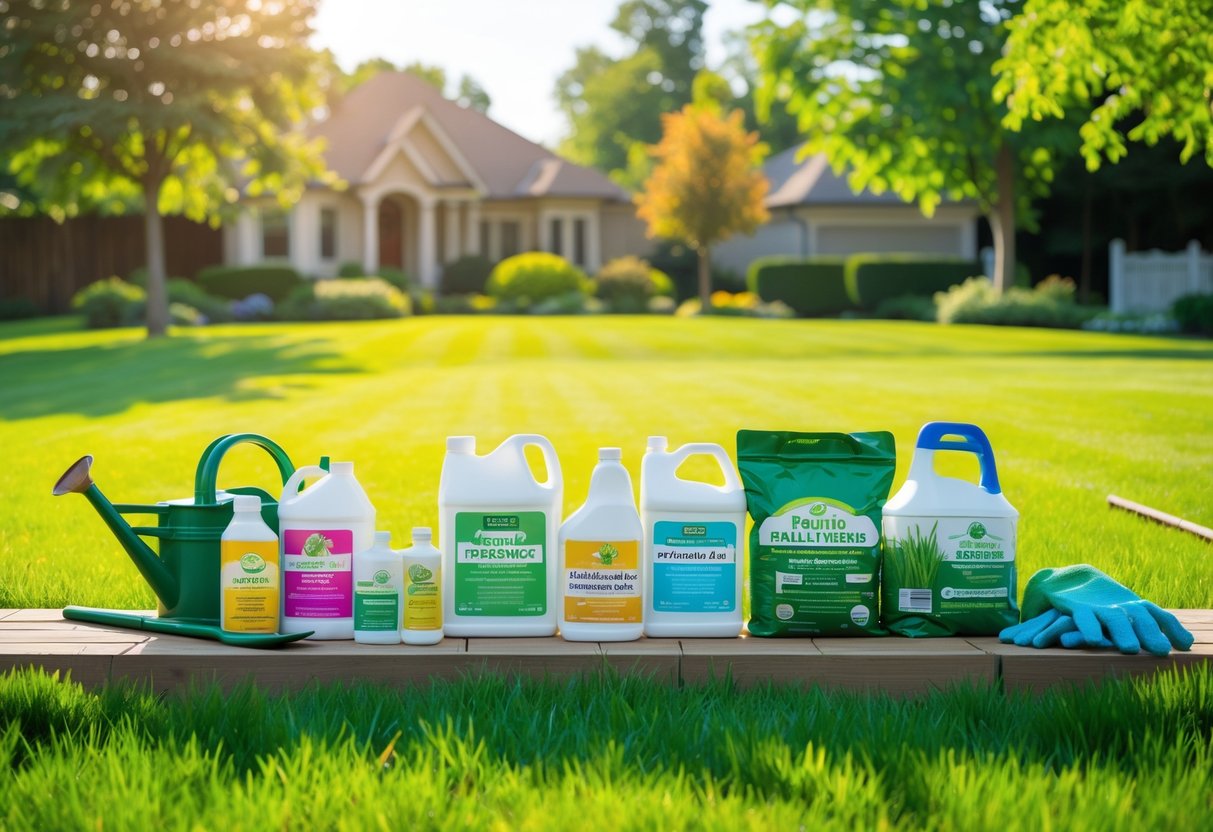
Fertilizer format matters. Granular options spread evenly and feed your lawn over weeks or even months, while liquid fertilizer absorbs fast for quick results.
Granular Versus Liquid Fertilizer: Which to Choose?
Granular fertilizer comes as little pellets. You spread them with a broadcast or drop spreader, and they break down slowly after watering, feeding your grass for weeks.
Usually, you’ll only need to apply granular every 6-8 weeks during the growing season. Liquid fertilizer mixes with water and soaks in through grass blades within a day or two. You’ll see a green-up in just a couple of days, so it’s great if you need a quick boost before a party or after stress.
The tradeoff? You’ll need to reapply liquid every 2-3 weeks to keep the look. Most people stick with granular for regular feeding since it’s less work and cheaper per treatment. Save the liquid stuff for those times when you need a rapid turnaround or want to fix a deficiency between granular feedings.
Organic and Synthetic Fertilizers Compared
Synthetic fertilizers are made with manufactured nutrients in precise ratios—think 16-4-8 or 32-0-4. Grass roots absorb these right away, so you get predictable results.
You’ll know exactly how much nitrogen, phosphorus, and potassium you’re putting down. Organic lawn fertilizers use natural stuff—composted plants, bone meal, biosolids. These feed soil microbes, which then release nutrients for your grass over time.
Organic options usually have lower nutrient percentages, so you’ll need to use more to get the same punch. Synthetic fertilizers are great if you want fast results and exact ratios. Organic fertilizer is slower but builds soil health and supports microbes. What matters more to you—speed or long-term soil health?
Slow-Release, Quick-Release, and Starter Fertilizers
Quick-release fertilizer gives nutrients your grass can grab in just days. You’ll see a fast green-up, but you’ll also mow more and risk burning your lawn if you overdo it. The nutrients wash out within a month or so.
Slow-release fertilizer coats nutrients so they break down over 8-12 weeks. That means fewer applications and less risk of burning. Slow-release nitrogen helps avoid those wild growth spurts that leave you with piles of clippings.
Starter fertilizer is different—it’s got more phosphorus (the middle number in NPK) to help new grass roots get established. Use it when seeding or sodding, usually with ratios like 18-24-12 or 10-20-10. Once your grass matures after two months or so, switch to a maintenance fertilizer with more nitrogen and less phosphorus.
Decoding NPK Ratios and Application Timing
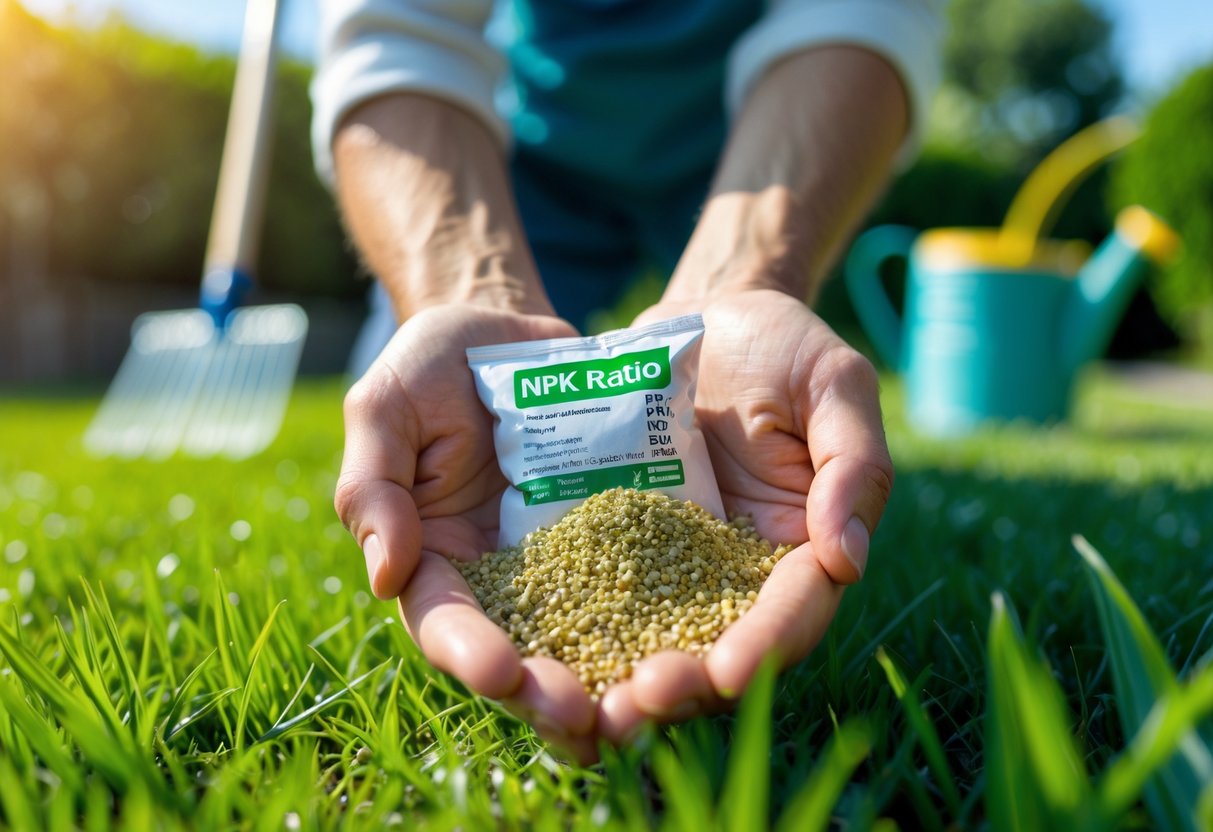
The three numbers on a fertilizer bag tell you exactly what you’re feeding your lawn. Nail these ratios and your timing, and you’ll see a big difference in how your lawn performs early in the season.
Interpreting NPK Labels for Optimal Results
The NPK ratio shows the percentage of nitrogen (N), phosphorus (P), and potassium (K) in your fertilizer. For example, a 20-5-10 bag contains 20% nitrogen, 5% phosphorus, and 10% potassium.
Nitrogen drives green growth and color—basically, it’s what makes your grass pop. Phosphorus helps build strong roots, which is especially key for new lawns or grass waking up from winter.
Potassium toughens your grass against stress, disease, and temperature swings. For your first feeding of the year, go for a balanced approach that helps roots and early growth.
A fertilizer like Scotts Turf Builder Starter Food for New Grass uses a ratio around 24-25-4—lots of nitrogen for greening and extra phosphorus for roots. For established lawns, a 20-5-10 or 15-5-10 blend works well in spring.
Cool-season grasses want moderate nitrogen in early spring. Warm-season grasses need less phosphorus and more nitrogen once they’re fully greened up.
Seasonal Timing for First Fertilizer Application
When you apply your first fertilizer matters almost as much as which ratio you pick. Timing really depends on your grass type and where you live.
Cool-season grasses (Kentucky bluegrass, fescue, ryegrass) should get their first feeding in early to mid-spring, once soil temperatures hit 55°F. In the North, that usually means late March through April, while in transition zones, mid-March is your target.
Warm-season grasses (Bermuda, Zoysia, St. Augustine) need it warmer. Wait until soil temperatures stay at 65-70°F—late April through May in the South, or May into early June in transition areas.
If you fertilize too early, the grass is dormant and can't use the nutrients. Plus, you might just feed the weeds instead.
Too late, and you miss the window when your lawn really needs that boost for spring growth.
Water the lawn within 24 hours after fertilizing. This helps move nutrients into the soil and prevents fertilizer burn.
Feeding Newly Seeded Lawns
New grass seedlings have different needs than established lawns. They need extra phosphorus to help roots develop fast.
Use a starter fertilizer with higher phosphorus, like Turf Builder Starter Food or a similar product—look for ratios like 18-24-12 or 20-27-5. Apply it right as you seed, not before.
New lawns usually need less fertilizer than mature grass. Stick to the bag instructions—too much burns seedlings or causes spindly growth.
Once the grass reaches mowing height, give it a second feeding about 4-6 weeks after germination. At that point, you can switch to a regular lawn fertilizer with less phosphorus.
New lawns also need steady moisture. Water lightly twice a day until seeds sprout, then start watering deeper and less often as the roots grow in.
Top First Fertilizer Recommendations by Lawn Type and Region
Your first fertilizer of the year should match your grass type and region. Cool-season grasses want early spring feeding with balanced formulas, while warm-season lawns do best with a late spring application high in nitrogen.
Best Fertilizers for Cool-Season Grasses
If you grow fescue, Kentucky bluegrass, or ryegrass, apply fertilizer in early spring when soil hits 55°F. Scotts Turf Builder Lawn Food (32-0-4) is a solid pick for greening up without making the grass too leggy.
You’ll want about 1 pound of nitrogen per 1,000 square feet for the first round.
Milorganite is another good option, especially in the North. It’s a slow-release (6-4-0) organic fertilizer that feeds for 8-10 weeks and is less likely to burn your grass.
In the Midwest and Northeast, fertilize between mid-March and early April. If you’re farther north or at a higher elevation, wait until mid-April or early May.
If you’ve got weeds too, Scotts Turf Builder Weed & Feed handles both jobs—just make sure soil stays above 55°F before using it.
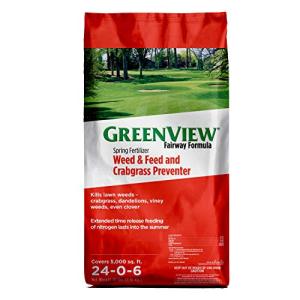
GreenView Spring Fertilizer Weed & Feed 18 lb
Give your lawn the boost it needs while tackling pesky weeds with this easy-to-use fertilizer
Product information
$44.99 $39.95
Product Review Score
4.36 out of 5 stars
60 reviewsProduct links
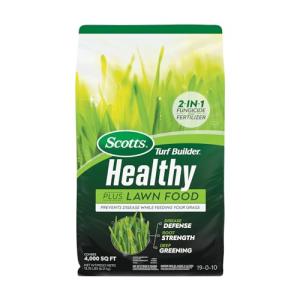
Scotts Turf Builder Lawn Food and Fungicide
Keep your lawn healthy and vibrant while tackling pesky weeds and diseases with this all-in-one solution
Product information
$18.99
Product Review Score
4.86 out of 5 stars
188 reviewsProduct links
Best Choices for Warm-Season Lawns
Bermuda, St. Augustine, zoysia, and centipede grasses need different timing. Wait until soil is steadily 65-70°F, usually late spring. If you go too early, you waste product and might even damage grass as it wakes up.
Simple Lawn Solutions Advanced 16-4-8 is a fast-acting liquid that gives warm-season lawns the nitrogen kick they want. One 32-ounce bottle covers 3,200 square feet, and you’ll see results in just a couple of days.
Bermuda and zoysia like professional-grade fertilizers with a 3-1-2 or 4-1-2 ratio. They’re heavy feeders and respond well to higher nitrogen. Scotts Green Max (27-0-2) is a common choice for a quick green-up.
Centipede grass is a bit picky. Use a lower-nitrogen formula, like 16-0-8 or 5-0-15. Too much nitrogen leads to thatch and yellowing.
Safe Picks for Regions with Fertilizer Restrictions
Some places restrict fertilizer use near water or during certain months. Florida, Maryland, New Jersey, and parts of Minnesota have rules about phosphorus and blackout dates. Always check your local ordinances before you buy anything.
Milorganite and most organic fertilizers usually face fewer restrictions. They release nutrients slowly and contain little or no phosphorus (6-4-0), which more areas are starting to ban.
Look for “phosphorus-free” products or those with a zero in the middle of the NPK ratio if your area has limits. Most established lawns don’t even need phosphorus unless a soil test says otherwise. Many brands now offer versions made specifically for restricted regions.
Fertilizer Application Techniques and Tools
How you apply fertilizer makes a huge difference. The right spreader and technique give even coverage, and proper watering keeps your grass safe and healthy.
Choosing the Right Fertilizer Spreader
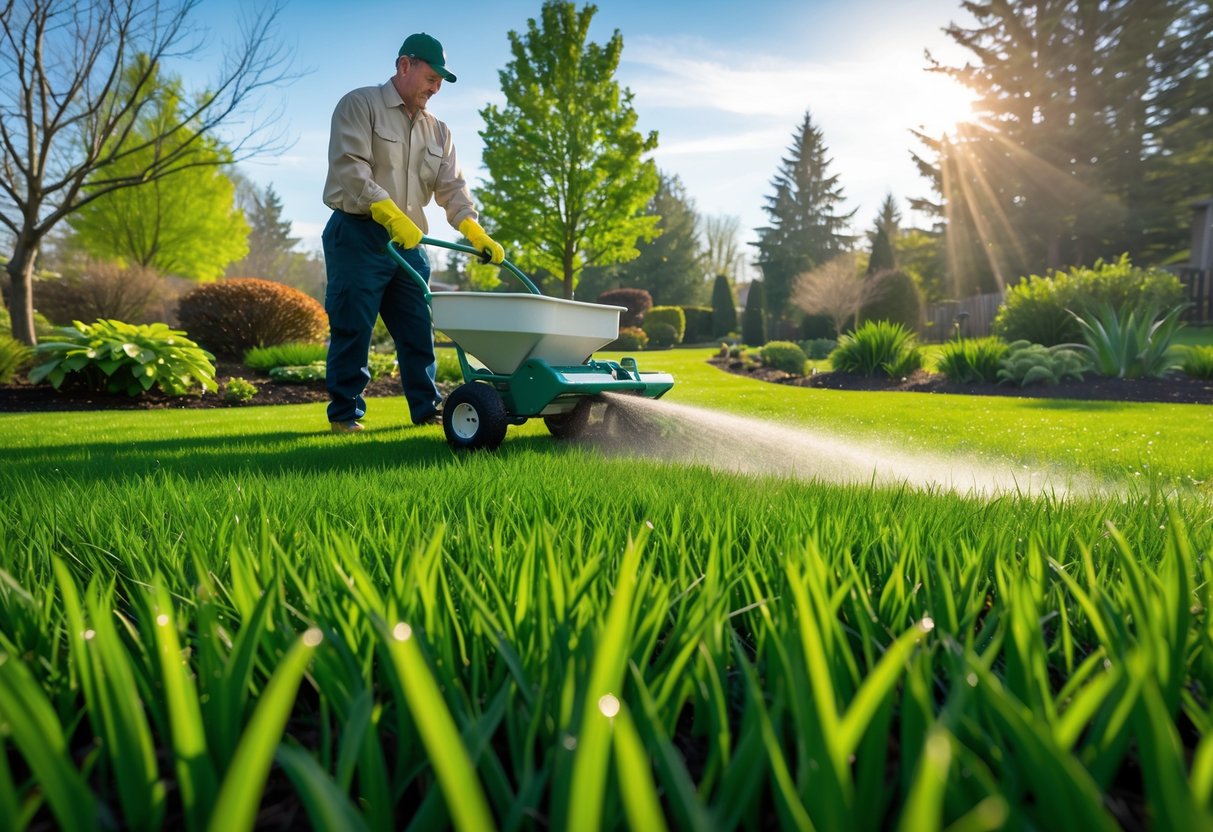
Broadcast spreaders toss fertilizer in a wide arc—great for big lawns over 5,000 square feet. They’re fast but can be messy at the edges.
Drop spreaders put fertilizer straight down in a narrow strip. They’re best for small to medium lawns or for precision work, like near flower beds.
For tiny lawns under 2,000 square feet, a handheld spreader works fine and costs $15-30. Push broadcast spreaders ($40-100) handle most yards, while drop spreaders ($50-150) keep fertilizer off sidewalks and gardens.
Check if your spreader settings match what the fertilizer bag says. Using the wrong setting wastes product or burns your lawn.
Proper Spreading and Watering Methods
Walk at a steady pace while spreading. If you go too fast, you’ll leave gaps; too slow, and you might overlap and burn the grass.
Use a crisscross pattern—one pass north-south, another east-west. That helps avoid stripes and gives better coverage.
Start with the perimeter, then fill in the middle. Always close the spreader before turning or stopping, or you’ll dump too much in one spot.
Water within 24 hours after applying granular fertilizer. About 0.25 inches of water is enough to dissolve the granules and get them to the roots.
If rain’s coming soon, you can skip watering. But don’t overwater—runoff just wastes fertilizer and pollutes drains.
Safety Tips and Environmental Considerations
Wear gloves, long pants, and closed shoes when handling fertilizer. Wash your hands after, even if you wore gloves.
Sweep up any fertilizer that lands on hard surfaces and toss it back on the lawn. Fertilizer in storm drains pollutes rivers and lakes.
Keep kids and pets off the grass until you’ve watered in the fertilizer ,and it’s dry. Store leftovers in the original bag, somewhere dry and locked up.
Never apply fertilizer right before heavy rain. Wait for calmer weather—24 to 48 hours without rain is best. Wind over 10 mph can blow fertilizer into gardens or even the neighbor’s yard.
Stick to the application rate on the bag. More doesn’t make your grass greener faster—it just burns it and wastes money.
Maintaining Lawn Health Beyond the First Feeding
After the first fertilizer, your lawn still needs regular care to stay thick and healthy. Managing weeds and pests, building up soil life, and tweaking your feeding plan keeps grass thriving all season.
Controlling Weeds and Lawn Pests
Weed and feed products combine fertilizer with herbicide, so you tackle two things at once. If you’re fighting broadleaf weeds like dandelions, these work well once the grass greens up in spring.
For crabgrass prevention, use a pre-emergent herbicide in early spring when soil hits 55°F. Scotts Triple Action combines pre-emergent, fertilizer, and weed killer—apply it 2-4 weeks after your first feeding, not at the same time.
Keep an eye out for lawn pests like grubs and chinch bugs during summer. If you see brown patches that peel up easily, that’s usually grub damage. Only use pest controls if you’re sure there’s an infestation.
Keep your lawn thick with proper mowing and watering. Thick grass naturally chokes out most weeds.
Encouraging Soil Health with Microbes
Healthy soil’s loaded with microbes that break down thatch and free up nutrients for your grass. Products with bio-tone microbes add these helpful organisms to your lawn’s root zone.
Apply microbe boosters after aerating for best results. The holes help them get deeper into the soil.
Leaving grass clippings after mowing feeds the soil’s microbes naturally. Clippings decompose fast and return nitrogen to the ground.
Skip harsh chemicals when you can—they kill good soil life along with pests. Compost topdressing once or twice a year adds organic matter and helps microbial populations. Spread a thin quarter-inch layer in spring or fall.
Monitoring Growth and Adjusting Fertilization
Your grass will show what it needs if you pay attention. Slow growth and pale color usually mean it’s short on nitrogen, while reddish or purple hints at a phosphorus shortage.
Check your lawn every week during the growing season. If it greens up fast after fertilizing but fades again in three weeks, try a slow-release fertilizer next time.
Cut back on fertilizer during drought or extreme heat. Stressed grass can’t use nutrients well and might burn even at normal rates.
Mark your fertilizer schedule on a calendar. Most lawns need feeding every 6-8 weeks while growing, but adjust based on how fast your grass uses up nutrients—not just by the calendar.
Frequently Asked Questions
Early spring fertilization needs the right nutrient ratios and timing for your grass and climate. The best fertilizer depends on your soil, region, and whether you’re feeding established turf or starting from scratch.
What are the ideal early spring lawn fertilizer options for cool-season grasses?
Cool-season grasses thrive on nitrogen-rich fertilizers in early spring, once soil temperatures hit 50-55°F. A balanced fertilizer like 20-5-10 or 24-0-6 is a solid pick for fescue, ryegrass, and Kentucky bluegrass.
Go for a slow-release formula to avoid a sudden burst of top growth that might actually weaken your grass. Quick-release nitrogen can burn cool-season varieties if you use it too early or pile it on.
If your lawn is already established, aim for 0.5 to 1 pound of nitrogen per 1,000 square feet. For new lawns, starter fertilizers with more phosphorus—think 18-24-12—are a better fit.
How can you determine the appropriate fertilizer for your lawn's needs?
A soil test gives you the most accurate read on what your lawn actually needs. You can reach out to your local extension office or grab a home kit to check pH and nutrient levels.
The results will tell you exactly which nutrients are missing. That way, you can choose a fertilizer that targets those gaps instead of just guessing.
Your grass type, soil, and climate all play a role here. Cool-season grasses have different needs than warm-season ones, and sandy soils usually need feeding more often than heavy clay.
When is the optimal time to apply spring lawn fertilizer?
Apply your first round of fertilizer when you see the grass growing and soil temperatures stay above 50°F. In most northern areas, that means sometime between late March and early May.
Wait until you've mowed the lawn at least twice before fertilizing. That’s a good sign the grass is awake and ready to use those nutrients.
Don’t fertilize too early while the grass is still dormant. If you do, the nutrients might just wash away or feed weeds instead of helping your turf.
What is the most effective fertilizer for initiating grass seed growth?
Starter fertilizers with a 10-10-10 or 18-24-12 ratio give new seedlings the phosphorus they need for roots. Apply these at seeding time or within a couple weeks after planting.
The extra phosphorus helps roots get established, since it doesn’t move much in soil and needs to be close to the seed. For new lawns, stick to 0.5 to 1 pound of nitrogen per 1,000 square feet.
Skip high-nitrogen fertilizers on new seed—they push for top growth before roots are really ready.
Which fertilizer promotes the best grass root development in early spring?
Fertilizers with good amounts of phosphorus and potassium help roots in early spring. Look for something like 10-20-10 or 5-10-5 if you want to emphasize those nutrients.
Phosphorus is especially key for root growth and works best in early spring or fall. It helps grass bounce back from winter and dig deeper roots.
Combining slow-release nitrogen with phosphorus gives you steady growth and stronger roots. Some products even add mycorrhizae or other helpful organisms for extra root support—worth considering if you’re really after that lush, healthy lawn.
Where can you find the top-rated lawn fertilizers for use during springtime?
Local garden centers and home improvement stores usually carry regional formulas that fit your climate. Staff can point you to products that work well with your grass and soil.
Online retailers give you a bigger selection of specialized fertilizers. It’s smart to check customer reviews and make sure the product actually fits your grass type and region before you buy.
Agricultural supply stores and nurseries often have professional-grade fertilizers. You might also find bulk options here, which can save money if you’ve got a bigger lawn.
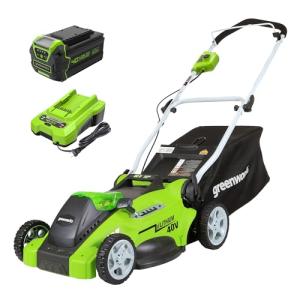
Greenworks 16-Inch G-MAX Battery-Powered Lawn Mower
Experience effortless mowing with this quiet and eco-friendly battery-powered lawn mower
Product information
$349.99 $279.99
Product Review Score
4.38 out of 5 stars
96 reviewsProduct links
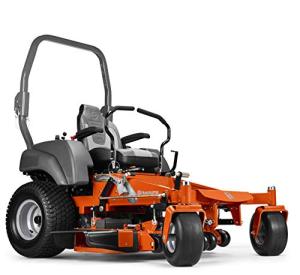
Husqvarna 61" Zero Turn Riding Mower 24 HP
Experience powerful mowing with precision handling for a beautifully manicured lawn
Product information
$6,299.00
Product Review Score
4.19 out of 5 stars
79 reviewsProduct links
DISCLAIMER
This document is provided for general information purposes only and should not be relied upon as providing legal advice, technical, or specific operational guidance to the reader, whether as to the practices described in the document or the applicable legal requirements and regulations. Lawnfly.com expressly disclaims any responsibility for liability arising from or related to the use or misuse of any information in this document.