
How to Select the Right Self-Propelled Lawn Mower: Expert Guide
You want a mower that fits your yard, not one that forces you to change how you mow. I’ll show you how to pick a self-propelled mower that matches your lawn size, terrain, and budget so you spend less time struggling and more time finished.
Choose a mower by matching drive type, power source, and cutting width to your yard’s needs rather than chasing the fanciest features.
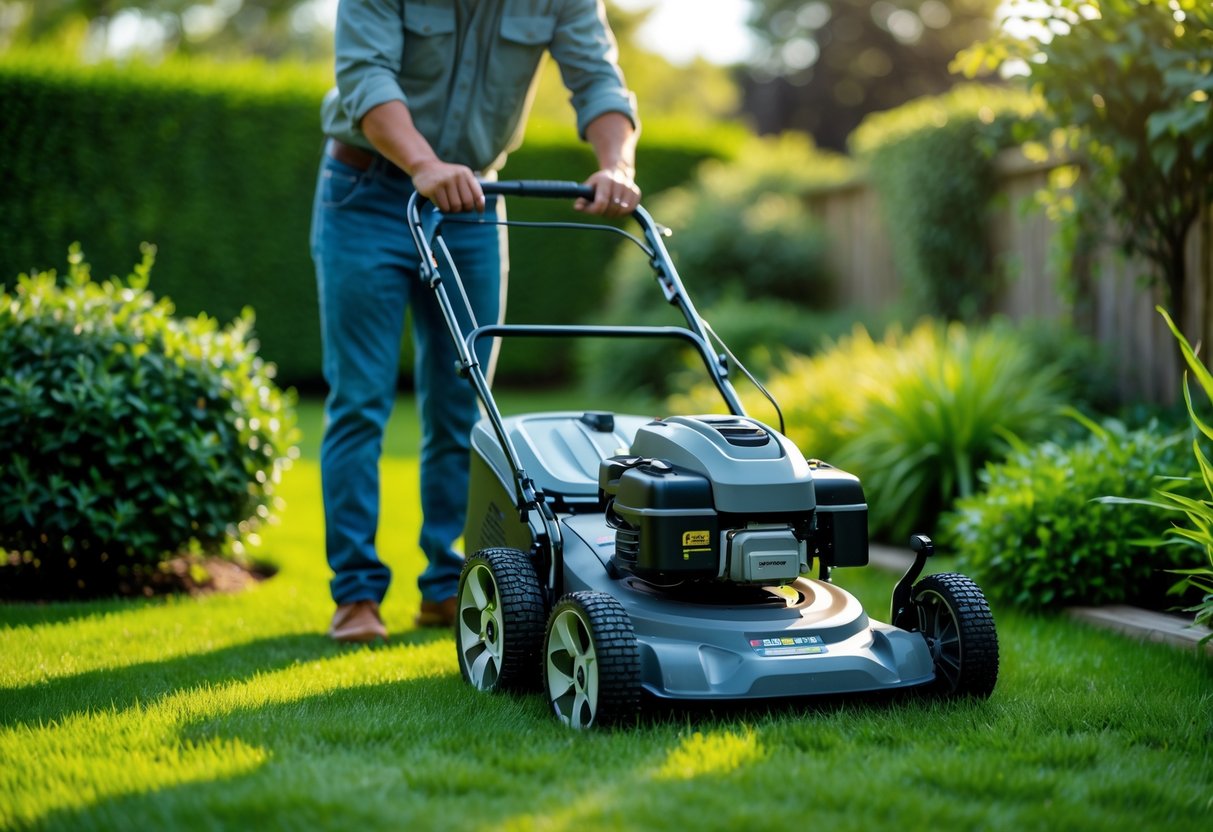
I’ll walk through the key features to compare. I’ll also explain the pros and cons of gas, battery, and electric mowers, plus some user-focused features that just make mowing easier.
You’ll learn the simple checks to make in-store or online so you end up with a mower that actually works for you.
Key Takeaways
- Match drive type and power to your yard for the best fit.
- Compare cutting width, runtime, and maintenance before deciding.
- Look for user-friendly features and solid build for long-term value.
Understanding Self-Propelled Lawn Mowers
I’ll explain what these mowers do and how their drive systems propel them. Let’s look at which drive type fits different yards.
Read the short descriptions and tech points to pick the best option for your lawn size and terrain.
What Is a Self-Propelled Lawn Mower
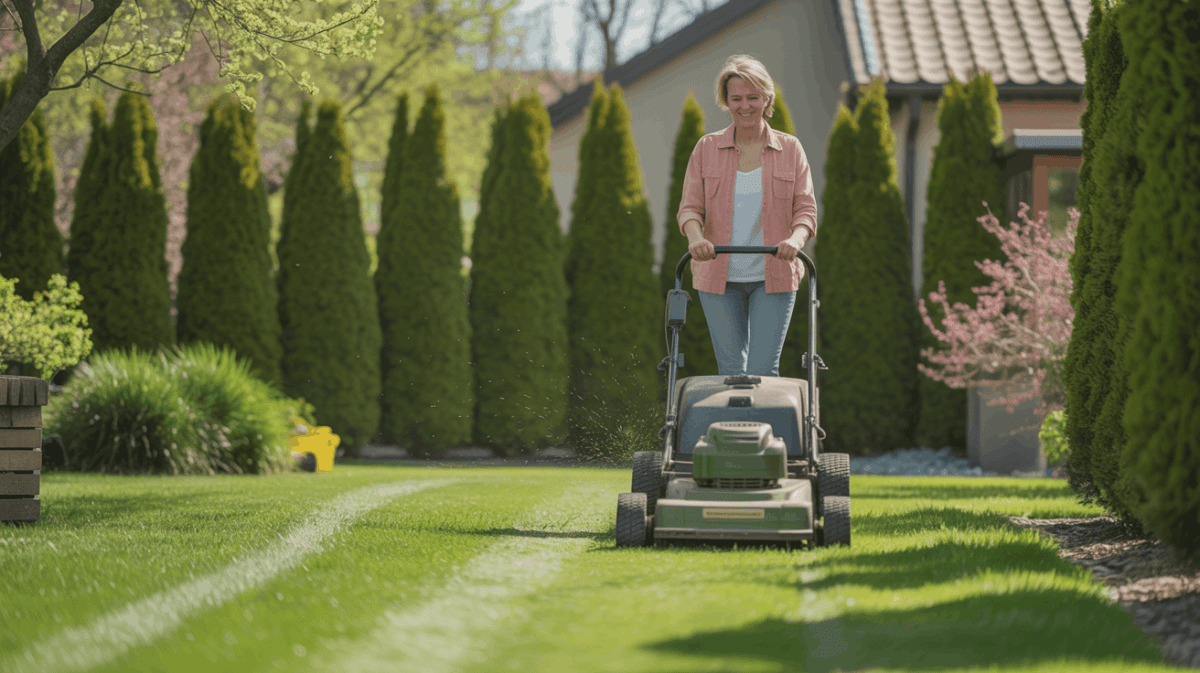
A self-propelled lawn mower is a walk-behind mower that uses engine power to move its wheels forward. I still hold the handle and steer, but the mower does most of the pushing for me.
This cuts fatigue and speeds up mowing, especially on larger or sloped yards.
- Less physical effort when cutting medium to large lawns.
- Easier handling on long runs and when mowing around obstacles.
- Available in gas and electric models, so I can choose based on power needs and noise preferences.
If my yard is under 1/4 acre and flat, a simple front-wheel-drive model might suffice. For hills or rough turf, I look for stronger traction and a more robust drive system.
How Self-Propelled Systems Work
Self-propelled systems transfer power from the engine or motor to one or more wheels through a transmission or direct-drive mechanism. I control speed with a lever, trigger, or variable drive called Personal Pace or Touch Drive on some models.
These controls let the mower match my walking speed without repeated throttle changes.
- Transmission type (gear, belt, hydrostatic).
- Drive engagement (lever, variable-speed dial, or operator-sensing control).
- Wheel drive linkage and belt condition for reliability.
When I start the mower, power flows into the drivetrain, turning the wheels. A well-maintained belt and correct tension keep the system running smoothly.
If a model lists Personal Pace or Touch Drive, it means the mower senses my pace and adjusts automatically for smoother control.
Types of Self-Propelled Drive Systems
There are three common drive layouts: front-wheel-drive (FWD), rear-wheel-drive (RWD), and all-wheel-drive (AWD). Each suits different yard conditions.
- Front-wheel-drive mower: Best for flat, manicured lawns. I get easier turning and a lower price. Traction drops on slopes, so I avoid FWD on hills.
- Rear-wheel-drive mower: Offers stronger traction for hilly or uneven yards. I notice better control going up inclines and over rough patches. RWD can be heavier to steer at tight corners.
- All-wheel-drive mower: Combines traction and stability for very uneven or steep terrain. I pay more, but AWD helps in mud, long grass, and slopes where both front and rear wheels need power.
I pick FWD for small flat yards, RWD for slopes, and AWD only if my yard has mixed terrain or persistent traction issues.
Key Factors to Consider When Choosing

I focus on the things that matter most: how big and steep your yard is, what drive and power the mower uses, and how well it cuts and handles grass.
These choices affect time spent, fuel or charging costs, and the final look of your lawn.
Lawn Size and Terrain
I pick cutting widths based on yard size. For yards under 1/4 acre, a 20–21 inch deck works well and lets me maneuver tight spaces.
For 1/4–1 acre, I prefer 21–22 inch decks to balance speed and control. Over 1 acre, I look at 24–30 inch decks to cut faster.
Slope and ground unevenness change my choice. Flat yards do fine with front-wheel drive or lightweight push mowers.
For hills and slips, I choose rear-wheel or all-wheel drive for better traction. For rough or rocky ground, I want a sturdier deck and stronger engine to avoid damage.
Drive System Selection and Traction
I match drive type to terrain and control needs. Front-wheel drive gives sharp turning on flat lawns and feels lighter to steer.
Rear-wheel drive pulls better on hills and resists bogging down in thick grass. All-wheel drive gives the best grip on very uneven or steep ground but adds weight and cost.
Variable-speed self-propel systems let me match walking pace without fighting the mower. I check traction aids like wider rear tires, high-torque transmission, and selectable drive engagement.
These features help when the grass is wet or the yard has repeated slopes.
Power Source: Gas vs. Electric vs. Battery
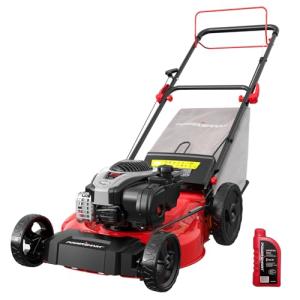
I compare engine power and running costs. Gas-powered mowers with brand engines like Briggs & Stratton give high torque for thick lawns and long runtimes.
They need oil changes, fuel, and more maintenance. Electric mowers (corded) suit small yards where outlets are nearby.
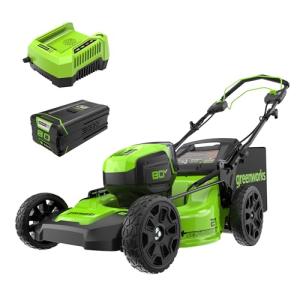
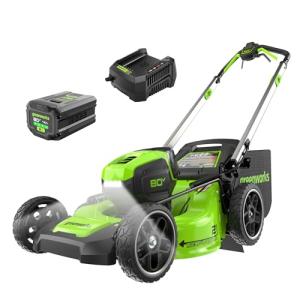
They cost less to run but limit range. Cordless battery-powered mowers from makers like EGO Power+ and Greenworks (40V/60V/80V) offer quiet operation and low upkeep.
Higher-voltage batteries give longer runtime and better cutting power.
Match battery capacity (Ah) and voltage to lawn size. Keep spare batteries if your yard exceeds one battery’s runtime.
Consider charging time and replacement battery cost when choosing cordless models.
Cutting Performance and Quality
I put cutting performance first for lawn appearance. Look at blade quality, deck design, and cutting width.
A well-shaped steel deck and sharp, heat-treated blades give an even cut and clean clippings. Wider decks cut more per pass but can struggle around tight corners.
Engine power matters for thick or overgrown grass. A 140–190cc gas engine or high-voltage battery system keeps speed under load.
Check for adjustable cutting heights, with at least 5–7 positions ranging from about 1 to 4 inches, to match the grass type and season.
Also evaluate mulching, side-discharge, and bagging options. Good mulching chops clippings finely and returns nutrients.
A roomy bag (1.5+ bushels) means fewer stops. For residential lawn care, I balance cutting quality with ease of maintenance to find the best self-propelled lawn mower for my needs.
Features and Specifications That Matter
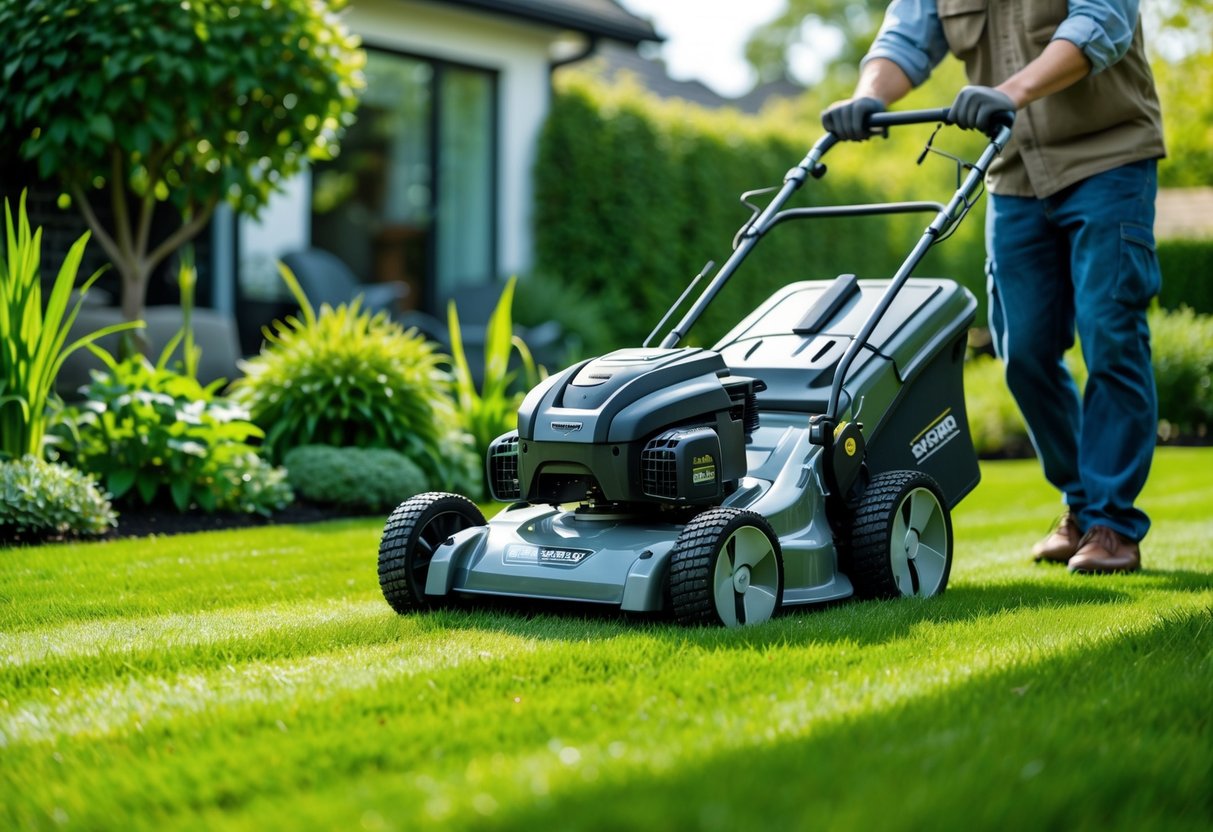
I focus on features that change how a mower cuts, handles, and deals with clippings. These are the parts you’ll use every time: deck size and cut width, how you raise and lower the blade, how easy the mower moves, and where the grass goes.
Cutting Width and Deck Size
Deck size directly affects how many passes I need. A 21-inch deck suits small yards and tight spaces.
A 22-inch deck or larger cuts more per pass and speeds up work on medium to large lawns. Wider decks cut faster but are harder to store and turn around near flower beds.
Cutting width also affects fuel or battery use. Bigger decks need more power.
For battery mowers, I pick a deck that matches battery capacity so I can finish the lawn in one charge. For gas or electric mowers, a 21–22-inch deck usually balances speed and maneuvering.
Consider obstacles and gate size. If I must fit through a 30-inch gate, a 22-inch mower is tight but doable; anything wider may not fit.
For curvy yards, a slightly narrower deck helps me navigate without extra trimming.
Height Adjustment Systems
Cutting height matters for lawn health. I look for multiple cutting heights and a simple way to change them.
Single-lever height adjustment or single-point adjusters let me change all wheels at once in seconds. That saves time compared to changing each wheel.
Common cutting heights range from about 1.0 to 4.0 inches. Lower settings suit short, fine grass; higher settings help tall or coarse grass.
If my grass varies, I prefer a mower with at least five height positions for flexibility.
Some mowers have tool-free height adjusters and clear markings. Those are easier to use.
Avoid models with stiff or hard-to-reach levers, since I adjust height several times a season.
Maneuverability and Ease of Use
How a mower handles affects fatigue and accuracy. Front-wheel drive is good for flat, smooth yards and tight turns.
Rear-wheel drive or all-wheel drive helps on hills and rough turf. I pick rear-wheel drive for slopes or uneven ground.
Look for adjustable handlebars and comfortable grips. Push-button electric start and push-button speed control reduce hassle.
Foldable handles and vertical storage help if my garage is small.
Weight matters when lifting over steps or loading into a truck. Battery mowers can be heavy because of batteries, while gas mowers feel lighter but need more maintenance.
A washout port or deck cleanout port makes cleaning under the deck easier and keeps performance steady.
Grass Clipping Management Options
Decide how you want to handle clippings: mulching, rear bagging, or side discharge.
A mulching mower with a mulch plug chops clippings fine and returns them to the lawn as nutrients. I use mulching when grass is healthy and not too tall.
Rear bagging collects clippings for a tidy finish. I use it when I want a clean look or need to remove weeds.
Side discharge works well for very tall grass or when I want quick passes without stopping. Some mowers let you swap between mulching, bagging, and side discharge without tools.
I like models with a mulching blade and an easy-to-install mulch plug. If my yard is big, I check for a large-capacity bag and a deck cleanout or washout port to prevent buildup after bagging.
Comparing Gas, Battery, and Electric Models
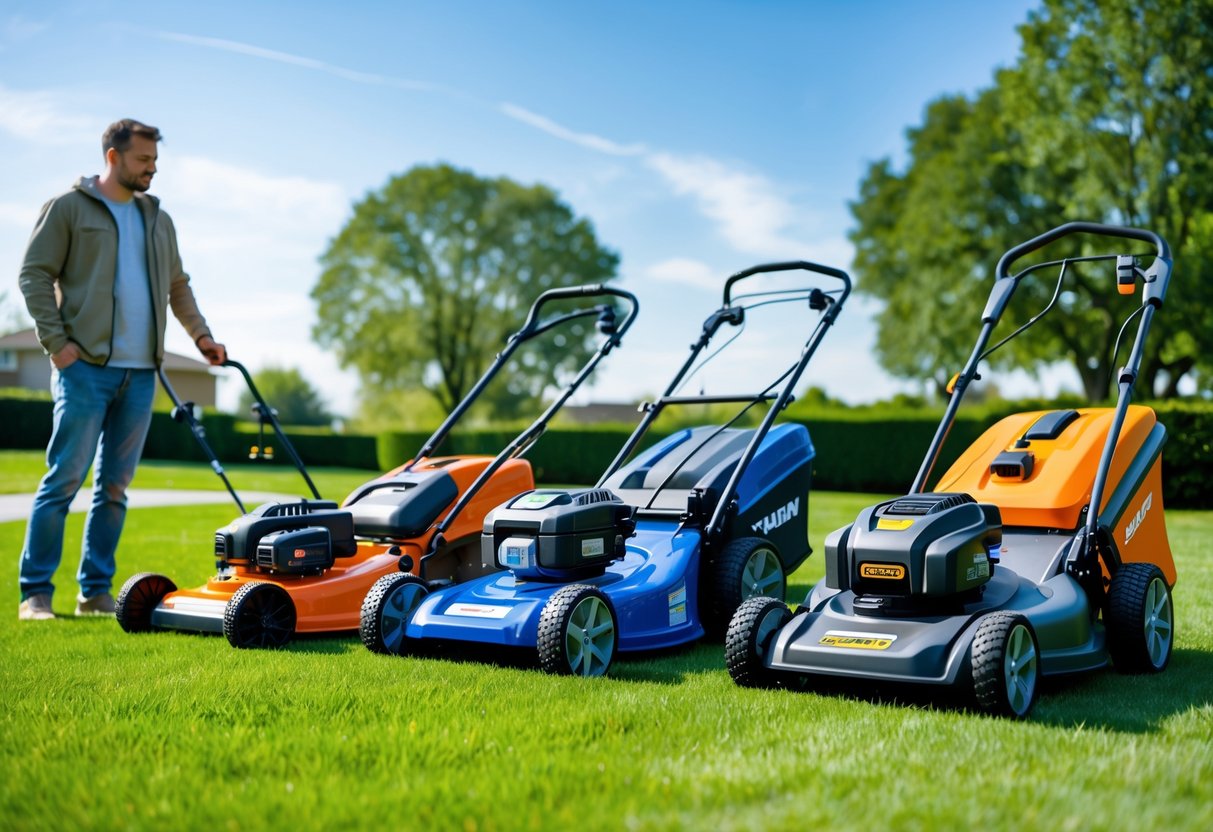
I focus on which power type fits yard size, noise needs, and upkeep. I compare fuel and maintenance costs, cutting power on thick grass, and battery runtime plus charger options.
Pros and Cons of Gas Lawn Mowers
I choose gas mowers when I need raw power and long run times without recharging. Gas models with 160cc or larger engines handle thick grass and steep slopes best.
They usually have longer blade life under heavy use and simpler replacement parts availability. Maintenance is a clear downside.
I have to do oil changes, spark plug checks, and winterization. Recoil starters can be frustrating compared to push-button starts, though some newer gas units now offer electric start.
Gas mowers are loud, emit fumes, and cost more to run per season than electric alternatives. If parts longevity and fuel refueling matter more than noise or emissions, gas makes sense.
For smaller yards or frequent short cuts, the upkeep and emissions often outweigh the benefits.
Advantages of Battery-Powered Mowers
I pick a battery-powered mower for quiet operation and low maintenance. Modern brushless motors match gas power on many models while producing far less noise.
With a good setup—like a dual-battery system or a 4.0Ah battery paired with a rapid charger—I can get 45–85 minutes of runtime depending on grass and speed. Battery systems reduce routine maintenance: no oil or spark plugs, fewer replacement parts, and minimal winter work.
I keep an eye on battery life over the seasons. Lithium-ion batteries usually retain useful capacity for many charge cycles, but replacement costs matter eventually.
Battery ecosystems add value. I like using the same batteries in my trimmer or blower.
For larger yards, I look for dual batteries or fast charging to avoid mid-mow downtime.
EGO Power+ Self-Propelled Cordless Lawn Mower
Enjoy effortless mowing with this powerful, easy-to-use cordless lawn mower that makes your yard work a breeze
Product information
$999.00
Product Review Score
4.74 out of 5 stars
62 reviewsProduct links
Benefits of Electric Self-Propelled Mowers
I use corded electric mowers for very small yards or tight spaces where unlimited runtime matters. The cord means I never worry about battery runtime or replacement costs.
Corded models are light, have consistent power, and need almost no mechanical maintenance. The cord can limit movement and sometimes gets in the way, so careful planning and an extension-rated cord are essential.
Cordless electric mowers blend benefits: they offer the low-maintenance and quiet operation of electric power with the freedom of battery mobility. I always check the advertised runtime against real conditions and see if the mower supports a rapid charger or swappable batteries.
For most homeowners seeking low-maintenance, cleaner operation, electric self-propelled models—corded or cordless—provide practical, quieter mowing with fewer parts to service.
User Experience and Advanced Features
I focus on controls that save effort, handles that cut fatigue, and features that make upkeep and storage simple. These things affect daily use more than brand names or price.
Adjustable Speed and Drive Controls
I look for adjustable speed so the mower matches my walking pace. Models with variable speed control or CVT-style systems let me set a steady speed instead of forcing me to walk faster or slower.
Personal Pace drive and touch drive systems that sense or follow my stride reduce push effort on slopes and long lawns. Check for a clear speed lever or dial and a readable indicator.
A mower that offers multiple speed ranges (slow for precise edging, faster for open areas) cuts time and improves comfort. If a mower has a blade brake clutch it lets me stop the blade to empty the bag or move the mower without shutting the engine or motor, which speeds up small tasks.
Battery models with a rapid charger matter too—shorter charge times mean less downtime.
Ergonomics and Handle Design
I try out the handle shape, height, and folding options for the first time I use a mower. A folding handle makes storage easy and fits in tighter sheds.
Adjustable handle heights let me stand upright and reduce lower back strain. I prefer padded grips and a center-mounted control panel so I don’t reach awkwardly.
Controls should be within thumb or forefinger reach. A well-placed speed lever, blade engage, and safety bar reduce hand movement.
The mower’s balance matters too—rear-wheel drive models often steer easier on hills. I also check how easy it is to fold or unfold the handle after use; quick-release pins save time and keep me from wrestling with tools.
Noise, Maintenance, and Storage Solutions
I consider noise level, especially for early-morning mowing. Battery models run quieter than gas, and many list decibel ratings.
Lower noise helps neighbors and lets me mow earlier. For maintenance, I value features like a deck cleanout port so I can flush clippings without flipping the mower.
A blade brake or blade brake clutch reduces risk when servicing the deck. Brushless motors need less upkeep than brushed ones, and easily accessible battery bays speed swaps.
Storage-wise, look for a folding handle and a lightweight design for carrying. Mowers with onboard wrench storage or simple tool-free access to the blade make seasonal tasks easier.
If you have a larger yard, a mower that supports a rapid charger and spare battery slot keeps work moving without long waits.
Durability, Reliability, and Value Considerations
I focus on hard facts: what lasts, what breaks, and what gives the best value over years of mowing. Read the parts, service, and real-world performance to avoid surprises.
Build Quality and Longevity
I check deck material first. Steel or alloy steel decks resist dents and protect blade tip speed better than thin plastic.
A 21–25 inch steel deck balances cut width and maneuverability. Larger decks like the Toro TimeMaster 30-inch cut faster but add weight and potential wear points.
Look at spindle and mower-gear construction. Sealed spindles and metal gear housings last longer than exposed bearings and cheap plastic gears.
For electric models, I prefer brushless motors because they run cooler and reduce long-term wear compared with brushed motors.
Replacement parts matter. Brands with wide parts networks—Greenworks, EGO, Toro—make repairs cheaper and faster.
I read mower reviews that report common failures and check whether blades, belts, and wheels are available separately. Cut quality also hints at durability: consistent, even cuts mean the deck stays true and the blade tip speed is maintained.
Warranty and Support
I treat warranty length and coverage as a risk calculator. A full-frame or deck warranty of 5+ years signals confidence from the manufacturer.
Battery warranties for electric mowers should cover at least 2–3 years with clear capacity loss terms. Service networks are crucial.
I prefer brands with local authorized dealers for warranty work and verified replacement parts. Phone and online support must be responsive—slow support leads to long downtime.
Read the fine print. Some warranties exclude normal wear items like blades, belts, and batteries.
I keep receipts and register my mower to ensure smooth claims. For models I test, I note how easy it is to swap common parts; simple field-service designs save money over time.
Budget and Long-Term Ownership Costs
I separate the upfront price from the lifetime cost. Electric mowers often cost more initially but save on gas, oil, spark plugs, and tune-ups.
Battery replacements (typically 3–5 years) are the main recurring cost for cordless models. Factor in expected repairs: spindle rebuilds, belts, and blades.
Cheap mowers may need a deck or gearbox repair that outweighs initial savings. I compare total cost by adding expected replacement part prices and typical service labor per five years.
Consider resale and model reputation. The best self-propelled lawn mowers—those rated highly in mower reviews—retain value and need fewer repairs.
If I need large-area efficiency, investing in a proven model like a 30-inch TimeMaster-style machine can lower labor hours, even if the purchase price is higher.
Frequently Asked Questions
I cover what to check for size, drive type, engine and features, how price maps to value, and which mowers suit hills or specific grasses. I give clear, practical criteria you can use when shopping.
What should I look for when choosing a self-propelled lawn mower?
I start with lawn size and terrain. For yards under 1/4 acre, a 20–22 inch cutting width works well.
For larger yards, choose 21–30 inches to cut faster. I check drive type next.
Flat yards do fine with front-wheel drive. Hilly or uneven yards benefit from rear-wheel drive, and steep or rough terrain calls for all-wheel drive.
I also consider engine type, height adjustments, and grass handling. Gas gives more run time and power; battery keeps noise and maintenance low.
Look for simple height levers and an effective bagging or mulching option.
Which features are most important in a gas self-propelled lawn mower?
I prioritize engine size and torque. Higher cc (around 160–190cc) helps with thick or high grass and steeper slopes.
I value a robust drive system and a reliable transmission. Rear-wheel drive and a variable-speed self-propel mechanism make control easier on hills.
I also check build quality and serviceability. A steel deck, easy-access oil fill, and replaceable belts or cables reduce repair hassles.
How do I determine the best self-propelled lawn mower for my budget?
I set a total cost goal that covers fuel, maintenance, and blade sharpening. Entry-level models start near $300. Mid-range options usually land around $500–$800. Premium models? Well, those go even higher, and sometimes I wonder if the difference is worth it.
I compare key features for the price. If you want more power and durability, it's usually smart to spend in the mid-range. But if your lawn is small and flat, a cheaper electric or basic gas mower can save you money without much compromise.
I also pay attention to expected lifespan and warranty. A longer warranty and easy-to-find parts can justify spending a little more upfront, at least in my experience.
What are the advantages of a lightweight self-propelled lawn mower?
Lighter mowers just feel easier to turn and push. They help cut down on fatigue, especially on flat yards or when you're weaving around tight corners.
They're also a breeze to store and move around. But honestly, the lightest models can struggle on steep slopes or with really thick grass. I’d only pick a super lightweight mower if my yard was mostly flat and already well-kept.
Which self-propelled lawn mowers are best suited for hilly terrain?
For slopes, I always go for rear-wheel drive or all-wheel drive. Rear-wheel drive grabs better traction going up hills. All-wheel drive provides greater stability when the ground is really uneven.
I look for models with variable-speed control and a strong engine. Bigger rear wheels and durable traction tires help a ton to avoid slipping. Sometimes I wish every mower came with those by default.
What considerations are key when selecting a mower for specific grass types, such as Sir Walter buffalo grass?
I always look at blade type and the cutting height range. Sir Walter buffalo grows thick and tends to bruise if you cut it too low.
Go for a mower that lets you adjust the cutting height between 1.5 and 3.5 inches, and make sure the blades are sharp enough to slice cleanly. I can't overstate how much difference a sharp blade makes.
I like to cut at a slower speed and use a mower with a bit more power for dense turf. Mulching works well for feeding the lawn, though honestly, I’ll bag the clippings if the grass is wet or overgrown—it’s just easier that way.
DISCLAIMER
This document is provided for general information purposes only and should not be relied upon as providing legal advice, technical, or specific operational guidance to the reader, whether as to the practices described in the document or the applicable legal requirements and regulations. lawnfly.com expressly disclaims any responsibility for liability arising from or related to the use or misuse of any information in this document.