Creating a Beautiful Lawn: A Step-by-Step Guide for Homeowners
A perfect lawn doesn't just appear overnight. Plenty of folks deal with patchy grass, stubborn weeds, or those frustrating brown spots that make a yard look tired.
The good news? With the right approach and a bit of consistency, you can absolutely create a beautiful lawn.

If you follow a systematic plan—starting from soil prep and sticking with regular maintenance—any yard can turn into a lush green space that adds value and makes outdoor time way more enjoyable.
It's all about understanding your soil, picking the right grass, and using solid care techniques through the seasons.
Whether you're starting from scratch or just want to fix up what you've got, focusing on soil health, proper seeding, and those regular maintenance basics really does make a difference.
Key Takeaways
- Proper soil prep and testing give your grass the best chance to grow strong
- Choosing grass that fits your climate and yard pays off in the long run
- Regular mowing, watering, and fertilizing keep your lawn looking sharp
Planning Your Ideal Lawn

A great lawn starts with a bit of planning. Take a look at your yard, think about what you want, and consider what your property needs to look and function its best.
Assessing Existing Conditions
Before you even think about planting, get a sense of what you're working with. This step helps you choose which grass will thrive and what needs fixing up first.
Soil Testing and Analysis
A soil test tells you about pH, nutrients, and what your soil's made of. Most grasses like a pH between 6.0 and 7.0.
If your soil's too acidic or alkaline, grass can't soak up nutrients well. And drainage matters—a yard that stays soggy after rain needs better drainage before you start seeding.
Climate and Sunlight Evaluation
Different grasses want different climates. Fescue does great up north, while Bermuda loves the southern heat.
Sunlight isn't the same everywhere in your yard. Full sun areas get six hours or more; shady spots need grass that can handle less light.
Existing Vegetation Review
Take note of what's already growing. Lots of weeds might mean your soil's fertile, but you'll need to clear them out before planting.
Dead or thin grass could point to compacted soil or maybe pests. It's worth figuring that out early.
Defining Lawn Goals and Curb Appeal
Be clear about what you want from your lawn. That helps you pick the right grass, decide how much work you're up for, and plan any design touches.
Functionality Requirements
Think about how you'll use the space. Got kids or pets? You'll want tough grass, like tall fescue.
If you're not into yard work, choose low-maintenance options that need less water and mowing.
Curb Appeal Considerations
The front lawn shapes first impressions—no way around it. A tidy, green lawn bumps up your home's value and welcomes guests.
Uniform grass and crisp edges look great, while patchy or weedy spots drag the whole place down.
Budget and Time Constraints
Cost can swing a lot depending on your approach. Seeding is cheaper but takes longer than sodding.
Regular upkeep means mowing every week in the growing season, plus watering and fertilizing. Make sure you've got time and budget for that.
Understanding Your Soil
Good soil is the secret sauce for a healthy lawn. You really need to know what's underfoot before you get too far.
Soil testing tells you about nutrients, pH, and soil makeup—all of which matter for growing strong grass.
Importance of Soil Testing
A soil test gives you the facts before you plant. Without it, you might waste time and cash on stuff your soil doesn't even need.
Nutrient Analysis
Soil tests check for nitrogen, phosphorus, and potassium—the big three for grass growth.
Most tests also look at calcium, magnesium, and sulfur. These help your lawn stay healthy and fend off disease.
pH Level Assessment
The pH scale goes from 0 to 14. Grass usually likes it between 6.0 and 7.0.
If your soil's too acidic or alkaline, grass can't grab nutrients, even with fertilizer. That's when you get weak, patchy growth.
Organic Matter Content
Healthy soil has about 3-5% organic matter. That helps hold moisture and nutrients in the soil.
Too little organic matter makes soil hard and slow to drain. Too much, and water runs right through.
Interpreting Soil Test Results
Reading your soil test isn't rocket science, but you do need to know what the numbers mean. Most labs will tell you exactly what to add and how much.
Nutrient Levels
Your results show nutrients as ppm or pounds per acre. Each one has a sweet spot for grass.
| Nutrient | Low | Medium | High |
|---|---|---|---|
| Phosphorus | 0-15 ppm | 16-30 ppm | 31+ ppm |
| Potassium | 0-100 ppm | 101-200 ppm | 201+ ppm |
If your levels are low, add fertilizer or compost. High numbers might mean you've overdone it in the past.
pH Adjustments
Soil under 6.0 is too acidic for most grass. Add lime to bring it up, but be patient—it takes a while.
Over 7.5? That's too alkaline. You might need sulfur or extra organic matter. Sandy soil changes faster than clay, so keep that in mind.
Amendment Recommendations
Most tests tell you how much lime, fertilizer, or compost to use per 1,000 square feet. Stick to those numbers to avoid waste.
Timing matters, too. Lime acts slowly, so get it down months before you plant.
Selecting the Right Grass Type
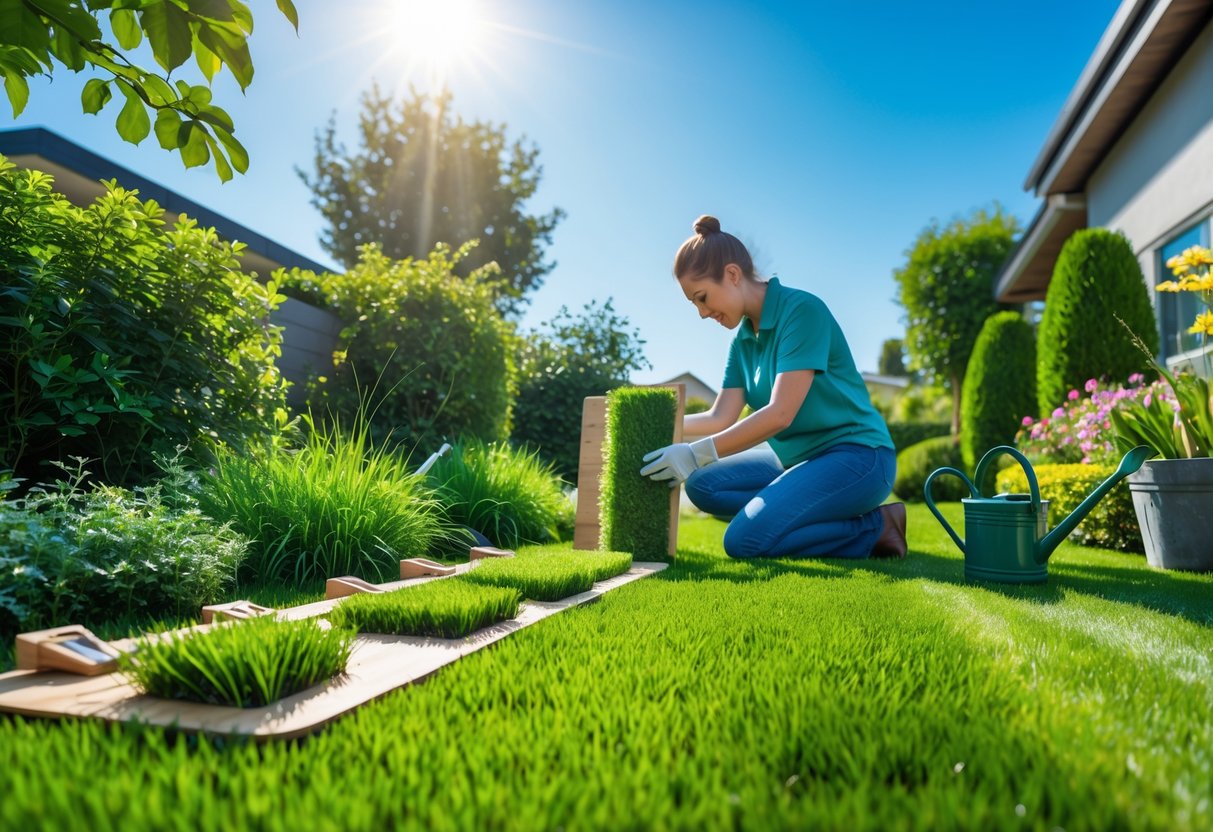
The right grass depends on your climate and yard conditions. Cool-season grasses do well up north, and a good seed mix can cover different needs at once.
Identifying Cool-Season Grasses
Cool-season grasses like cold winters and mild summers. They stay green in spring and fall but might slow down when it gets hot.
Kentucky Bluegrass makes a thick, soft lawn and handles cold well. It needs regular water and full sun. Shade isn't its thing.
Tall Fescue shrugs off drought and foot traffic. Its deep roots make it tough, but the blades feel a bit coarse.
Fine Fescue is perfect for shade and needs less water and fertilizer than bluegrass. The blades are thin and soft, but it doesn't handle heavy use.
| Grass Type | Sun Needs | Water Needs | Traffic Tolerance |
|---|---|---|---|
| Kentucky Bluegrass | Full sun | High | Good |
| Tall Fescue | Full to partial | Low | Excellent |
| Fine Fescue | Shade tolerant | Low | Poor |
Best time to plant these? Early fall or early spring, hands down.
Choosing Grass Seed Mixes
Seed mixes blend different grasses for a stronger, more flexible lawn. Most people get better results with a mix than a single grass type.
Sun and shade mixes combine full-sun and shade-tolerant grasses. If your yard has both, these mixes adjust on their own.
Traffic-tolerant blends use tough grasses like ryegrass with bluegrass. Ryegrass comes in fast, bluegrass fills in over time—good for yards with kids or pets.
Low-maintenance mixes focus on drought-resistant grasses like fine and tall fescue. These need less water and attention.
Check seed labels so you know what's in the bag. Look for the percentages—higher quality mixes cost more, but they pay off with thicker lawns and fewer weeds.
Preparing the Lawn Site
Getting the site ready matters more than you might think. Clear out obstacles and make the soil level and nutrient-rich before you even think about planting.
Clearing and Leveling the Area
Start by removing all grass, weeds, and debris from the area. Use a shovel or sod cutter to strip away the old turf completely.
Dead grass and weeds steal nutrients and water from new seedlings. Clear out rocks, sticks, and anything buried like roots or construction scraps.
These things create uneven spots and block root growth. Level the soil with a rake to make a smooth base.
Fill low spots with good topsoil. Take away extra dirt from high areas.
The ground should slope gently away from buildings to keep water from pooling. Here’s a quick rundown of the key steps:
- Strip existing grass and weeds
- Remove rocks and debris
- Fill holes and low areas
- Create proper drainage slope
Roll the area with a lawn roller filled with water to compact loose soil a bit. This helps prevent major settling after planting.
The surface should feel firm, but not rock hard.
Soil Amendment Techniques
Test your soil pH with a simple kit from the garden center. Most grass types like a pH between 6.0 and 7.0.
If your soil is acidic, add lime. If it’s alkaline, use sulfur.
Add 2-3 inches of compost or topsoil to improve the soil. Work it into the top 6 inches with a rototiller or rake.
This creates better drainage and gives the soil more nutrients. Here are some common amendments:
- Compost - adds nutrients and improves drainage
- Topsoil - gives roots a nice growing medium
- Lime - raises pH in acidic soil
- Sulfur - lowers pH in alkaline soil
Apply a starter fertilizer high in phosphorus to boost root growth. Follow the directions on the bag for how much to use.
Water the prepared soil well to settle it and get those nutrients moving.
Seeding and Planting Methods
How you seed your lawn really affects the results. New lawns need a different approach than patching up old ones.
Seeding New Lawns
Starting from scratch lets you pick the grass variety and coverage you want. It takes careful prep and the right seeding steps.
Here’s a quick prep checklist:
- Remove grass, weeds, and debris with a sod cutter
- Clear rocks and roots
- Fill holes and low spots with topsoil
- Add an inch of sand and an inch of compost
- Till everything into the top 6-8 inches of soil
For seeding:
- Set up spreader – Calibrate it using the seed package instructions
- Apply seed – Walk in straight lines, overlapping a little
- Create a cross pattern – Make a second pass at a right angle for even coverage
- Work seeds in – Use a plastic rake to gently mix seeds into the top 1/8 inch of soil
Seeds need to touch soil to absorb moisture and nutrients. Just tossing them on top won’t cut it – you’ll get patchy growth.
Spread a thin layer of straw over seeded areas. This keeps moisture in and birds out.
Overseeding for Thicker Growth
Overseeding adds new grass to an existing lawn without pulling up the old turf. It fills in bare spots and brings in tougher grass types.
Here’s how to prep for overseeding:
- Mow the grass shorter than usual
- Rake away dead grass and debris
- Loosen bare soil with a rake
- Add a thin layer of compost for better seed contact
Use half the regular seeding rate when overseeding. Too much seed just makes the grass compete with itself.
Apply seed with a broadcast spreader for even coverage. Pay extra attention to thin or bare spots.
After seeding, water lightly 2-3 times a day for the first 10 days. Keep the soil moist but don’t soak it.
Try to stay off overseeded areas until the new grass hits 3 inches tall. That way, you won’t crush the new roots.
Fertilizing for Optimal Growth
Fertilizer gives grass the nutrients it needs for healthy growth and color. Picking the right type, applying it at the right time, and using the right technique can make all the difference.
Understanding Key Lawn Nutrients
Grass needs three main nutrients. Each one plays a different role in creating a healthy lawn that stands up to stress.
Nitrogen makes grass thick and green. It’s what gives lawns that lush look everyone wants.
Grass uses nitrogen fast, so you’ll need to reapply it throughout the season. Phosphorus helps roots grow strong, which is especially important for new lawns.
Some places limit phosphorus in fertilizers to protect water sources. Potassium helps grass handle heat, cold, and disease by strengthening cell walls.
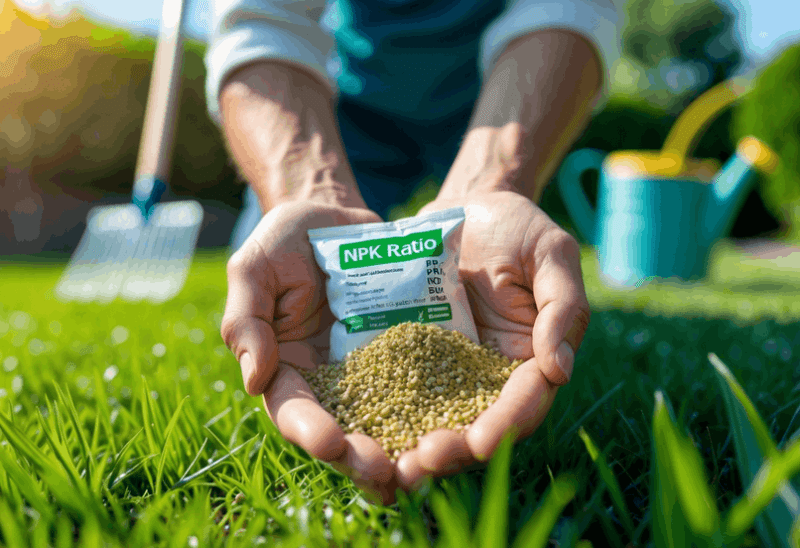
Fertilizer bags show these nutrients as three numbers. The first is nitrogen, then phosphorus, then potassium.
Applying Slow-Release Fertilizer
Slow-release fertilizer feeds grass over a few months. It avoids burning and saves you from constant reapplying.
Slow-release fertilizer breaks down gradually as temperature and moisture change. This steady nutrient supply keeps growth even and avoids those sudden spurts that mean more mowing.
Apply fertilizer when the grass is dry but the soil has some moisture. Water lightly after to help the nutrients reach the roots.
Don’t fertilize right before a big rain or it’ll just wash away. Use a spreader so you get even coverage and overlap your passes a bit to avoid stripes.
Clean the spreader after each use to keep it from rusting up.
Fertilizer Timing and Techniques
Cool-season grasses want fertilizer in early spring and fall. Warm-season grasses do best with feeding in late spring and summer.
Test your soil’s pH before fertilizing. Grass absorbs nutrients best when pH is between 6.0 and 7.0.
Lime raises pH, sulfur lowers it. Apply fertilizer in spring when grass starts growing, but before it gets too hot.
Fall feeding helps grass store energy for winter. Don’t fertilize during a drought or extreme heat—stressed grass can burn or just not use the nutrients.
Split big fertilizer jobs into smaller ones. This way, grass can absorb nutrients without getting overwhelmed.
Lawn Care Maintenance Essentials
Regular mowing, deep watering twice a week, and annual aeration keep grass healthy. These basics are what make a lawn thick and green.
Proper Mowing Practices
Mowing height really matters. Set your mower to 3 inches in spring and bump it up to 4 inches in summer.
Taller grass sends roots deeper and naturally crowds out weeds. The one-third rule helps avoid stress—never cut off more than a third of the blade at once.
This lets grass recover quickly. Mowing frequency depends on how fast your grass grows.
In spring, you might mow 2-3 times a week. In summer, it usually drops to twice a week.
Sharp blades make cleaner cuts that heal up faster. Dull blades just tear the grass and leave brown tips.
Sharpen mower blades at least twice a season. Change up your mowing pattern each time to stop soil compaction and keep grass standing tall.
Effective Watering Strategies
Deep and infrequent watering builds strong roots. Water about 1 inch a week in spring and 1.5 inches in summer, split into two sessions.
Water early in the morning between 6-10 AM. Cooler temps and calm winds mean less evaporation.
Soil type changes how often you water. Clay holds water longer, so you can water less often. Sandy soil dries out fast, so you’ll need to water more.
Check soil moisture by pushing a screwdriver into the ground. If it goes in 6 inches easily, you’re good. If not, it’s time to water.
Make sure sprinkler coverage overlaps a bit to avoid dry patches. Put containers around the yard to see how much water each spot gets.
Aeration and Dethatching Tips
Core aeration loosens compacted soil and lets water soak in. Rent a core aerator that pulls plugs of soil out—works better than spike types.
Test for compaction with a screwdriver. If you can’t push it 6 inches into damp soil, it’s time to aerate.
Best time for aeration depends on your grass. Cool-season grasses like fall aeration, warm-season ones prefer spring.
Dethatching removes dead grass when the layer gets thicker than half an inch. Use a dethatching rake for small spots or rent a power dethatcher for big lawns.
After aeration, leave the soil plugs on the lawn. They’ll break down and feed the soil. The holes fill in on their own in a couple weeks.
Controlling Weeds and Lawn Problems
Thick, healthy grass crowds out weeds. When that’s not enough, selective herbicides can help.
Preventing Weeds with Thick Turf
Dense grass blocks weeds by taking up space and resources. The trick is sticking with lawn care habits that keep grass thick.
Regular fertilizing helps grass fill in bare spots. Feed cool-season grasses in spring and fall, warm-season ones in late spring and summer.
Keep mowing height right so grass stays healthy and competitive. Don’t cut more than a third of the blade at once.
Taller grass shades the soil and keeps weed seeds from sprouting. Water deeply but less often—aim for one inch a week, counting rainfall.
Water early in the morning for best results. Overseed thin spots every year to keep the lawn dense. Pick high-quality seed that matches your grass.
Fall is the best overseeding time for cool-season lawns. Core aeration once a year helps roots grow better by reducing compaction.
Using Selective Herbicide Safely
Selective herbicide targets weeds and leaves grass alone. These products work best when weeds are actively growing and the weather's mild.
Pre-emergent herbicides stop weed seeds from sprouting. Apply them in early spring, before soil temperatures hit 55°F.
Don't use pre-emergent products if you're seeding your lawn. Timing really matters here.
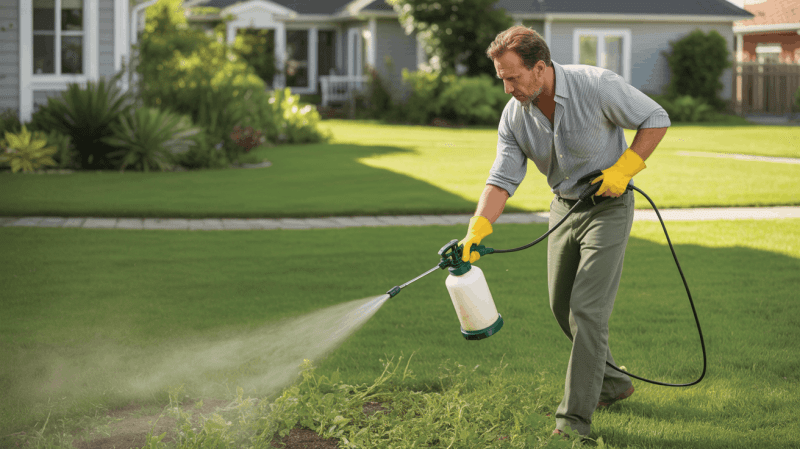
Post-emergent herbicides kill weeds that are already growing. Spot-treat small patches or cover larger infested areas as needed.
Wait for calm, dry days between 60-85°F before applying. Wind and rain can mess up your results.
Read and follow all label directions. Use the right amount for your lawn size—too much can hurt your grass, too little won't do much to weeds.
- Spraying on windy days
- Applying to wet grass
- Using during drought stress
- Mixing products incorrectly
Wait at least 72 hours after treatment before mowing. This gives the herbicide time to work through the weeds.
Frequently Asked Questions
These common questions cover the basics of creating and maintaining a healthy lawn, from soil prep to ongoing care.
What are the essential steps to start a lawn from scratch?
Starting a lawn from scratch involves five main steps. First, clear away grass, weeds, and debris with a shovel or sod cutter.
Test your soil pH. It should fall between 6.0 and 7.0.
Amend the soil with lime or sulfur if it's too acidic or alkaline. This helps grass grow stronger.
Loosen the soil to a depth of 4 to 6 inches using a rototiller. This helps roots settle in and get the air they need.
Add 2 to 4 inches of compost or organic matter, mixing it well into the soil. This boosts fertility and structure.
Level everything out. Decide between sod for instant results or seed if you're watching your budget.
How can I quickly establish grass on bare soil?
Sod is the fastest way to get grass on bare soil. It creates a green lawn you can use in just 2 to 3 weeks.
Loosen the soil and add compost first. Lay sod pieces like bricks to hide the seams.
Press each piece firmly into the soil and against its neighbors. Roll the area lightly for good contact.
Water right after installation with about 1 inch daily for two weeks. Keep the soil moist, but not soggy.
Try to avoid heavy foot traffic for the first month while roots settle in.
What is the best way to ensure a thick and green lawn?
Proper watering makes the biggest difference for thick, green grass. Water deeply but less often to encourage deep roots.
Give your lawn 1 to 1.5 inches of water per week, including rainfall. Early morning is best to cut down on evaporation and disease.
Mow when grass hits 3 inches tall. Keep mower blades sharp to prevent tearing the grass.
Test soil every year and add fertilizer based on what your lawn needs. Compost also feeds grass naturally.
Overseed thin spots in the fall to keep things dense. Try to match grass types with your current lawn.
What lawn care practices should be followed during spring?
Spring lawn care starts with a good cleanup—clear away debris and leaves. Rake gently so you don't harm new shoots.
Apply pre-emergent herbicide in early spring to stop crabgrass and other weeds before they sprout. Timing depends on where you live.
Test soil pH and add lime if you need to get to that 6.0 to 7.0 sweet spot. Spring is a good time for adjustments.
Begin watering as temperatures rise and rain slows down. Don't forget to check and adjust your sprinkler system after winter.
Start mowing when grass reaches 3 inches. Sharp blades help grass recover quickly.
How can I plant grass seed effectively as a beginner?
Pick the right grass type for your climate and sun. Cool-season grasses work best up north.
Remove debris and loosen soil to 4 to 6 inches deep. Add compost to improve quality.
Spread seed evenly with a broadcast spreader, or use your hand for small spots. Follow the package for how much to use.
Rake lightly so seeds get soil contact, but don't bury them too deep. They need some light to sprout.
Water gently twice a day to keep the top inch moist. Once grass hits 2 inches, you can cut back on watering.
What is the '1/3 rule' in lawn maintenance and how does it apply?
The 1/3 rule says you shouldn't cut off more than a third of the grass blade at once. If you take off too much, the grass gets stressed out and struggles to recover.
When you cut too much, the roots can weaken. Grass also needs enough blade left for photosynthesis, or it just can't thrive.
Let's say your lawn is 3 inches high. You'd only cut off 1 inch, leaving 2 inches of blade to keep the plant going strong.
Sometimes, especially when the grass is growing fast, you might have to mow twice a week. The best cutting height depends on the type of grass and the season—there's no one-size-fits-all.
DISCLAIMER
This document is provided for general information purposes only and should not be relied upon as providing legal advice, technical, or specific operational guidance to the reader, whether as to the practices described in the document or the applicable legal requirements and regulations. Lawnfly.com expressly disclaims any responsibility for liability arising from or related to the use or misuse of any information in this document.